Home / Guides / Plants by growth form / Fire-resistant trees, by how many lists agree
Fire-resistant trees, by how many lists agree

A fire-resistant tree, on the published lists this site records, is one the extension services and fire agencies place on their recommended side: quaking aspen is recommended by 20 independent lists, eastern redbud by 18, flowering dogwood by 17. The keep-away side is led by eucalyptus and eastern red cedar, nine lists each. No tree is fireproof, and none belongs within five feet of the house.
You are looking at a tree already in the yard, or a tag at the nursery that says fire-wise, and the question is whether it stays, and where. The answer on this page is a count, not an opinion: how many independent lists put that species on which side, with each list’s own words one click away.
Why it matters
Embers land first, and a tree is the tallest fuel on the lot. A shrub under a low limb is a ladder that carries fire from the ground into the crown, and a crown within reach of the eave carries it to the roof; crown and shrub spacing has the distances the agencies publish. That is why the rules below speak about placement and limbs before they speak about species, and why IBHS Wildfire Prepared clears the first five feet of vegetation altogether, whatever the plant is rated.
How the rating is made
Every tree record on this site carries the verdict of each list that names it, quoted in that list’s own words. A record is rated fire-resistant when the balance of independent primary evidence recommends it, keep-away when the balance condemns it, and a genuine disagreement between lists is published as a conflict, never averaged. A tree no list has rated in either direction waits as a candidate. The order below is how many independent lists agree, which is a count anyone can check, not a ranking this site invents. How to read a plant page walks one record.
The roll shows a pattern worth noticing without turning it into a rule: the trees with the widest agreement are deciduous hardwoods, and the trees the lists condemn most often are resinous conifers and eucalyptus. Each record still stands on its own lists.
What the published lists say about trees
342 fire-resistant 143 keep away 35 documented conflict 751 awaiting a directional source
Rated fire-resistant by the most independent lists
-
 quaking aspen Populus tremuloides Fire-resistant
 -
 apple Malus Fire-resistant
 -
 eastern redbud Cercis canadensis Fire-resistant
 -
 flowering dogwood Cornus florida Fire-resistant
 -
 sweetgum Liquidambar styraciflua Fire-resistant
 -
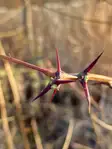 black locust Robinia pseudoacacia Fire-resistant
 -
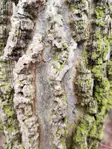 common hackberry Celtis occidentalis Fire-resistant
 -
 honeylocust Gleditsia triacanthos Fire-resistant
 -
 northern red oak Quercus rubra Fire-resistant
 -
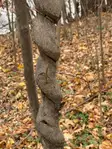 ash Fraxinus sp. Fire-resistant
 -
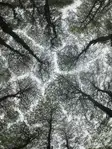 blackgum Nyssa sylvatica Fire-resistant
 -
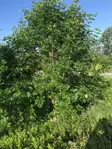 green ash Fraxinus pennsylvanica Fire-resistant
 -
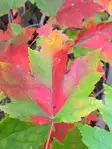 red maple Acer rubrum Fire-resistant
 -
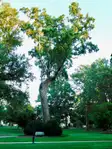 tuliptree Liriodendron tulipifera Fire-resistant
 -
 cottonwood Populus sp. Fire-resistant
 -
 Kentucky coffeetree Gymnocladus dioicus Fire-resistant
 -
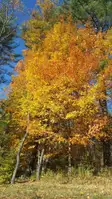 maple Acer spp. Fire-resistant
 -
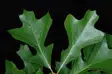 oak Quercus spp. Fire-resistant
 -
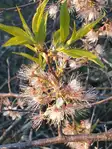 American plum Prunus americana Fire-resistant
 -
 birch Betula Fire-resistant
 -
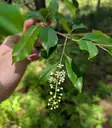 black cherry Prunus serotina Fire-resistant
 -
 European smoketree Cotinus coggygria Fire-resistant
 -
 hawthorn Crataegus Fire-resistant
 -
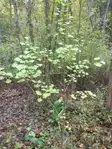 maidenhair tree Ginkgo biloba Fire-resistant
 -
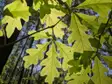 white oak Quercus alba Fire-resistant
Trees the lists say to keep away from structures
aleppo pine , Alnus mandshurica , American devilwood , American holly , apple blossom , arar tree , arborvitae , Arizona pine , Ash Quandong , Atlantic white cedar , Australian cheesewood , Australian-teak and 131 more .
Where the lists disagree
Alaska cedar , Atlas cedar , bald cypress , cabbage palmetto , cedar , Chinese windmill palm , common pear , corkscrew willow , Downy oak , English oak , English yew , European chestnut and 23 more .
What people mix up
- A fire-resistant tree can go anywhere. It cannot go in Zone 0. IBHS removes vegetation there to bare mineral soil; Oregon’s checklist wants five feet of clearance from the structure.
- Conifer means keep-away. The lists condemn resinous conifers most often, but each record shows its own lists, and a few conifers carry recommendations. Read the record, not the family.
- The cultivar name says something about fire. ‘Wildfire’ black gum is a cultivar name; the lists rate the species, black gum, and that record is fire-resistant on nine lists.
- Fire-resistant means fireproof. It does not; the difference is the whole point of the rating.
How to check a tree
- Open the record. The chips under the status are the independent lists and their direction; the evidence table quotes each one.
- Look at the states and range. A list written for Oregon says nothing about Georgia; the Grow pages hold the plants cited for a place.
- Read a candidate as “no list has spoken”, not as “safe”. Awaiting evidence is an absence, not a verdict.
- Then measure. Five feet clear of the wall and attached decks, limbs raised, spacing per the agency whose zone bands govern the lot (zone bands).
Limits
This page does not decide spacing, pruning or maintenance, which the agencies publish and the records do not rate. The lists are regional documents and say nothing about a state they were not written for. The site issues no rating of its own: every status is a computation over the lists named on the record, and the lists disagree more often than any one of them admits. A conflict on this page is information, not an error.
Plant records this page rests on
- quaking aspen Populus tremuloides Fire-resistant
- eastern redbud Cercis canadensis Fire-resistant
- flowering dogwood Cornus florida Fire-resistant
- sweetgum Liquidambar styraciflua Fire-resistant
- common hackberry Celtis occidentalis Fire-resistant
- northern red oak Quercus rubra Fire-resistant
- blackgum Nyssa sylvatica Fire-resistant
-
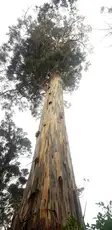 gum Eucalyptus spp. Keep away
Questions
What trees are most resistant to fire?
By agreement across the published lists this site records, quaking aspen (20 independent lists), crabapple (19), eastern redbud (18), flowering dogwood (17) and American sweetgum (15). The roll above holds the next twenty, each with the lists that recommend it. Agreement is a count of sources, not a rating this site issues.
What tree is the most flammable?
The lists condemn eucalyptus and eastern red cedar most often, nine independent lists each, then fir, Italian cypress, spruce, Aleppo pine and loblolly pine at seven. Every keep-away record names the lists that put it there; open one to read their own words.
Are redwood trees fire resistant?
Not by the evidence on record here. Coast redwood carries one directional source, the Eastern US Fire Performance Plant Selector's not-Firewise rating, plus FLAMITS measurements, and is classed keep-away with limited evidence. Giant sequoia is keep-away by consensus. Neither record has a list recommending it.
Can I plant a fire-resistant tree next to the house?
No. IBHS Wildfire Prepared removes vegetation within five feet to bare mineral soil, and Oregon's State Fire Marshal wants vegetation five feet from the structure and limbs raised to six feet on trees over eighteen feet. A fire-resistant rating is a Zone 1 and Zone 2 conversation, spaced and maintained.