Current native
42
exact source areas
Home / Plants / Grow / Green ash
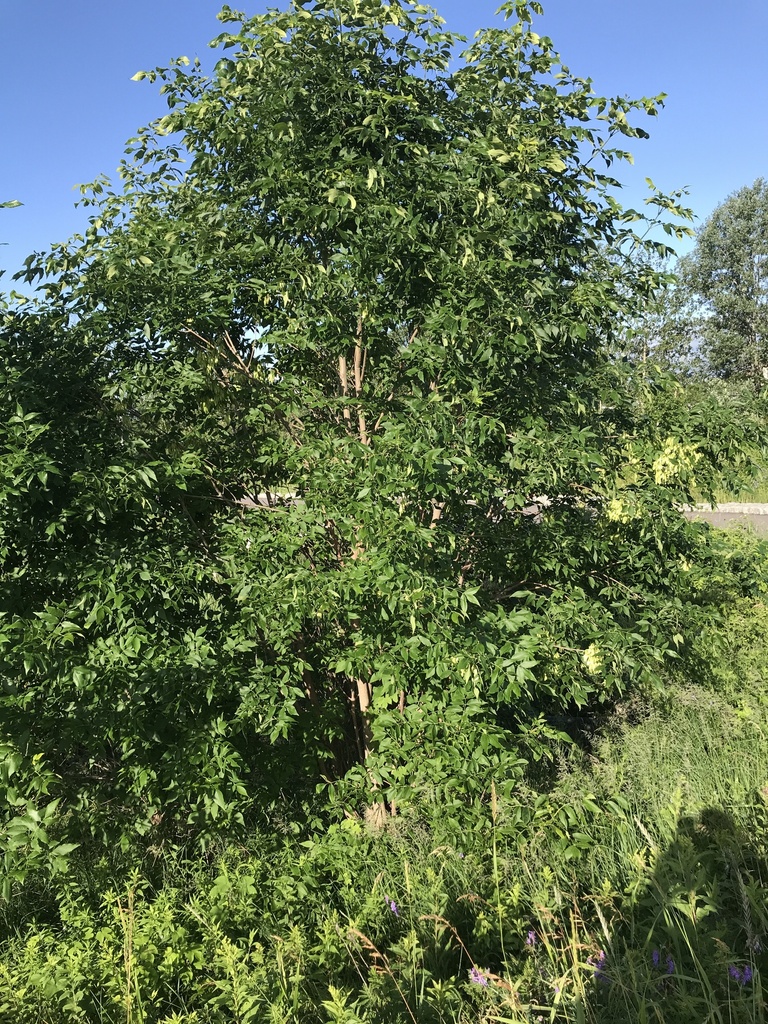
Fraxinus pennsylvanica
Your local evidence lens
A genus split is not a placement verdict. Set a ZIP to read the local documented split.
The status above is computed from the cited rows below: independent recommendations can support a fire-resistant result, an avoid row can produce keep-away, and disagreement stays visible as conflict. Placement notes preserve each source’s own scheme rather than translating unlike rules into one scale. This is evidence about a plant, not permission to plant it in every part of the defensible space; Zone 0 remains noncombustible.
These are exact U.S. botanical-area records from the cited range source. Native and introduced describe biogeographic relationship, not fire performance or planting approval. Doubtful and extinct rows stay visible but do not count as current presence.
Current native
exact source areas
Current introduced
exact source area
Qualified
doubtful or extinct source rows
Eastern United States Fire Performance Plant Selector
Source prints 5 · single-value meaning unresolved
USDA PLANTS Database — Plant Characteristics
Minimum 2a · no upper limit documented
Eastern United States Fire Performance Plant Selector
“Firewise (1)”
Emerald Ash Borer destroying all native ash in infected areas-firewood is quarantined.
Firewise Landscaping in North Carolina (E05-44596)
“Low flammability rating”
Firewise Landscaping (OSU Extension Bulletin 921)
“L flammability”
Tolerates drought, alkaline soil, and salt; fails without warning; insect sensitive under stress.
Virginia Firescapes — Firewise Landscaping for Woodland Homes (430-300)
“L flammability”
Tolerates drought, high soil pH, salt and poor soils.
Fire-Resistant Landscaping in North Carolina (AG-874)
“low flammability”
FireSmart BC Plant Program — fire-resistant plant chart
“FireSmart-approved fire-resistant plant”
Flagged by FireSmart BC as needing more research.
A Compilation of Good Plant Choices for Nevada's High Fire Hazard Areas (SP-05-16)
“listed by at least two cited sources”
Compilation marks: AZ1289, CSU 6.305, MT200101AG.
FIREWISE Plant Materials for 3,000 ft. and Higher Elevations (AZ1289)
“listed FIREWISE plant material”
Listed among fire-resistant plant materials for Arizona above 3,000 feet.
Fire-Resistant Plants for Montana Landscapes (MontGuide MT200101AG)
“listed fire-resistant”
Listed among fire-resistant plant species adapted to Montana.
North Carolina Extension Gardener Plant Toolbox — plant profiles and flammability ratings
“low flammability”
NC Toolbox facet capture lists "Fraxinus pennsylvanica" under the low flammability tag.
Firewise Landscaping Plants (Maryland, New Jersey, and West Virginia editions)
“relatively resistant to fire”
Listed as Fraxinus pennsylvanica (Green Ash). The source says listed species exhibit stronger resistance to ignition by wildfires. Source comments: Tolerates drought, high soil pH, salt, and poor soils
Firewise Plant Material for the Black Hills
“Large shrubs & trees: Green ash — Fraxinus pennsylvanica”
The introduction describes all table entries as fire-resistive plants that can be used in landscaping.
Maine fire-resistant plant list
“listed as fire-resistant for landscaping 30-100 feet from a structure”
Maine Forest Service includes Green ash (Fraxinus pennsylvanica) on its partial fire-resistant plant list for landscaping 30-100 feet from a structure. The printed scientific name is a unique current-name match to this record.
Low Flammability Plants directory
“Moderate/high flammability”
Moderate/high flammability classification.
Shoot flammability patterns in native and exotic street tree species at the WUI of eastern Australia
“Measured; four flammability-attribute rankings were not concordant”
Shoot time-to-flame, flame duration, flaming events, and flame temperature were compared without an overall class.
FLAMITS: FLAMmability plant traiTS database
“ignition frequency (%): 100”
FLAMITS record 1394; Ignitability measurement; plant part branches; fuel all; predrying yes; device grill; site Cui2020a-1; sampling ND. Primary study Cui2020a: Cui, X., Paterson, A. M., Wyse, S. V., Alam, M. A., Maurin, K. J. L., Pieper, R., ... Curran, T. J. (2020a). Shoot flammability of vascular plants is phylogenetically conserved and related to habitat fire-proneness and growth form. Nature Plants, 6, 355-359.
“maximum sample temperature (°C): 554.3”
FLAMITS record 1588; Combustibility measurement; plant part branches; fuel all; predrying yes; device grill; site Cui2020a-1; sampling ND. Primary study Cui2020a: Cui, X., Paterson, A. M., Wyse, S. V., Alam, M. A., Maurin, K. J. L., Pieper, R., ... Curran, T. J. (2020a). Shoot flammability of vascular plants is phylogenetically conserved and related to habitat fire-proneness and growth form. Nature Plants, 6, 355-359.
“burning duration (s): 28.3”
FLAMITS record 1782; Sustainability measurement; plant part branches; fuel all; predrying yes; device grill; site Cui2020a-1; sampling ND. Primary study Cui2020a: Cui, X., Paterson, A. M., Wyse, S. V., Alam, M. A., Maurin, K. J. L., Pieper, R., ... Curran, T. J. (2020a). Shoot flammability of vascular plants is phylogenetically conserved and related to habitat fire-proneness and growth form. Nature Plants, 6, 355-359.
“estimated burnt biomass (%): 47.5”
FLAMITS record 1976; Consumability measurement; plant part branches; fuel all; predrying yes; device grill; site Cui2020a-1; sampling ND. Primary study Cui2020a: Cui, X., Paterson, A. M., Wyse, S. V., Alam, M. A., Maurin, K. J. L., Pieper, R., ... Curran, T. J. (2020a). Shoot flammability of vascular plants is phylogenetically conserved and related to habitat fire-proneness and growth form. Nature Plants, 6, 355-359.