United States / Grow / quaking aspen

quaking aspen (Populus tremuloides)
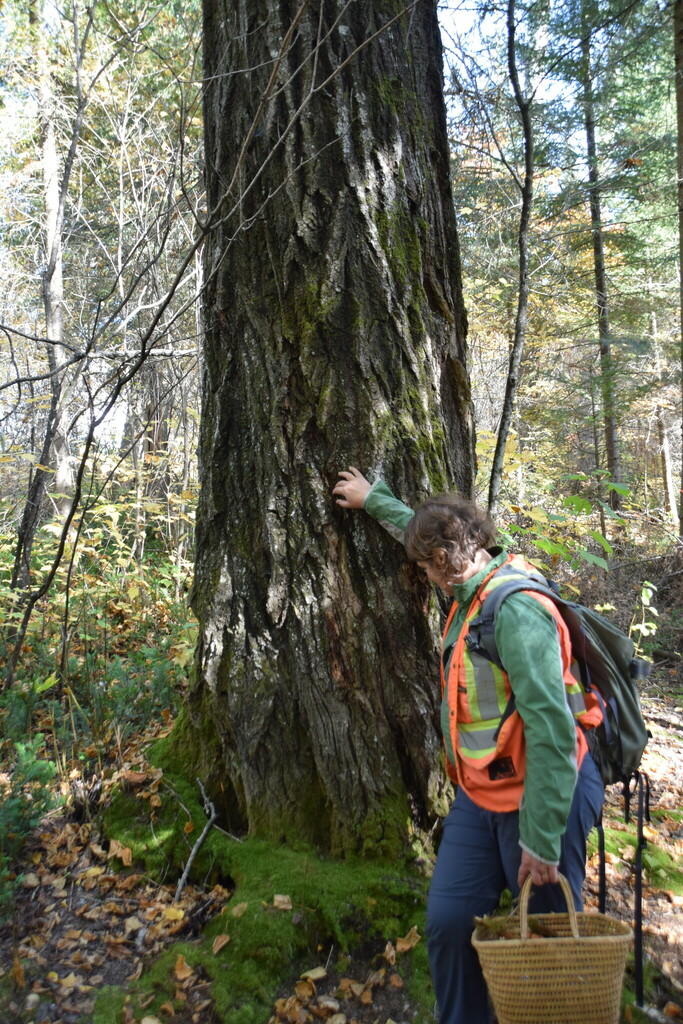
Photo: no rights reserved (CC0), via iNaturalist. Species-typical, not necessarily this cultivar.

quaking aspen

Populus tremuloides · Salicaceae · all Populus records · Wikipedia

View Saved

Is this one for your yard?

Enter your ZIP to see whether this is legal to plant in your state, and whether it survives your winter.

Yes, quaking aspen is consistently rated fire resistant, although one program says it needs more research.

All six assessments favor it: regional extension services, forestry agencies, Firewise programs, and western compilations place the tree among recommended plants rather than those to avoid.

The ratings are strong because they agree across several systems. The USDA Forest Service and state Firewise programs give quaking aspen their best rating, Firewise 1. Ohio State’s extension service assigns it low flammability, a band that warrants recommendation on its five-point scale, and says it tends to suppress fire. Oregon State, Washington State, and Idaho extension specialists list it as fire resistant, as does Washington’s natural-resources agency. Nevada’s extension compilation found it favorably rated by at least two of its cited western sources.

FireSmart BC also approves quaking aspen as fire resistant but flags it for further research. That caution does not reverse the broader agreement; it simply keeps the approval from being treated as the final word. These findings are landscape guidance, not a promise that a tree cannot burn.

Choosing a site for quaking aspen means allowing for high water needs and a mature height of about 65 feet. It is native across broad parts of North America and grows from USDA zones 1a through 8b. For a homeowner choosing vegetation with fire behavior in mind, the published guidance strongly supports quaking aspen as a fire-resistant choice.

Form
tree
Mature height
~65 ft
Water need
high
Rated in
Alaska; Arizona above 3,000 feet / interior Southwest; Black Hills, South Dakota; British Columbia +18
On this lot

1. Fire evidence and conditions

Fire evidence
Fire-resistant — location does not change the cited classification.
Fire-performance conditions
1 condition stated in cited fire-evidence rows.
Placement evidence
9 source placement records; source schemes remain separate.
Evidence regions
Alaska; Arizona above 3,000 feet / interior Southwest; Black Hills, South Dakota; British Columbia; California; Fremont County, Wyoming; Global; Global compilation (published in Australia); Lake Tahoe Basin, Nevada and California; Maine; Michigan / Great Lakes; Montana / Northern Rockies; Nevada / Great Basin; New Mexico; OR/WA/ID; Ohio / Midwest; Pacific Northwest (Oregon / Washington / Idaho); Utah / Intermountain West; Yavapai County, Arizona; eastern US; eastern WA; north-eastern and mid-Atlantic United States
Typed publication scope: 18 scopes across 18 cited fire sources
  • Protect Your Home from Wildfire — Fire Resistant Vegetation and Landscaping · Official scoped edition
    • AK; partial normalized coverage · 2005-04-27

      Alaska Division of Forestry opens with the wildfire threat to Alaskans and publishes Alaska firewise-landscape examples. FireApproved publishes 58 exact source owners from its 60 taxon entries and holds the taxon-free fern label. State publication scope does not establish suitability for every Alaska climate, site, or home-ignition-zone placement.

  • Fire Performance of Common Plants (Guide to Plants) · Official scoped edition
    • CA; partial normalized coverage · 2026-08-29

      The guide presents itself as fire performance ratings for common landscape plants in a fire-prone California setting. FireApproved publishes 104 exact owners as republished California context. It is not an independent rating, a current endorsement, or parcel suitability.

  • Combustion characteristics of north-eastern USA vegetation tested in the cone calorimeter · Official scoped edition
    • Northeastern and mid-Atlantic study sites (ME, MD, MA, NY, VA footprint); partial normalized coverage · 2007-08-20

      The authors collected foliage and twigs across study sites in Maine, Maryland, Massachusetts, New York, and Virginia, then conditioned and tested the samples in a cone calorimeter. FireApproved publishes 37 exact source owners only as multi-state laboratory context. The source does not establish that every taxon was sampled in every named state, whole-plant behavior, landscape suitability, or state planting guidance.

  • Firewise Plant Material for the Black Hills · Official scoped edition
    • Black Hills (SD footprint); partial normalized coverage

      The page explicitly limits itself to the Black Hills, and NFPA Firewise's archived 2006 plant-list index files it under South Dakota. FireApproved publishes 47 exact genus or species owners from 48 printed rows. This is bounded Black Hills context, not statewide South Dakota coverage or a finding that a plant suits a particular site.

  • Fremont County Firewise Plant List · Official scoped edition
    • Fremont County (WY footprint); partial normalized coverage · 2011-02-25

      The source identifies itself as the Fremont County Firewise Plant List. FireApproved publishes its 92 exact source owners as Fremont County regional context. No methodology, current county endorsement, statewide Wyoming scope, or site-specific suitability is inferred.

  • Defensible Space Landscaping in the Urban/Wildland Interface: A Compilation of Fire Performance Ratings of Residential Landscape Plants · Official scoped edition
    • CA; partial normalized coverage · 1997-07-01

      The UC Forest Products Laboratory says the guide covers properties of common California landscaping plants and was prepared for California fire agencies. FireApproved publishes 130 exact owners at historical California publication scope. The report is a 1997 compilation, not a current endorsement, site rating, or independent test of every row.

  • Maine fire-resistant plant list · Official scoped edition
    • ME; partial normalized coverage · 2013-10-23

      Maine Forest Service presents a partial list for landscaping 30-100 feet from a structure. FireApproved publishes only 39 unique exact current/accepted matches plus Rhus typhina from the source's explicit parenthetical; unresolved, abbreviated, misspelled, absent, and duplicate-owner rows remain held.

  • Wildfire-resistant Landscape Plants for Michigan (Extension Bulletin E2948) · Official scoped edition
    • MI; partial normalized coverage · 2007-01-01

      Michigan State University Extension Bulletin E2948 is explicitly a list of wildfire-resistant landscape plants for Michigan and includes a Michigan-native field. FireApproved publishes 221 exact GBIF owners from 226 represented source rows and holds 15 complex or non-exact rows. This dated publication scope is not a current site-suitability determination.

  • Fire-Resistant Plants for Montana Landscapes (MontGuide MT200101AG) · Official scoped edition
    • MT; partial normalized coverage · 2022-04-01

      The April 2022 MontGuide explicitly presents fire-resistant species adapted to Montana. FireApproved publishes 92 exact plant records from the source while retaining excluded genus, family, and unresolved rows; the guide itself says not every listed species grows in every part of the state.

  • FireWise Plant List for New Mexico · Official scoped edition
    • NM; partial normalized coverage · 2003-10-08

      New Mexico Forestry Division publishes this as its FireWise Plant List for New Mexico. FireApproved accounts for all 140 printed rows and publishes 95 exact same-rank owners already represented in the directory; 29 exact taxa without an existing record, 14 unresolved spellings or higher-rank matches, one compound taxon cell, and one species row whose only apparent owner has an infraspecific printed identity remain held. Every published row retains the source's Y, N, ?, or blank elevation cells. Publication scope does not erase those elevation limits or establish suitability for every New Mexico site.

  • Home Landscaping Guide for Lake Tahoe and Vicinity (Ed. Bulletin 06-01) · Official scoped edition
    • Lake Tahoe Basin (CA, NV footprint); partial normalized coverage · 2006-01-01

      Nevada Division of Forestry and University of Nevada Cooperative Extension publish Bulletin 06-01 for the Lake Tahoe Basin and vicinity. FireApproved publishes 83 exact rated owners as basin context across Nevada and California. Rough estimates are not statewide or site ratings.

  • Firewise Landscaping (OSU Extension Bulletin 921) · Official scoped edition
    • OH; partial normalized coverage · 2006-03-01

      Ohio State University Extension Bulletin 921 is an Ohio publication that describes Ohio fire seasons and landscape conditions and labels nativity to Ohio. FireApproved publishes 352 exact source-owning plant records from its eight rated tables. This historical publication scope does not assert current extension endorsement or that a listed plant suits every Ohio site.

  • Fire-Resistant Plants for Home Landscapes (PNW 590) · Official scoped edition
    • ID, OR, WA; partial normalized coverage · 2023-10-01

      The October 2023 joint Pacific Northwest Extension publication explicitly names Oregon, Washington, and Idaho and publishes more than 150 plant profiles. FireApproved has normalized 155 exact plant records from the source; publication scope does not assert that every listed plant suits every site within the three states.

  • FIREWISE Plant Materials for 3,000 ft. and Higher Elevations (AZ1289) · Official scoped edition
    • Arizona at or above 3,000 feet (AZ footprint); partial normalized coverage · 2011-12-01

      AZ1289 is explicitly limited to Arizona elevations of 3,000 feet and higher. FireApproved publishes 69 exact owners as regional Arizona context, retaining every water and elevation condition. It is never promoted to statewide low-desert guidance or an independent Tier 1 vote.

  • A Compilation of Good Plant Choices for Nevada's High Fire Hazard Areas (SP-05-16) · Official scoped edition
    • NV; partial normalized coverage · 2005-01-01

      University of Nevada Cooperative Extension compiled plants suited to Nevada climate zones and reported favorably by at least two upstream firewise lists. FireApproved publishes 126 exact source owners at Nevada publication scope. The source explicitly makes no independent flammability determination, so these rows remain corroborative.

  • Firewise Plants for Utah Landscapes (NR/FF/002) · Official scoped edition
    • UT; partial normalized coverage · 2005-02-01

      Utah State University Extension states that this fact sheet selects examples for Utah landscapes and that they require proper placement and maintenance. FireApproved publishes 83 exact source owners at Utah publication scope. The table is not a site-specific planting clearance.

  • Fire-Resistant Plants for Eastern Washington · Official scoped edition
    • Eastern Washington (WA footprint); partial normalized coverage

      Washington DNR publishes the guide for Eastern Washington and says it compiles plants from other Firewise documents that are likely to thrive there. FireApproved publishes 46 exact owners only as eastern Washington context. The rows are corroborative, not empirical or statewide.

  • Fire-Resistant and Fire-Prone Plants Common to Yavapai County (Bulletin 34) · Official scoped edition
    • Yavapai County (AZ footprint); partial normalized coverage · 2025-03-14

      University of Arizona Cooperative Extension authors Bulletin 34 for Yavapai County. FireApproved publishes 198 exact source owners from its resistant and prone tables and keeps the county boundary visible. County publication scope is regional Arizona context, never statewide scope.

2. Why this plant is relevant here

State distribution
Documented in AK, AR, AZ, CA, CO, CT, DE, IA, ID, IL, IN, KY, MA, MD, ME, MI, MN, MO, MT, NC, ND, NE, NH, NJ, NM, NV, NY, OH, OR, PA, RI, SD, TX, UT, VA, VT, WA, WI, WV, WY.
Native range
Current cited native range in AK, AZ, CA, CO, CT, DE, IA, ID, IL, IN, MA, MD, ME, MI, MN, MO, MT, NC, ND, NE, NH, NJ, NM, NV, NY, OH, OR, PA, RI, SD, TX, UT, VA, VT, WA, WI, WV, WY.
USDA hardiness
3 applicable cited hardiness statements overlap but have different boundaries; compare each complete source row.

3. Legal, ecological, and broader status

How to read this page

The status above is computed from the cited rows below: independent recommendations can support a fire-resistant result, an avoid row can produce keep-away, and disagreement stays visible as conflict. Placement notes preserve each source’s own scheme rather than translating unlike rules into one scale. This is evidence about a plant, not permission to plant it in every part of the defensible space; Zone 0 remains noncombustible.

Native and introduced range evidence

These are exact U.S. botanical-area records from the cited range source. Native and introduced describe biogeographic relationship, not fire performance or planting approval. Doubtful and extinct rows stay visible but do not count as current presence.

Current native

38

exact source areas

Current introduced

0

exact source areas

Qualified

0

doubtful or extinct source rows

38 native source areas · World Checklist of Vascular Plants, version 16 v16, as of 2026-06-04
  • Alaska (AK)
  • Arizona (AZ)
  • California (CA)
  • Colorado (CO)
  • Connecticut (CT)
  • Delaware (DE)
  • Iowa (IA)
  • Idaho (ID)
  • Illinois (IL)
  • Indiana (IN)
  • Massachusetts (MA)
  • Maryland (MD)
  • Maine (ME)
  • Michigan (MI)
  • Minnesota (MN)
  • Missouri (MO)
  • Montana (MT)
  • North Carolina (NC)
  • North Dakota (ND)
  • Nebraska (NE)
  • New Hampshire (NH)
  • New Jersey (NJ)
  • New Mexico (NM)
  • Nevada (NV)
  • New York (NY)
  • Ohio (OH)
  • Oregon (OR)
  • Pennsylvania (PA)
  • Rhode I. (RI)
  • South Dakota (SD)
  • Texas (TX)
  • Utah (UT)
  • Virginia (VA)
  • Vermont (VT)
  • Washington (WA)
  • Wisconsin (WI)
  • West Virginia (WV)
  • Wyoming (WY)

The lossless worldwide derivative is retained once in the research corpus; object pages repeat only exact U.S. areas needed by the local lens. The JSON twin carries the same page assertions.

Plant hardiness evidence

These values describe the plant source. Your ZIP zone comes from the separate 2023 USDA Plant Hardiness Zone Map. Whole-zone values stay whole-zone, and a single unresolved value is not treated as a tolerance range. Different source boundaries stay separate: overlapping statements are compared independently, while only ranges with no shared zone are called a conflict.

Conditions in the fire evidence

These describe tested or rated plant material. They are not horticultural maintenance instructions.

Where its sources say to plant it

Placement rules below use each source's own distances or named zones, tied to its rating. They are not interchangeable with the directory's current Zone 0 guidance.

The evidence

Grouped by what each source concluded. Primary evidence rated the plant itself (a lab, field program, or original curation); corroboration compiled or republished another source's rating and resolves to its root lineage.

Recommends (20)

Corroboration (13 rows from 13 sources)
  • Fire-Resistant Plants for Eastern Washington — Washington State Department of Natural Resources · original source Corroboration Compilation lineage: unknown

    “listed fire-resistant” · original source

  • FireSmart BC Plant Program — fire-resistant plant chart — FireSmart BC · original source Corroboration Compilation lineage: pnw590-tree resolves to Fire-Resistant Plants for Home Landscapes (PNW 590)

    “FireSmart-approved fire-resistant plant”

    Flagged by FireSmart BC as needing more research.

  • A Compilation of Good Plant Choices for Nevada's High Fire Hazard Areas (SP-05-16) — University of Nevada Cooperative Extension · SP-05-16 (2005) · original source Corroboration Compilation lineage: unr-tree

    “listed by at least two cited sources”

    Compilation marks: AZ1289, UCFPL 1997, CSU 6.305, MT200101AG, USU NR/FF/002.

  • FIREWISE Plant Materials for 3,000 ft. and Higher Elevations (AZ1289) — University of Arizona Cooperative Extension · 2011 revision · original source Corroboration Compilation lineage: csu-nmsu-firewise

    “listed FIREWISE plant material”

    Listed among fire-resistant plant materials for Arizona above 3,000 feet.

  • Home Landscaping Guide for Lake Tahoe and Vicinity (Ed. Bulletin 06-01) — Nevada Division of Forestry / University of Nevada Cooperative Extension · Bulletin 06-01 (2006) · original source Corroboration Compilation lineage: unr-tree

    “low — Aspen, quaking — Populus tremuloides”

    Table 1's Fire Hazard column prints “low” for this taxon. The guide calls the rating a rough estimate of potential flammability, not a result of scientific trials. Its footnote says plants that turn brown often become high fire hazards and tells readers to mow grasses and forbs when they begin to turn brown.

  • Defensible Space Landscaping in the Urban/Wildland Interface: A Compilation of Fire Performance Ratings of Residential Landscape Plants — University of California Forest Products Laboratory · Internal Report 36.01.137 (July 1997) · original source Corroboration Compilation lineage: ucfpl-berkeley

    “RECOMMENDED by 3 references for use in high fire risk areas.”

    1997 Landscape Vegetation Database row: Populus tremuloides (Quaking aspen). Preserved UCFPL transcription marker: F3.

  • Fremont County Firewise Plant List — Fremont County Firewise · web page (server last-modified 2011-02-25) · original source Corroboration Compilation lineage: unknown

    “Fremont County Firewise Plant List — Populus tremuloides — Aspen”

    Listed in the source's Large Shrubs and Trees section; the page describes its listed Firewise plants as generally low-growing, low-debris, and relatively moist.

  • Fire-Resistant and Fire-Prone Plants Common to Yavapai County (Bulletin 34) — University of Arizona Cooperative Extension, Yavapai County · v1.2 · original source Corroboration Expert-curated lineage: unknown

    “Fire-Resistant Plants”

    Listed as Aspen, Quaking — Populus tremuloides. The bulletin says fire-resistant plants tend to resist ignition when irrigated and maintained, while fire-prone plants may ignite readily and burn intensely.

  • Protect Your Home from Wildfire — Fire Resistant Vegetation and Landscaping — Alaska Department of Natural Resources, Division of Forestry, Community Forestry Program · April 2005 · original source Corroboration Expert-curated lineage: unknown

    “Following are a few of the plants that may be used in firewise landscapes in Alaska if placed and maintained appropriately.”

    Listed as Quaking aspen — Populus tremuloides; the source conditions these examples on appropriate placement and maintenance.

  • Firewise Plant Material for the Black Hills — NFPA Firewise Communities · 2004 scan / 2007 archive · original source Corroboration Compilation lineage: firewise-national

    “Large shrubs & trees: Aspen — Populus tremuloides”

    The introduction describes all table entries as fire-resistive plants that can be used in landscaping.

  • FireWise Plant List for New Mexico — New Mexico Energy, Minerals and Natural Resources Department, Forestry Division · 2003 Forestry Division PDF · original source Corroboration Compilation lineage: csu-nmsu-firewise

    “FireWise Plant List for New Mexico”

    Listed as Populus tremuloides (Aspen) in Trees and Large Shrubs. Printed elevation cells: 4,000 ft=not stated, 5,000 ft=not stated, 6,000 ft=Y, 7,000 ft=Y, 8,000 ft=Y, 9,000+ ft=Y. Water need: M-H; sun/shade: S; mature height: 20-40; approximate bloom: n/a.

  • Fire Performance of Common Plants (Guide to Plants) — Diablo Firesafe Council · live page captured 2026-08-29 · original source Corroboration Mirror lineage: ucfpl-berkeley resolves to Defensible Space Landscaping in the Urban/Wildland Interface: A Compilation of Fire Performance Ratings of Residential Landscape Plants

    “Table 1: favorable fire performance rating in 3 or more references (refs 9,11,15)”

    The Diablo Firesafe Council Guide to Plants lists Populus tremuloides (Quaking aspen) as tree, deciduous, in Table 1: plants with a favorable fire performance rating in 3 or more references. The guide cites 3 of its 57 numbered references for this row (9,11,15). The guide states the ranking terms in its underlying references were mostly undefined and makes no attempt to rank within the list, and that fire performance is compromised without maintenance.

  • Maine fire-resistant plant list — Maine Forest Service, Forest Protection Division · MFS-list-updated-2013-10-23 · original source Corroboration Compilation lineage: me-mfs-fire-resistant-plants

    “listed as fire-resistant for landscaping 30-100 feet from a structure” · original source

    Maine Forest Service includes Quaking/Trembling aspen (Populus tremuloides) on its partial fire-resistant plant list for landscaping 30-100 feet from a structure. The printed scientific name is a unique current-name match to this record.

Mid-scale / conditional (2)

Corroboration (1 rows from 1 source)
  • Safer Gardens: Plant Flammability & Planning for Fire — Lesley Corbett / Australian Scholarly Publishing · 2021 book / public sample · original source Corroboration Compilation lineage: meta-aggregator

    “But when leaves fall in autumn, and also in spring before leaf cover returns, stands of trembling aspen are markedly more flammable.” · original source

    The sample also reports summer aspen stands as traditional barriers to fire spread, so the seasonal evidence remains mixed.

Listed without a rating (26)
Corroboration (26 rows from 1 source)
  • FLAMITS: FLAMmability plant traiTS database — Dryad / Global Ecology and Biogeography · Dryad version 9 · original source Corroboration Trait database lineage: meta-aggregator

    26 cited rows from this source; its identity, lineage and tier are stated once.

    • “calorific value (kcal/kg): 3152.77”

      FLAMITS record 2883; Combustibility measurement; plant part leaves; fuel live; predrying yes; device calorimeter; site Dibble2007-1; sampling ND. Primary study Dibble2007: Dibble, A. C., White, R. H., & Lebow, P. K. (2007). Combustion characteristics of north-eastern USA vegetation tested in the cone calorimeter: invasive versus non-invasive plants. International journal of wildland fire, 16, 426-443.

    • Primary study Hough1969: Hough, W. A. (1969). Caloric Value of Some Forest Fuels of the Southern United States. Res. Note SE-120. Asheville, NC: U.S. Department of Agriculture, Forest Service, Southeastern Forest Experiment Station.

      Shared row context: Combustibility measurement; fuel all; predrying yes; device calorimeter; site Hough1969-3; sampling june.

      • “calorific value (kcal/kg): 5053”

        FLAMITS record 5023; plant part leaves.

      • “calorific value (kcal/kg): 4864”

        FLAMITS record 5024; plant part twigs.

    • Primary study Shafizadeh1977: Shafizadeh, F., Chin, P. P., & DeGroot, W. F. (1977). Effective heat content of green forest fuels. Forest Science, 23, 81-89.

      Shared row context: Combustibility measurement; plant part leaves; fuel live; predrying yes; device thermal analyzer; site Shafizadeh1977-1; sampling ND.

      • “calorific value (kcal/kg): 5368”

        FLAMITS record 12444.

      • “calorific value (kcal/kg): 426.87”

        FLAMITS record 12445.

      • “calorific value (kcal/kg): 700.59”

        FLAMITS record 12446.

      • “calorific value (kcal/kg): 963.23”

        FLAMITS record 12447.

      • “calorific value (kcal/kg): 609.65”

        FLAMITS record 12448.

      • “calorific value (kcal/kg): 432.94”

        FLAMITS record 12449.

      • “calorific value (kcal/kg): 377.82”

        FLAMITS record 12450.

      • “calorific value (kcal/kg): 2052”

        FLAMITS record 12451.

      • “calorific value (kcal/kg): 283.2”

        FLAMITS record 12452.

      • “calorific value (kcal/kg): 399.41”

        FLAMITS record 12453.

      • “calorific value (kcal/kg): 581.92”

        FLAMITS record 12454.

      • “calorific value (kcal/kg): 377.57”

        FLAMITS record 12455.

      • “calorific value (kcal/kg): 220.17”

        FLAMITS record 12456.

      • “calorific value (kcal/kg): 167.81”

        FLAMITS record 12457.

      • “calorific value (kcal/kg): 3161”

        FLAMITS record 12458.

      • “calorific value (kcal/kg): 103.59”

        FLAMITS record 12459.

      • “calorific value (kcal/kg): 233.62”

        FLAMITS record 12460.

      • “calorific value (kcal/kg): 460.35”

        FLAMITS record 12461.

      • “calorific value (kcal/kg): 380.34”

        FLAMITS record 12462.

      • “calorific value (kcal/kg): 217.41”

        FLAMITS record 12463.

      • “calorific value (kcal/kg): 178.87”

        FLAMITS record 12464.

    • Primary study Pickett2010: Pickett, B. M., Isackson, C., Wunder, R., Fletcher, T. H., Butler, B. W., & Weise, D. R. (2010). Experimental measurements during combustion of moist individual foliage samples. International Journal of Wildland Fire, 19, 153-162 .

      Shared row context: Combustibility measurement; plant part twigs; fuel live; predrying no; device flat flame burner; site Pickett2010-2; sampling ND.

      • “mass loss rate (g/s): 0.0191”

        FLAMITS record 18262.

      • “mass loss rate (g/s): 0.0209”

        FLAMITS record 18263.

Guides that discuss this plant

Last verified 2026-08-23. JSON (CC BY 4.0)

Profiles: USDA PLANTS · GBIF · iNaturalist · Wikidata · Wikipedia · ITIS

Populus tremuloides (Quaking aspen). FireApproved. https://fireapproved.com/plants/populus-tremuloides/. Last verified 2026-08-23.