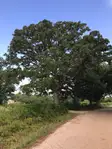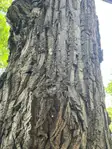
Current native
19
exact source areas
Home / Plants / Grow / Baldcypress
Taxodium distichum
Your local evidence lens
A genus split is not a placement verdict. Set a ZIP to read the local documented split.
The status above is computed from the cited rows below: independent recommendations can support a fire-resistant result, an avoid row can produce keep-away, and disagreement stays visible as conflict. Placement notes preserve each source’s own scheme rather than translating unlike rules into one scale. This is evidence about a plant, not permission to plant it in every part of the defensible space; Zone 0 remains noncombustible.
These are exact U.S. botanical-area records from the cited range source. Native and introduced describe biogeographic relationship, not fire performance or planting approval. Doubtful and extinct rows stay visible but do not count as current presence.
Current native
exact source areas
Current introduced
exact source areas
Qualified
doubtful or extinct source rows
Eastern United States Fire Performance Plant Selector
Source prints 5 · single-value meaning unresolved
Fire-resistant Landscape Plants for the Willamette Valley (EM 9103)
2–10 explicit range
USDA PLANTS Database — Plant Characteristics
Minimum 5a · no upper limit documented
Firewise Landscaping in North Carolina (E05-44596)
“Low flammability rating”
Fire-Resistant Landscaping in North Carolina (AG-874)
“low flammability”
Fire-resistant Landscape Plants for the Willamette Valley (EM 9103)
“fire-resistant plants that thrive in Willamette Valley growing conditions”
The trees profile lists Taxodium distichum as Bald Cypress. The profile prints USDA Hardiness Zone: 2–10.
North Carolina Extension Gardener Plant Toolbox — plant profiles and flammability ratings
“low flammability”
NC Toolbox facet capture lists "Taxodium distichum" under the low flammability tag.
Eastern United States Fire Performance Plant Selector
“NOT Firewise (4)”
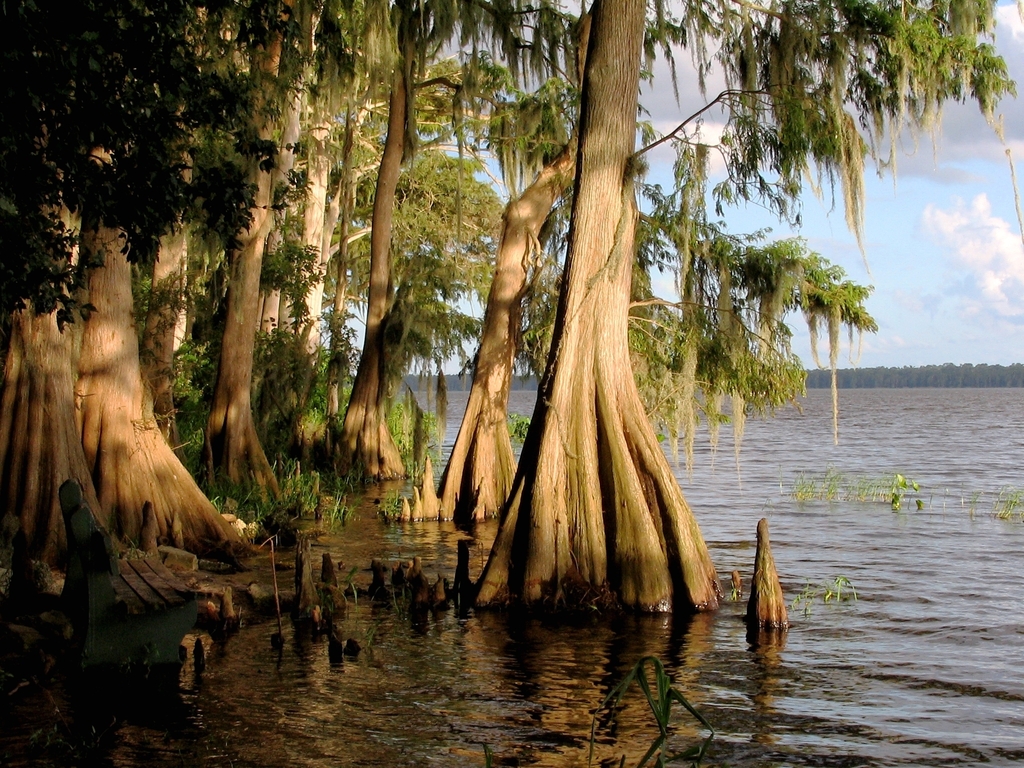
Develops knees in flooded soil-salt tolerant. Foliage resembles dawn redwood and hemlock.
Firewise Landscaping (OSU Extension Bulletin 921)
“H flammability”
Tolerates many soil types; urban tolerant; deciduous conifer.
Virginia Firescapes — Firewise Landscaping for Woodland Homes (430-300)
“H flammability”
Tolerates most soil types. Requires soil with low pH.
“MUY DESACONSEJADA”
Taxodium distichum is rated “MUY DESACONSEJADA” by the guide's qualitative IUF garden-suitability method. The method assumes species-specific care and integrates fire evidence with fuel structure, maintenance, origin, invasiveness, and expert fire-service experience.
“high”
The table rates Cypress, Bald — Taxodium distichum high for flammability hazard, defined as the ease a plant can burn at high temperatures for a prolonged time.
FLAMITS: FLAMmability plant traiTS database
“time to flaming (s): 6.83”
FLAMITS record 610; Ignitability measurement; plant part litter; fuel all; predrying yes; device calorimeter; site Belcher2016-1; sampling ND. Primary study Belcher2016: Belcher, C. M. (2016). The influence of leaf morphology on litter flammability and its utility for interpreting palaeofire. Philosophical Transactions of the Royal Society B: Biological Sciences, 371, 20150163.
“burning duration (s): 42.73”
FLAMITS record 625; Sustainability measurement; plant part litter; fuel all; predrying yes; device calorimeter; site Belcher2016-1; sampling ND. Primary study Belcher2016: Belcher, C. M. (2016). The influence of leaf morphology on litter flammability and its utility for interpreting palaeofire. Philosophical Transactions of the Royal Society B: Biological Sciences, 371, 20150163.
“maximum energy release rate (kW): 2.56”
FLAMITS record 640; Combustibility measurement; plant part litter; fuel all; predrying yes; device calorimeter; site Belcher2016-1; sampling ND. Primary study Belcher2016: Belcher, C. M. (2016). The influence of leaf morphology on litter flammability and its utility for interpreting palaeofire. Philosophical Transactions of the Royal Society B: Biological Sciences, 371, 20150163.
“calorific value (kcal/kg): 2087.47”
FLAMITS record 655; Combustibility measurement; plant part litter; fuel all; predrying yes; device calorimeter; site Belcher2016-1; sampling ND. Primary study Belcher2016: Belcher, C. M. (2016). The influence of leaf morphology on litter flammability and its utility for interpreting palaeofire. Philosophical Transactions of the Royal Society B: Biological Sciences, 371, 20150163.
“flame height (cm): 51.9”
FLAMITS record 13713; Combustibility measurement; plant part litter; fuel all; predrying yes; device burning bench; site Varner2021-1; sampling ND. Primary study Varner2021: Varner, J. M., Kane, J. M., Kreye, J. K., & Shearman, T. M. (2021). Litter Flammability of 50 Southeastern North American Tree Species: Evidence for Mesophication Gradients Across Multiple Ecosystems. Frontiers in Forests and Global Change, 4, 727042. Primary-study method: freshly fallen litter was oven-dried at 50–60°C for at least 24 hours to constant mass; each trial used a 15 g dry litter fuelbed, with five to seven trials per species.
“flaming duration (s): 74.4”
FLAMITS record 13714; Sustainability measurement; plant part litter; fuel all; predrying yes; device burning bench; site Varner2021-1; sampling ND. Primary study Varner2021: Varner, J. M., Kane, J. M., Kreye, J. K., & Shearman, T. M. (2021). Litter Flammability of 50 Southeastern North American Tree Species: Evidence for Mesophication Gradients Across Multiple Ecosystems. Frontiers in Forests and Global Change, 4, 727042. Primary-study method: freshly fallen litter was oven-dried at 50–60°C for at least 24 hours to constant mass; each trial used a 15 g dry litter fuelbed, with five to seven trials per species.
“smouldering duration (s): 230”
FLAMITS record 13715; Sustainability measurement; plant part litter; fuel all; predrying yes; device burning bench; site Varner2021-1; sampling ND. Primary study Varner2021: Varner, J. M., Kane, J. M., Kreye, J. K., & Shearman, T. M. (2021). Litter Flammability of 50 Southeastern North American Tree Species: Evidence for Mesophication Gradients Across Multiple Ecosystems. Frontiers in Forests and Global Change, 4, 727042. Primary-study method: freshly fallen litter was oven-dried at 50–60°C for at least 24 hours to constant mass; each trial used a 15 g dry litter fuelbed, with five to seven trials per species.
“burnt biomass (%): 62.3”
FLAMITS record 13716; Consumability measurement; plant part litter; fuel all; predrying yes; device burning bench; site Varner2021-1; sampling ND. Primary study Varner2021: Varner, J. M., Kane, J. M., Kreye, J. K., & Shearman, T. M. (2021). Litter Flammability of 50 Southeastern North American Tree Species: Evidence for Mesophication Gradients Across Multiple Ecosystems. Frontiers in Forests and Global Change, 4, 727042. Primary-study method: freshly fallen litter was oven-dried at 50–60°C for at least 24 hours to constant mass; each trial used a 15 g dry litter fuelbed, with five to seven trials per species.
“flame intensity (kW/m): 136”
FLAMITS record 13717; Combustibility measurement; plant part litter; fuel all; predrying yes; device burning bench; site Varner2021-1; sampling ND. Primary study Varner2021: Varner, J. M., Kane, J. M., Kreye, J. K., & Shearman, T. M. (2021). Litter Flammability of 50 Southeastern North American Tree Species: Evidence for Mesophication Gradients Across Multiple Ecosystems. Frontiers in Forests and Global Change, 4, 727042. Primary-study method: freshly fallen litter was oven-dried at 50–60°C for at least 24 hours to constant mass; each trial used a 15 g dry litter fuelbed, with five to seven trials per species.
“maximum flame temperature (°C): 509.37”
FLAMITS record 15578; Combustibility measurement; plant part leaves; fuel all; predrying yes; device burning bench; site Zhang2022-1; sampling january and march 2011. Primary study Zhang2022: Zhang, S., Cornwell, W. K., Zhao, W., van Logtestijn, R. S., Krab, E. J., Aerts, R., & Cornelissen, J. H. (2022). Experimental evidence that leaf litter decomposability and flammability are decoupled across gymnosperm species. Journal of Ecology, 111, 761-772.
“flaming duration (s): 1.6”
FLAMITS record 15619; Sustainability measurement; plant part leaves; fuel all; predrying yes; device burning bench; site Zhang2022-1; sampling january and march 2011. Primary study Zhang2022: Zhang, S., Cornwell, W. K., Zhao, W., van Logtestijn, R. S., Krab, E. J., Aerts, R., & Cornelissen, J. H. (2022). Experimental evidence that leaf litter decomposability and flammability are decoupled across gymnosperm species. Journal of Ecology, 111, 761-772.