Current native
27
exact source areas
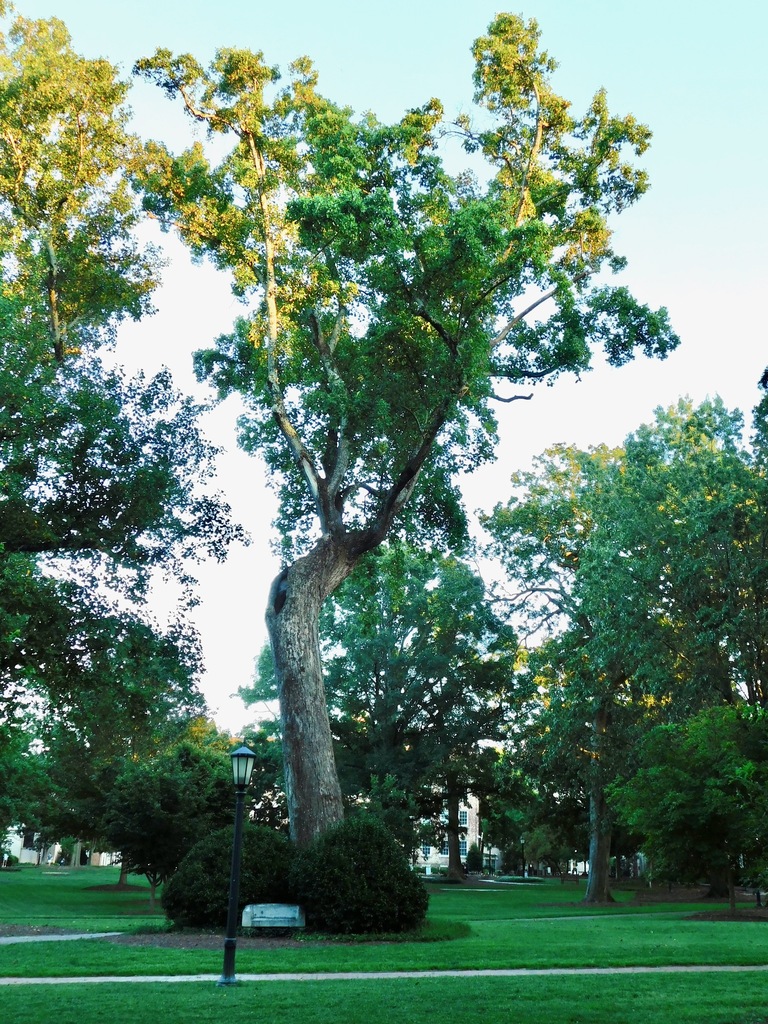
Home / Plants / Grow / Tulip-poplar
Liriodendron tulipifera
Your local evidence lens
A genus split is not a placement verdict. Set a ZIP to read the local documented split.
The status above is computed from the cited rows below: independent recommendations can support a fire-resistant result, an avoid row can produce keep-away, and disagreement stays visible as conflict. Placement notes preserve each source’s own scheme rather than translating unlike rules into one scale. This is evidence about a plant, not permission to plant it in every part of the defensible space; Zone 0 remains noncombustible.
These are exact U.S. botanical-area records from the cited range source. Native and introduced describe biogeographic relationship, not fire performance or planting approval. Doubtful and extinct rows stay visible but do not count as current presence.
Current native
exact source areas
Current introduced
exact source area
Qualified
doubtful or extinct source rows
Eastern United States Fire Performance Plant Selector
Source prints 5 · single-value meaning unresolved
Wildfire-resistant Landscape Plants for Michigan (Extension Bulletin E2948)
4–9 explicit range
USDA PLANTS Database — Plant Characteristics
Minimum 5a · no upper limit documented
Eastern United States Fire Performance Plant Selector
“Firewise (1)”
Very apical dominat tree as grow very columnar and is fas5t growing. Weak in strong winds, heavy wet snow and ice accumulation. In the magnolia family. Used for veneer in furniture manufacture.
Firewise Landscaping in North Carolina (E05-44596)
“Low flammability rating”
Firewise Landscaping (OSU Extension Bulletin 921)
“L flammability”
Does not tolerate poor growing conditions.
Virginia Firescapes — Firewise Landscaping for Woodland Homes (430-300)
“L flammability”
Does not tolerate poor growing conditions.
Fire-Resistant Landscaping in North Carolina (AG-874)
“low flammability”
FireSmart BC Plant Program — fire-resistant plant chart
“FireSmart-approved fire-resistant plant”
Landscaping Guidelines to Protect Your Home from Wildfire (SP685)
“listed Firewise plant”
Wildfire-resistant Landscape Plants for Michigan (Extension Bulletin E2948)
“considered wildfire-resistant and are recommended for Michigan’s climate”
Table 1 row: Liriodendron tulipifera (Tulip tree).
“RECOMENDADA”
Liriodendron tulipifera is rated “RECOMENDADA” by the guide's qualitative IUF garden-suitability method. The method assumes species-specific care and integrates fire evidence with fuel structure, maintenance, origin, invasiveness, and expert fire-service experience.
North Carolina Extension Gardener Plant Toolbox — plant profiles and flammability ratings
“low flammability”
NC Toolbox facet capture lists "Liriodendron tulipifera" under the low flammability tag.
Firewise Landscaping Plants (Maryland, New Jersey, and West Virginia editions)
“relatively resistant to fire”
Listed as Liriodendron tulipifera (Yellow Poplar, Tulip Poplar, Tulip Tree). The source says listed species exhibit stronger resistance to ignition by wildfires. Source comments: Does not tolerate poor growing conditions
Firewise Landscaping for Woodland Homes
“Large sized hardwoods: Yellow Poplar — Liriodendron tulipifera”
The booklet explicitly places this row in one or more suggested-plant sections.
FireWise Plants offer colorful choices for Fire Safe Gardens
“Liriodendron tulipifera — Tulip poplar — Does not tolerate poor growing conditions. Grows fairly rapidly.”
The page presents this row in its table of Firewise trees, shrubs, and groundcovers from which homeowners can choose.
Fire Resistance of Plants Master Database
“fire-resistance score 4 of 10”
Tree fire-protection classification in Hito to Shinrin (人と森林)
“中”
Table 10-2 prints ユリノキ in the medium fire-protection-power class. The Kagoshima reproduction says highly fire-protective trees can slow spread, promote upward dispersal of heat and smoke, and intercept flying embers.
FLAMITS: FLAMmability plant traiTS database
“flame height (cm): 5.48”
FLAMITS record 9222; Combustibility measurement; plant part litter; fuel all; predrying no; device burning bench; site Mola2014-1; sampling may and june. Primary study Mola2014: Mola, J. M., Varner, J. M., Jules, E. S., & Spector, T. (2014). Altered Community Flammability in Florida's Apalachicola Ravines and Implications for the Persistence of the Endangered Conifer Torreya taxifolia. Plos One, 9, 8.
“flaming duration (s): 48.6”
FLAMITS record 9239; Sustainability measurement; plant part litter; fuel all; predrying no; device burning bench; site Mola2014-1; sampling may and june. Primary study Mola2014: Mola, J. M., Varner, J. M., Jules, E. S., & Spector, T. (2014). Altered Community Flammability in Florida's Apalachicola Ravines and Implications for the Persistence of the Endangered Conifer Torreya taxifolia. Plos One, 9, 8.
“burnt biomass (%): 99.11”
FLAMITS record 9256; Consumability measurement; plant part litter; fuel all; predrying no; device burning bench; site Mola2014-1; sampling may and june. Primary study Mola2014: Mola, J. M., Varner, J. M., Jules, E. S., & Spector, T. (2014). Altered Community Flammability in Florida's Apalachicola Ravines and Implications for the Persistence of the Endangered Conifer Torreya taxifolia. Plos One, 9, 8.
“time to smouldering (s): 173.4”
FLAMITS record 9273; Ignitability measurement; plant part litter; fuel all; predrying no; device burning bench; site Mola2014-1; sampling may and june. Primary study Mola2014: Mola, J. M., Varner, J. M., Jules, E. S., & Spector, T. (2014). Altered Community Flammability in Florida's Apalachicola Ravines and Implications for the Persistence of the Endangered Conifer Torreya taxifolia. Plos One, 9, 8.