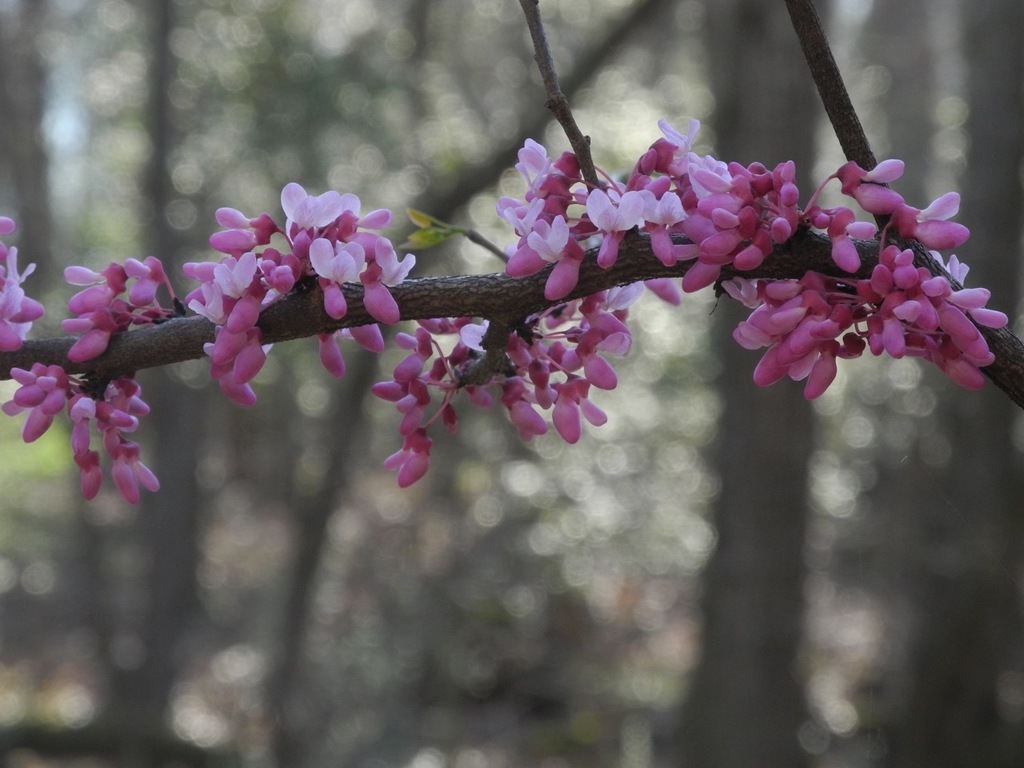
eastern redbud
Cercis canadensis
A genus split is not a placement verdict.
Is this one for your yard?
Enter your ZIP to see whether this is legal to plant in your state, and whether it survives your winter.
Eastern redbud is recommended for fire-resistant landscaping.
Across six assessments, every finding favors eastern redbud. Eastern redbud appears among the fire-resistant plants recommended by OSU, WSU, and University of Idaho Extension and by the Washington State Department of Natural Resources. NC State University, North Carolina Cooperative Extension, and the U.S. Fish and Wildlife Service gave it a low rating on their four-level scale in 2005. NC State Extension's 2025 guidance uses three flammability levels instead of four, and eastern redbud remains in the low category.
The other ratings reinforce that judgment. Ohio State University Extension assigns eastern redbud an L on its five-band scale, where L is one of the two ratings mapped to a recommendation. Virginia Cooperative Extension and Virginia Tech also assign it an L; on their three-point scale, L means less forest-fire prone and maps to a recommendation. The scales differ, but each institution places the tree on its lower-flammability side.
Eastern redbud is a low-water tree in the Fabaceae family that reaches about 30 feet at maturity. It is native across parts of the eastern and central United States and is listed for USDA zones 4a through 9b. Fire resistant does not mean unable to burn.
- Form
- tree
- Mature height
- ~30 ft
- Water need
- low
- Rated in
- Arkansas; British Columbia; Georgetown, Texas; Kentucky +16