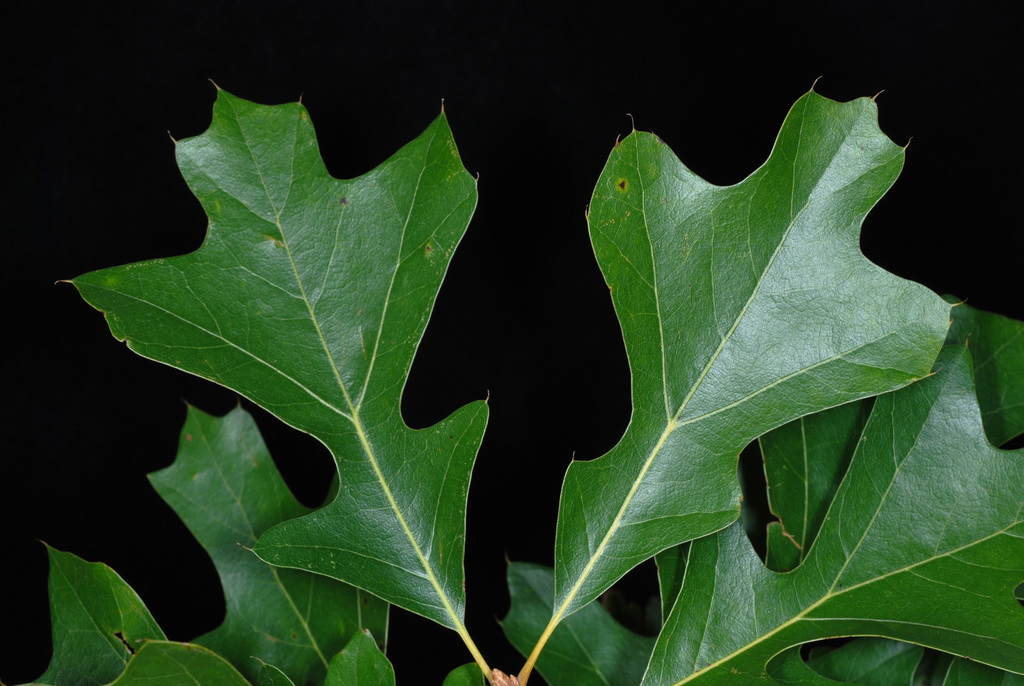
Enter your ZIP to see whether this is legal to plant in your state, and whether it survives your winter.
Oak is generally treated as fire resistant, but the guidance is not unanimous.
Five of six sources recommend oaks for firewise or wildfire-resistant landscaping. Extension services in Tennessee, Kentucky, Louisiana, and Michigan do so, as does King County’s forestry program in Washington. These are regional plant lists and defensible-space recommendations, not results from one shared experimental scale. Together, the published assessments support the fire-resistant verdict for Quercus as a genus.
Fire Safe Marin reaches the opposite conclusion for Marin County, California, placing oak among common fire-prone plants. Its guidance also says that placement, spacing, irrigation, and removal of dead material remain necessary. The sources cover different climates and use different recommendation systems, but they do not establish why Marin’s conclusion differs. For a homeowner, the sensible reading is that oak is broadly recommended, while local fire guidance can override that general classification. Species alone does not settle how a tree should be managed around a home.
Form
tree
Rated in
Alabama; Catalonia, Spain; Florida; Global +10
On this lot
1. Fire evidence and conditions
Fire evidence
Fire-resistant — location does not change the cited classification.
Alabama; Catalonia, Spain; Florida; Global; Greece; Kentucky; Louisiana; Marin County, California; Michigan / Great Lakes; South Carolina; Tennessee; Turkey; Yavapai County, Arizona; western WA
Maintenance
Typed publication scope: 9 scopes across 9 cited fire sources
The Alabama Forestry Commission's five-page AFC-FP-04 booklet is an Alabama publication and contains 31 printed suggested or fire-prone plant occurrences. FireApproved publishes 27 exact species or genus owners and holds one infraspecific form plus two named cultivars; this historical source scope does not establish current site suitability for a particular Alabama property.
Marin County (CA footprint); partial normalized coverage · 2019-01-01
The publication is explicitly limited to plants common to Marin County. FireApproved publishes 104 exact owners as Marin regional context while retaining its placement, spacing, irrigation, and maintenance boundary. It is not statewide California guidance or parcel suitability.
King County's current wildfire page links this list for the Puget Sound Basin. FireApproved publishes 82 exact source owners as basin context, not statewide Washington guidance or a site-specific recommendation.
LSU AgCenter calls these 31 ornamentals commonly used in Louisiana and recommended for Louisiana firewise landscaping efforts. FireApproved publishes 31 exact source owners, mostly at the source's genus grain. Undocumented curation remains corroborative and is not site suitability.
Michigan State University Extension Bulletin E2948 is explicitly a list of wildfire-resistant landscape plants for Michigan and includes a Michigan-native field. FireApproved publishes 221 exact GBIF owners from 226 represented source rows and holds 15 complex or non-exact rows. This dated publication scope is not a current site-suitability determination.
South Carolina Forestry Commission publishes this explicitly as its Fire Smart Plant List for South Carolina. FireApproved publishes 63 exact genus owners from 72 unique common-name labels; unsafe common-name mappings and duplicates are not broadened. The brochure calls the list non-inclusive and does not establish species-level or site-specific suitability.
University of Kentucky Cooperative Extension and the Kentucky Division of Forestry publish this small-woodland guidance for Kentuckians. FireApproved exposes its 13 exact species or genus owners while retaining the prose-example grain. It is not a scored or comprehensive state table.
University of Tennessee Extension SP685 is Tennessee landscape guidance and publishes 78 represented plant owners. Most table rows are a carrier of Virginia Firescapes rather than an independent rating; Tennessee source scope does not change that lineage or establish site suitability.
Yavapai County (AZ footprint); partial normalized coverage · 2025-03-14
University of Arizona Cooperative Extension authors Bulletin 34 for Yavapai County. FireApproved publishes 198 exact source owners from its resistant and prone tables and keeps the county boundary visible. County publication scope is regional Arizona context, never statewide scope.
2. Why this plant is relevant here
State distribution
Documented in MI.
Native range
Introduced / established
USDA hardiness
3. Legal, ecological, and broader status
Legal-list status
Seed-list status
Reported invasive here
Broader regional context
Federal context
How to read this page
The status above is computed from the cited rows below: independent recommendations can support a fire-resistant result, an avoid row can produce keep-away, and disagreement stays visible as conflict. Placement notes preserve each source’s own scheme rather than translating unlike rules into one scale. This is evidence about a plant, not permission to plant it in every part of the defensible space; Zone 0 remains noncombustible.
Conditions in the fire evidence
These describe tested or rated plant material. They are not horticultural maintenance instructions.
Placement rules below use each source's own distances or named zones, tied to its rating.
They are not interchangeable with the directory's current Zone 0 guidance.
Save Your Home from Wildfire: works well in defensible space [uk-forfs-home] (with its recommendation)
Landscaping in Florida with Fire in Mind: inside defensible space [ufifas-for71-defensible-space] (with its recommendation)
Landscaping Can Be Attractive & FIREWISE: TREES [SCFC Fire Smart plant-form sections] (with its recommendation)
Firewise Landscaping for Woodland Homes: Large sized hardwoods [Alabama Forestry Commission booklet section] (with its recommendation)
Les franges perimetrals de protecció contra els incendis …: page 4 species-selection panel [catalonia-perimeter-strip-maintain-remove] (with its recommendation)
Κανονισμός Πυροπροστασίας Ακινήτων εντός ή πλησίον δασικώ…: section 5.4.2, paragraph following Table 2δi [greece-2023-fire-resistant-examples] (with its recommendation)
Yanan Orman Alanlarının Rehabilitasyonu ve Yangına Direnç…: Yangın önleyici tesisler [yardop-6976-operational-fire-resistant-planting] (with its recommendation)
The evidence
Grouped by what each source concluded. Primary evidence rated the plant itself
(a lab, field program, or original curation); corroboration compiled or
republished another source's rating and resolves to its root lineage.
Listed as Oak — Quercus sp.. The bulletin says fire-resistant plants tend to resist ignition when irrigated and maintained, while fire-prone plants may ignite readily and burn intensely.
“güç yanan ve rüzgar perdesi oluşturan otsu veya odunsu bitkilerden — uygun meşe türleri”
The YARDOP circular directs managers to preserve, encourage, or use this named taxon in fire-resistant or slow-burning forest and fire-prevention plantings.
42 cited rows from this source; its identity, lineage and tier are stated once.
Primary study Polka2018: Pólka, M. (2018). Analysis of the heat and smoke release rate of selected undergrowth types. E3S Web of Conferences. Semarang, Indonesia.
Shared row context: Combustibility measurement; plant part litter; fuel all; predrying no; device calorimeter; site Polka2018-1; sampling ND.
“energy flux (kW/m²): 90”
FLAMITS record 10682.
“energy flux (kW/m²): 55”
FLAMITS record 10683.
“energy flux (kW/m²): 22”
FLAMITS record 10684.
“total heat release (MJ/m²): 12”
FLAMITS record 10685.
“total heat release (MJ/m²): 14”
FLAMITS record 10686.
“total heat release (MJ/m²): 18”
FLAMITS record 10687.
“smoke release rate (m²/s): 0.02”
FLAMITS record 10688.
“smoke release rate (m²/s): 0.07”
FLAMITS record 10689.
“smoke release rate (m²/s): 0.04”
FLAMITS record 10690.
“mass loss rate (g/s): 1.11”
FLAMITS record 10691.
“mass loss rate (g/s): 0.15”
FLAMITS record 10692.
“mass loss rate (g/s): 0.2”
FLAMITS record 10693.
Primary study Sotomayor2017: Sotomayor-Castellanos, J., & Carrillo-Gómez, M. (2017). Comportamiento al fuego de cinco especies mexicanas. Estudio comparativo. Investigación e Ingeniería de la Madera, 13, 4-38.
Shared row context: plant part wood; fuel dead; predrying yes; device burning bench; site Sotomayor2017-1; sampling ND.
“time to flaming (s): 29.86”
FLAMITS record 12957; Ignitability measurement.
“burnt biomass (%): 97.36”
FLAMITS record 12962; Consumability measurement.
Primary study Simms1967: Simms, D.L., & Law, M. (1967). The ignition of wet and dry wood by radiation. Combustion and Flame, 11, 377388.
Shared row context: Ignitability measurement; plant part wood; device radiant panel; site Simms1967-1; sampling ND.
Primary study Ji2003: Ji, J., Yang, L. -H., Chen, X., & Fan, W. (2003). Study on the effects of heat flux levels on heat release rate of wood. Journal Fire Science, 21, 5565.
Shared row context: plant part wood; fuel dead; predrying yes; device calorimeter; site Ji2003-1; sampling ND.