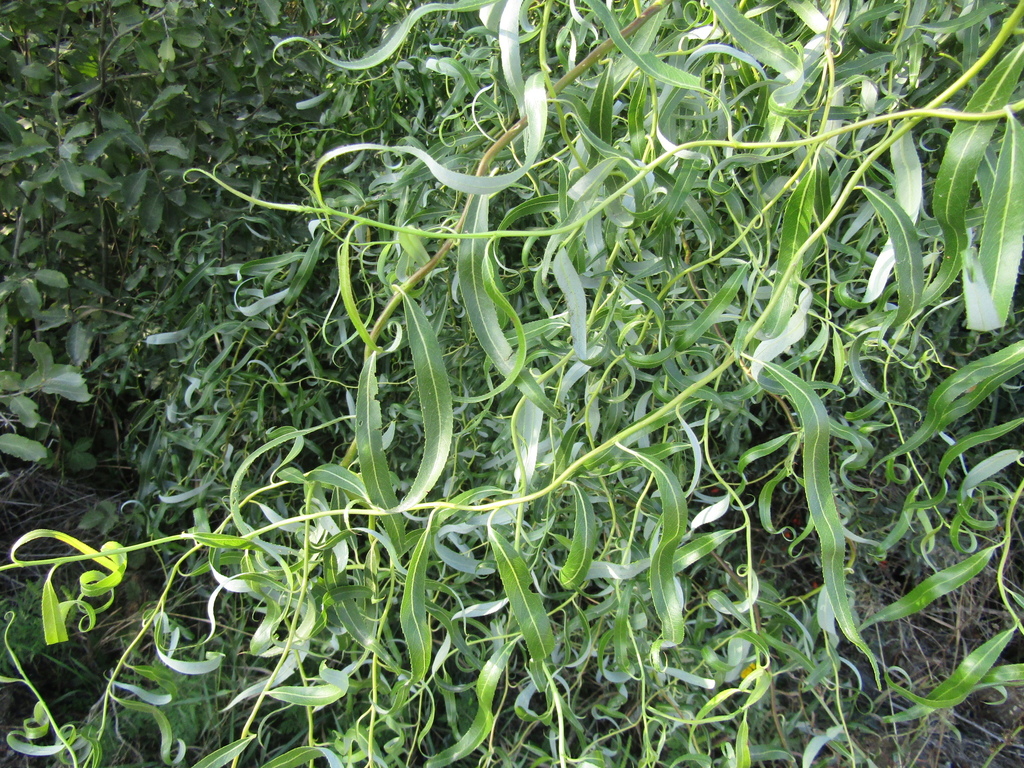
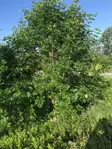
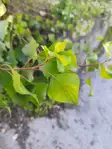
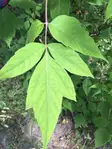
Virginia Cooperative Extension's publication opens with Virginia wildfire conditions, identifies its Virginia Firewise Landscaping Task Force, and labels plants native to Virginia. FireApproved publishes 306 exact source owners. Publication scope does not establish parcel suitability or current endorsement of this archived 2009 list.
2. Why this plant is relevant here
State distribution
Documented in CO, DC, DE, IL, MD, NJ, NY, OH, PA, UT, VA, WV.
Native range
Introduced / established
USDA hardiness
Only uncertain or inapplicable hardiness rows are cited; no primary zone is projected.
3. Legal, ecological, and broader status
Legal-list status
Seed-list status
Reported invasive here
Broader regional context
Federal context
How to read this page
The status above is computed from the cited rows below: independent recommendations can support a fire-resistant result, an avoid row can produce keep-away, and disagreement stays visible as conflict. Placement notes preserve each source’s own scheme rather than translating unlike rules into one scale. This is evidence about a plant, not permission to plant it in every part of the defensible space; Zone 0 remains noncombustible.
Plant hardiness evidence
These values describe the plant source. Your ZIP zone comes from the separate 2023 USDA
Plant Hardiness Zone Map. Whole-zone values stay whole-zone, and a single unresolved value
is not treated as a tolerance range. Different source boundaries stay separate: overlapping
statements are compared independently, while only ranges with no shared zone are called a conflict.
Source location: Cold Hardiness Zone field in the recovered selector record.
Not used for comparison: The recovered selector prints one Cold Hardiness Zone value but does not define it as a minimum threshold or a one-zone range.
Where its sources say to plant it
Placement rules below use each source's own distances or named zones, tied to its rating.
They are not interchangeable with the directory's current Zone 0 guidance.
Eastern United States Fire Performance Plant Selector: Landscape Zone 3 — 10–30 ft from the structure; thin vegetation, remove debris, and minimize plant massing [Fire Performance Plant Selector landscape zone] (with its recommendation)
Guía de pirojardinería: not suitable inside the 25-metre maximum-risk zone [girona-2020-iuf-25m-suitability] (with its avoid rating)
The evidence
Grouped by what each source concluded. Primary evidence rated the plant itself
(a lab, field program, or original curation); corroboration compiled or
republished another source's rating and resolves to its root lineage.
Salix matsudana is rated “DESACONSEJADA” by the guide's qualitative IUF garden-suitability method. The method assumes species-specific care and integrates fire evidence with fuel structure, maintenance, origin, invasiveness, and expert fire-service experience.
Mid-scale / conditional (1)
Low Flammability Plants directory — Fire and Emergency New Zealand (plant flammability testing at Lincoln University) · 2026 · original sourcePrimary evidenceLab-testedlineage: lincoln-nz-tree
“Moderate flammability”
Moderate flammability classification.
Listed without a rating (6)Corroboration (6 rows from 1 source)
6 cited rows from this source; its identity, lineage and tier are stated once.
Primary study Cui2020a: Cui, X., Paterson, A. M., Wyse, S. V., Alam, M. A., Maurin, K. J. L., Pieper, R., ... Curran, T. J. (2020a). Shoot flammability of vascular plants is phylogenetically conserved and related to habitat fire-proneness and growth form. Nature Plants, 6, 355-359.
Shared row context: plant part branches; fuel all; predrying yes; device grill; site Cui2020a-1; sampling ND.
“ignition frequency (%): 100”
FLAMITS record 1501; Ignitability measurement.
“maximum sample temperature (°C): 428.8”
FLAMITS record 1695; Combustibility measurement.
“burning duration (s): 7”
FLAMITS record 1889; Sustainability measurement.
“estimated burnt biomass (%): 23.3”
FLAMITS record 2083; Consumability measurement.
Primary study Shan2008: Shan, Y., Liu, N., & Shu, L. (2008). Flammability ranking of foliage species by factor analysis of physical and chemical pyric properties. Fire and Materials: An International Journal, 32, 371-382.
Shared row context: plant part leaves; fuel live; predrying no; site Shan2008-1; sampling ND.
“temperature at flaming (°C): 272”
FLAMITS record 12548; Ignitability measurement; device ignition temperature tester.
“calorific value (kcal/kg): 4657.5”
FLAMITS record 12549; Combustibility measurement; device calorimeter.