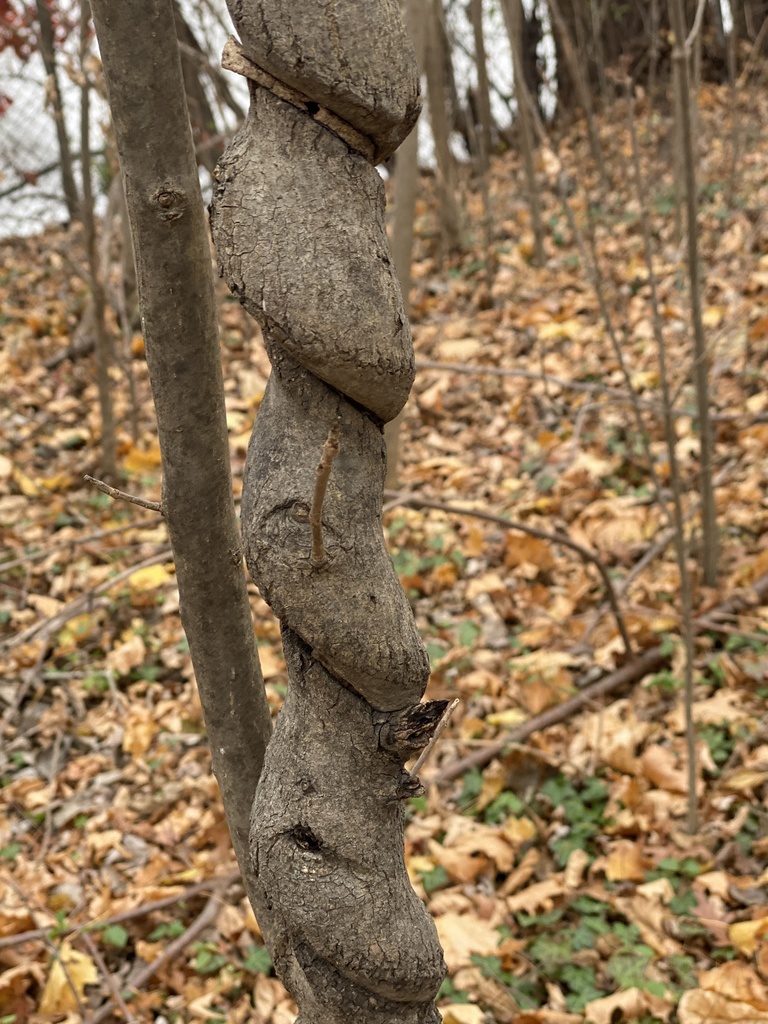
Enter your ZIP to see whether this is legal to plant in your state, and whether it survives your winter.
Fraxinus has an irrigated, green condition under test conditions. The same record is on-list in the cited evidence. This is a genus-rank umbrella record, so neither selected detail is silently assigned to every ash species. The record therefore keeps test context, recommendation, and taxonomic rank visible as separate parts of one source pack.
The evidence table keeps the taxonomic scope beside its source rows. Use the genus picker to reach individual species records when the planting decision requires finer evidence. That separation prevents the umbrella's condition and on-list result from becoming an unsupported species-level shortcut.
Form
tree
Rated in
Alabama; California; Louisiana; Marin County, California +9
On this lot
1. Fire evidence and conditions
Fire evidence
Fire-resistant — location does not change the cited classification.
Alabama; California; Louisiana; Marin County, California; Montana / Northern Rockies; Nevada / Great Basin; Oregon; South Carolina; Tennessee; Turkey; Wyoming; Yavapai County, Arizona; eastern US
Maintenance
Typed publication scope: 10 scopes across 10 cited fire sources
The Alabama Forestry Commission's five-page AFC-FP-04 booklet is an Alabama publication and contains 31 printed suggested or fire-prone plant occurrences. FireApproved publishes 27 exact species or genus owners and holds one infraspecific form plus two named cultivars; this historical source scope does not establish current site suitability for a particular Alabama property.
Marin County (CA footprint); partial normalized coverage · 2019-01-01
The publication is explicitly limited to plants common to Marin County. FireApproved publishes 104 exact owners as Marin regional context while retaining its placement, spacing, irrigation, and maintenance boundary. It is not statewide California guidance or parcel suitability.
LSU AgCenter calls these 31 ornamentals commonly used in Louisiana and recommended for Louisiana firewise landscaping efforts. FireApproved publishes 31 exact source owners, mostly at the source's genus grain. Undocumented curation remains corroborative and is not site suitability.
The UC Forest Products Laboratory says the guide covers properties of common California landscaping plants and was prepared for California fire agencies. FireApproved publishes 130 exact owners at historical California publication scope. The report is a 1997 compilation, not a current endorsement, site rating, or independent test of every row.
The April 2022 MontGuide explicitly presents fire-resistant species adapted to Montana. FireApproved publishes 92 exact plant records from the source while retaining excluded genus, family, and unresolved rows; the guide itself says not every listed species grows in every part of the state.
South Carolina Forestry Commission publishes this explicitly as its Fire Smart Plant List for South Carolina. FireApproved publishes 63 exact genus owners from 72 unique common-name labels; unsafe common-name mappings and duplicates are not broadened. The brochure calls the list non-inclusive and does not establish species-level or site-specific suitability.
University of Nevada Cooperative Extension compiled plants suited to Nevada climate zones and reported favorably by at least two upstream firewise lists. FireApproved publishes 126 exact source owners at Nevada publication scope. The source explicitly makes no independent flammability determination, so these rows remain corroborative.
University of Tennessee Extension SP685 is Tennessee landscape guidance and publishes 78 represented plant owners. Most table rows are a carrier of Virginia Firescapes rather than an independent rating; Tennessee source scope does not change that lineage or establish site suitability.
University of Wyoming Extension published these Firewise examples for its Wyoming rural-living audience and points readers to Firewise Wyoming. FireApproved publishes ten exact source owners while holding broad plant groups. State publication scope is not suitability across every basin.
Yavapai County (AZ footprint); partial normalized coverage · 2025-03-14
University of Arizona Cooperative Extension authors Bulletin 34 for Yavapai County. FireApproved publishes 198 exact source owners from its resistant and prone tables and keeps the county boundary visible. County publication scope is regional Arizona context, never statewide scope.
2. Why this plant is relevant here
State distribution
Documented in AZ.
Native range
Introduced / established
USDA hardiness
3. Legal, ecological, and broader status
Legal-list status
Seed-list status
Reported invasive here
Broader regional context
Federal context
How to read this page
The status above is computed from the cited rows below: independent recommendations can support a fire-resistant result, an avoid row can produce keep-away, and disagreement stays visible as conflict. Placement notes preserve each source’s own scheme rather than translating unlike rules into one scale. This is evidence about a plant, not permission to plant it in every part of the defensible space; Zone 0 remains noncombustible.
Conditions in the fire evidence
These describe tested or rated plant material. They are not horticultural maintenance instructions.
Placement rules below use each source's own distances or named zones, tied to its rating.
They are not interchangeable with the directory's current Zone 0 guidance.
Fire-Resistant Plants for Oregon Home Landscapes: Oregon [osu-frn6-oregon-regions] (with its recommendation)
Eastern United States Fire Performance Plant Selector: Master Plant DB row 598 [lwf-2024-fps-carrier] (with its recommendation)
Defensible Space Landscaping in the Urban/Wildland Interf…: Chapter 4, Landscape Vegetation Database [ucfpl-1997] (with its recommendation)
Landscaping Can Be Attractive & FIREWISE: TREES [SCFC Fire Smart plant-form sections] (with its recommendation)
Firewise Landscaping for Woodland Homes: Large sized hardwoods [Alabama Forestry Commission booklet section] (with its recommendation)
Yanan Orman Alanlarının Rehabilitasyonu ve Yangına Direnç…: Temel prensipler; Yangın önleyici tesisler [yardop-6976-operational-fire-resistant-planting] (with its recommendation)
The evidence
Grouped by what each source concluded. Primary evidence rated the plant itself
(a lab, field program, or original curation); corroboration compiled or
republished another source's rating and resolves to its root lineage.
“Fire-Resistant Plant Materials for Oregon”
· condition: green
Fraxinus species (Ash) is listed under “Trees—deciduous”. The guide says most listed plants require some irrigation during Oregon's dry summer months and must be maintained in a healthy condition.
Listed as Ash — Fraxinus sp.. The bulletin says fire-resistant plants tend to resist ignition when irrigated and maintained, while fire-prone plants may ignite readily and burn intensely.
“yangına dirençli olduğu tecrübe edilmiş dişbudak”
The YARDOP circular directs managers to preserve, encourage, or use this named taxon in fire-resistant or slow-burning forest and fire-prevention plantings.