Home / Guides / How to read a record / Shelterbelts again on the plains
Shelterbelts again on the plains
The row that stops the wind is also the seed. Nebraska Forest Service Conservation Roundtable: eastern redcedar is a native fixture providing wind and soil protection, and conservation plantings are named as a seed source. A listed action: identify alternative species for windbreaks. How Windbreaks Work: the species used in windbreaks are changing in parts of Nebraska; concerns over redcedar spread prompted trial testing of eastern white pine and ponderosa pine. Opened NFS pages do not print 40 mph. They print H. Juniperus virginiana currently computes as avoid and includes NE.
You are putting three rows of cedar on the north side of a Sandhills house because the wind is the problem. NFS is telling you the planting is also the spread. Rural Homes and Wildfire: fire-resistant plants have non-resinous woody material (avoid conifers). Zone 1 is the first 30 to 50 feet.
This is not a Nebraska doorway.
Why it matters
“Shelterbelt” is easy to hear as a firewise screen. The opened Roundtable is wind protection and a seed source in the same species. Windbreaks that don’t become wicks is Iowa’s PM 1717 spacing. Cedar glades versus cedar hedges is Missouri placement. This page is Nebraska’s conservation-planting seed source plus avoid conifers in the first 30 to 50 feet. Zone 0 is still not a planting list.
This site’s Nebraska plant evidence combines 326 occurrence records with two exact owners from the Eastern Nebraska Living With Fire avoid sentence. That regional row is not a statewide windbreak palette.
How it works
The seed source (Roundtable, NFS-hosted):
- Native. Fixture. Wood products, wind and soil protection, wildlife.
- Spread drivers include lack of fire, grazing and farm changes, drought, ownership patterns, and conservation plantings as a seed source.
- 2015: 333,134 forested acres of cedar, 22 percent of Nebraska’s forest. Greatest cedar trees/acre density among Midwestern states, as the page prints USFS FIA 2016.
- 2005–2010: about 25,000 acres/year of new cedar forest from former grassland; 13,000 acres/year of existing forest converting to cedar. Later years slowed.
- 2005–2015: cedar seedlings in forests doubled to nearly 275 million.
- Negative impact named: increased risk of catastrophic loss of life and property due to uncharacteristic wildfire.
- Action item: identify alternative species for windbreaks and educate landowners.
The wind (How Windbreaks Work):
- Protection is H, not a printed 40 mph. Windward 2H–5H. Leeward up to 30H.
- Example: 30-foot trees → 60 to 150 feet windward, up to 900 feet leeward.
- Farmsteads needing winter-wind protection: multiple-row, high density (about 60 to 80 percent).
- Species are changing because of redcedar spread. Trial testing: eastern white pine and ponderosa pine.
- Gaps funnel wind. Length at least 10:1 versus height.
The house (Rural Homes and Wildfire):
- Fire-resistant plants: little dead vegetation; open branching; non-resinous woody material (avoid conifers); high moisture; drought tolerance.
- Three zones; 100 to 150 feet minimum. Windswept exposures require greater distances.
- Zone 1: 30 to 50 feet. Low-growing fire-resistant plants; turf and groundcover watered. Occasional shrubs and trees at least 10 feet from the house.
- Zone 2: 50 to 100. Zone 3: 100 to 150, thinned natives.
This directory:
- Nebraska: 327 records. 202 on-list, 29 avoid, 4 conflict, 92 candidate.
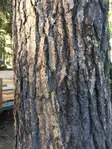
- Juniperus virginiana avoid, consensus, NE.
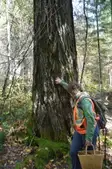
- Pinus ponderosa avoid, consensus, NE. Trial testing is not on-list at the wall.
- Pinus strobus avoid; USDA states on this record do not include NE.
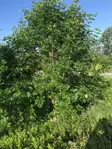
- Populus tremuloides on-list, NE.
- Fraxinus pennsylvanica on-list, NE.
- Quercus macrocarpa on-list, NE.
The paths
| Claim | Opened source | What it is not |
|---|---|---|
| Shelterbelts work | How Windbreaks Work: H multiples | A 40 mph sentence on the opened pages |
| Cedar is native and useful for wind | Roundtable: fixture, wind and soil protection | A Zone 1 planting |
| Conservation plantings are a seed source | Roundtable | A reason to add another female row by the house |
| Identify alternatives | Roundtable action list | A finished NFS substitute table on this page |
| Trial pines | How Windbreaks Work | Ponderosa as on-list |
| Avoid conifers in fire-resistant plants | Rural Homes and Wildfire | A farmstead-windbreak exemption for the first 30 feet |
| 333,134 acres / 22 percent | Roundtable, 2015 FIA as printed | A current 2026 recount |
| 326 Nebraska records | USDA distribution | A windbreak list |
What people mix up
- A farmstead windbreak with Zone 1.
- 40 mph (not printed on the opened NFS pages) with 2H to 30H.
- Iowa’s 50/75-foot pamphlet with Nebraska’s H mechanics.
- Missouri’s glade vs hedge with Nebraska’s conservation-planting seed source.
- Trial ponderosa / white pine with on-list at the house. Ponderosa is avoid. White pine is avoid and not on this site’s Nebraska list.
- Native cedar with on-list.
- 275 million seedlings with a five-foot planting.
- Montana’s MontGuide list with Nebraska’s Roundtable.
How to check
- Open the Roundtable page. Read “conservation plantings as a seed source.” Read “identify alternative species for windbreaks.”
- Open How Windbreaks Work. Read H. Read the species-are-changing sentence. Search the page for “40 mph.”
- Open Rural Homes and Wildfire. Read “avoid conifers.” Read Zone 1.
- Open Juniperus virginiana and Pinus ponderosa.
- Open Nebraska plant evidence. Distribution is not a windbreak recipe.
- Do not plant in Zone 0.
Limits
This page quotes opened NFS HTML (Conservation Roundtable, How Windbreaks Work, Rural Homes and Wildfire) and retains the archived Eastern Nebraska edition’s direct juniper/mugo-pine avoid sentence as a separate regional source. The Roundtable’s linked July 2016 issue-paper PDF returned HTTP 404 this session and is not quoted. NEMA Living With Fire: Western Nebraska timed out on download and is not quoted. Opened NFS pages do not print 40 mph; this page does not invent it. The 326 occurrence rows and two regional source owners are directory counts, not NFS statistics. Trial testing of pines is not a rated NFS plant table. Zone 0 is not a planting list.
Related records
- Juniperus virginiana
- Pinus ponderosa
- Nebraska plant evidence
- Windbreaks that don’t become wicks
- Cedar glades versus cedar hedges
- Glossary: Zone 0
Plant records this page rests on


Questions
Do plains shelterbelts still mean a redcedar row when the wind is high?
The opened Nebraska Forest Service pages do not print a 40 mph figure. How Windbreaks Work measures protection in multiples of tree height H: wind speed reductions 2H to 5H windward and up to 30H leeward. For 30-foot trees that is 60 to 150 feet upwind and up to 900 feet downwind. The same page: the species used in windbreaks are changing in parts of Nebraska because of eastern redcedar spread. The Conservation Roundtable lists conservation plantings as a seed source and calls for identifying alternative species for windbreaks. Rural Homes and Wildfire: fire-resistant plants have non-resinous woody material (avoid conifers). This directory’s Juniperus virginiana currently computes as avoid and includes NE.
Is the windbreak the wildfire problem?
The Roundtable names conservation plantings as one driver of spread, alongside lack of fire, grazing changes, drought, and land ownership. Negative impacts include increased risk of catastrophic loss of life and property due to uncharacteristic wildfire. Cedar was estimated at 333,134 forested acres in 2015, 22 percent of Nebraska’s forest. A farmstead windbreak is still a windbreak. It is also a seed source. It is not Zone 0.
Did NFS switch the windbreak to pine?
How Windbreaks Work says concerns over redcedar spread prompted trial testing of eastern white pine and ponderosa pine. Trial testing is not a foundation listing. Pinus ponderosa currently computes as avoid and includes NE. Pinus strobus currently computes as avoid and does not include NE on this site’s USDA states, so it is not on the Nebraska plant evidence page.
Is this a Nebraska doorway page?
No. The object is the shelterbelt as seed source versus the first 30 to 50 feet. Place claims sit on whereThisDiffers. The Nebraska plant surface keeps 326 occurrence records distinct from two Eastern Nebraska source owners.