Home / Guides / How to read a record / What did MSU actually rate
What did MSU actually rate
MSU rated a list, not the forest. MontGuide MT200101AG (Cheryl Moore-Gough; current as of 4/22): fire-resistant plants have supple, moist leaves and water-like sap. Junipers should not be used as a foundation plant. Not all species on this list will grow in all parts of the state. Thick-bark forest survivors — western larch, ponderosa pine, Douglas fir, bur oak — sit in the forest paragraph, not the landscape tables. This directory currently stores 92 plant records citing that MontGuide. Populus tremuloides currently computes as on-list, cites it, and includes MT. Pinus ponderosa currently computes as avoid and includes MT.
You are at 5,800 feet putting ponderosa against a cabin because the MontGuide said thick bark survives fire. That sentence is about a forest bole. The table is aspen and ash. MT202104AG (January 2021): location and arrangement take priority over whether plants are fire-resistant.
This is not a Montana doorway. Montana WUI code status is a different object.
Why it matters
“MSU rated it fire-resistant” is easy to hear as every Montana tree. The opened MontGuide is a binary landscape list plus a forest-ecology paragraph plus a not-everywhere warning. What survives hail, drought, and embers at 7,000 feet is Colorado. This page is what MSU printed. Zone 0 is still not a planting list.
This site’s Montana plant evidence currently holds 368 USDA-distribution records. That is occurrence, not the MontGuide table.
How it works
What the 4/22 MontGuide actually listed:
- Groundcovers and herbaceous plants, shrubs, and trees adapted to Montana and noted to be fire resistant.
- Fire-resistant: supple, moist leaves, water-like sap, low sap, no strong crush odor.
- Flammable: aromatic leaves, gummy or resinous sap. Juniper: volatile oils; beds accumulate dead material; not a foundation plant.
- Most deciduous shrubs are fire-resistant for foundation planting.
- Any plant will burn if it is dry enough and the fire slow enough and hot enough.
- Survival also depends on terpenes, oils or waxes, dead/dry accumulation, moisture-holding, season, fire speed and type.
- Conifers as a group more susceptible than deciduous species because of high resin content.
- Some references named a genus (ash). One row is an entire family (Rose). This site’s plant-source file excludes the family row from rating inputs. Family is metadata, not a taxon vote.
- Not all species grow in all parts of the state. See EB123 for site conditions. The authors refused “fast-growing” / “slow-growing” labels because too many variables affect rate of growth.
What it named without listing:
- Forest, thick corky bark: western larch, ponderosa pine, Douglas fir, bur oak — often escape severe fire damage.
- Forest, thin bark: alpine fir, Engelmann spruce, lodgepole pine, and many younger trees — more likely killed by ground fires.
- Those forest names are not the landscape tables.
The companion MontGuide (NEW 1/21):
- Location and arrangement take priority over fire-resistant vs not.
- Deciduous (aspen) often preferred over coniferous (juniper or fir).
- Home Ignition Zone: maintained area out 100 feet.
- Increase distance on a steep slope. Fire moves rapidly uphill.
- A property does not become fire proof.
- Points back to MT200101AG, revised 12/19. The plant PDF opened here is current as of 4/22.
This directory:
- Montana: 368 records. 214 on-list, 28 avoid, 9 conflict, 117 candidate.
- 92 records currently cite
msu-montguide-mt200101ag. - Populus tremuloides on-list, consensus, MT, stored MontGuide recommend row.
- Acer glabrum on-list, consensus, MT, stored MontGuide row (Rocky Mountain maple is on the tree table).
- Fraxinus pennsylvanica on-list, consensus, MT, stored MontGuide row.
- Pinus ponderosa avoid, consensus, MT. Not on the landscape table.
- Pseudotsuga menziesii avoid, majority, MT. Not on the landscape table.
- Larix occidentalis candidate, MT. Thick-bark forest sentence, not a landscape listing.
- Juniperus scopulorum avoid, MT. The foundation-plant warning is the genus.
The paths
| Claim | Opened source | What it is not |
|---|---|---|
| MSU listed fire-resistant plants adapted to Montana | MT200101AG tables | Every tree that survives a forest fire |
| Not all species grow everywhere | Same MontGuide, plus EB123 pointer | A single elevation list |
| Location beats the list | MT202104AG | A reason to skip Zone 0 |
| Thick bark in the forest | Larch, ponderosa, Douglas fir, bur oak paragraph | A foundation table |
| Juniper is not a foundation plant | MT200101AG | A Rocky Mountain juniper exemption |
| Aspen on-list | Computed + stored MontGuide row | A five-foot planting |
| Ponderosa avoid | Computed evidence | The forest-bark sentence |
| 92 citing records | This directory’s ingest | The family (Rose) row |
| 367 Montana records | USDA distribution | The MontGuide table |
What people mix up
- Forest survival (thick bark) with landscape listing.
- A statewide adapted list with a plant that grows at your elevation.
- Genus rows (ash, maple, birch) with every species in the genus.
- The Rosaceae family sentence with a vote on this site. It is stored as source archive, excluded from rating inputs.
- MT200101AG’s 4/22 plant PDF with MT202104AG’s pointer to the 12/19 revision. Both are opened. Dates differ.
- Montana WUI code with a plant table.
- Water-like sap with Minnesota resin. Same chemistry argument, different documents.
- On-list aspen with IBHS 0–5 feet.
How to check
- Open MT200101AG. Read the juniper foundation sentence. Read “not all species.” Read the landscape tables. Read the thick-bark forest paragraph separately.
- Open MT202104AG. Read “take priority.”
- Open Populus tremuloides and Pinus ponderosa.
- Open Montana plant evidence. Distribution is not the MontGuide.
- Do not plant in Zone 0.
Limits
This page quotes the opened MT200101AG PDF (current as of 4/22) and the opened MT202104AG PDF (NEW 1/21). store.msuextension.org did not resolve to a PDF this session; the extension-store.montana.edu assets did. EB123 is named by MT200101AG and is not opened here. 92 is a count of stored YAML rows citing this source as of this writing, not MSU’s table length. 367 is a USDA-distribution count, not a MontGuide statistic. The Rosaceae family row is excluded from rating inputs as documented on the plant-source file. Alpine fir is named in the forest paragraph; this site currently has no Abies lasiocarpa species record, and this page does not invent one. Engelmann spruce and lodgepole pine are named in that paragraph; their stored records do not currently include MT in USDA states, so they are not on the Montana plant evidence page. Zone 0 is not a planting list.
Related records
- Populus tremuloides
- Pinus ponderosa
- Juniperus scopulorum
- Montana plant evidence
- Montana WUI code status
- What survives hail, drought, and embers at 7,000 feet
- Glossary: Zone 0
Plant records this page rests on
-
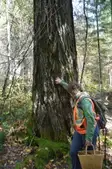 quaking aspen Populus tremuloides Fire-resistant
 -
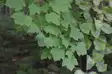 Rocky Mountain maple Acer glabrum Fire-resistant
 -
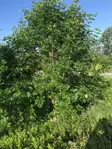 green ash Fraxinus pennsylvanica Fire-resistant
 -
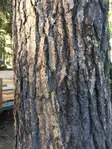 ponderosa pine Pinus ponderosa Keep away
 -
 Douglas-fir Pseudotsuga menziesii Keep away
 -
 western larch Larix occidentalis Fire-resistant
 -
 Rocky Mountain juniper Juniperus scopulorum Keep away
Questions
What did MSU actually rate?
A binary list of fire-resistant species adapted to Montana, not a grade for every tree that survives a forest fire. MontGuide MT200101AG (Cheryl Moore-Gough; current as of 4/22): fire-resistant plants have supple, moist leaves and water-like sap; sap content is low and does not have a strong odor when leaves are crushed. Flammable plants have aromatic leaves with gummy or resinous sap. Junipers should not be used as a foundation plant. Not all species on the list will grow in all parts of the state. This site currently stores 92 plant records citing that MontGuide. Populus tremuloides currently computes as on-list, cites it, and includes MT.
Why do elevations matter if the list is statewide?
Because the opened MontGuide says not all listed species grow in all parts of Montana and points to Tree and Shrub Selection Guide EB123 for growing-site conditions. Companion MontGuide MT202104AG (January 2021): location and arrangement of landscape vegetation should take priority over whether plants are fire resistant or not, and distance to structures should be increased on a steep slope. The plant table is not a Bozeman-to-Whitefish interchange.
Is ponderosa on the fire-resistant landscape table because it has thick bark?
No. MT200101AG names western larch, ponderosa pine, Douglas fir, and bur oak as thick-barked trees that often escape severe fire damage under forest conditions. Those names sit in the forest-ecology paragraph, not in the landscape tables. Pinus ponderosa currently computes as avoid and includes MT. Pseudotsuga menziesii currently computes as avoid and includes MT. Larix occidentalis currently computes as candidate and includes MT. Forest bark is not a foundation listing.
Is this a Montana doorway page?
No. The object is what the MontGuide listed versus what it named in the forest paragraph versus 92 stored rows. Place claims sit on whereThisDiffers. The Montana plant evidence list is USDA distribution, not this article. Montana WUI code status is a different page.