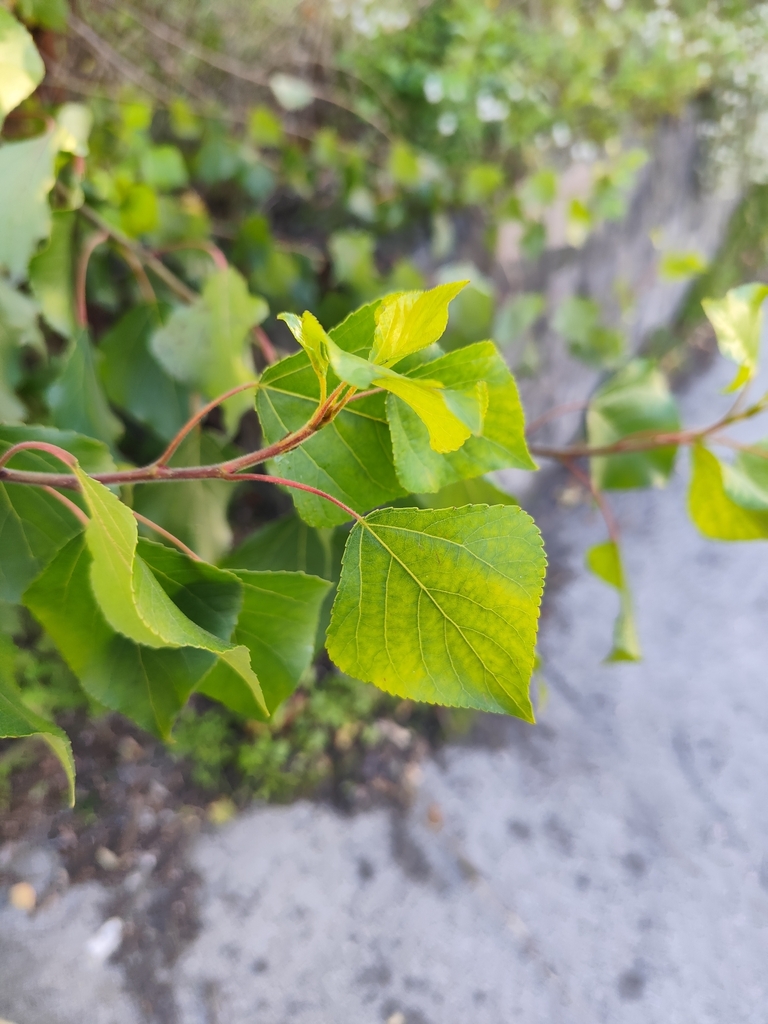
Home / Plants / Grow / Lombardy poplar
Lombardy poplar
Populus nigra 'Italica'
Your local evidence lens
Separate evidence questions, never one approval badge
A genus split is not a placement verdict. Set a ZIP to read the local documented split.
1. Fire evidence and conditions
- Fire evidence
- Fire-resistant — location does not change the cited classification.
- Fire-performance conditions
- No test or rating condition is normalized.
- Fire ecology context
- No section-reviewed fire-ecology context is normalized.
- Placement evidence
- 1 source placement record; source schemes remain separate.
- Evidence regions
- Global; New Zealand; Valencia, Spain / western Mediterranean; eastern US
- Maintenance
- No sourced horticultural maintenance assertion is normalized; fire-test conditions do not supply maintenance advice.
2. Why this plant is relevant here
- State distribution
- Documented in AL, AR, AZ, CA, CO, CT, DC, DE, FL, GA, IA, IL, IN, KS, KY, LA, MA, MD, ME, MI, MN, MO, MS, NC, ND, NE, NH, NJ, NM, NV, NY, OH, OK, OR, PA, RI, SC, SD, TN, TX, UT, VA, VT, WA, WI, WV, WY.
- Native range
- No current cited or legacy state native range is normalized.
- Introduced / established
- 1 sourced range or established record; set a location to match them. This is not an invasive warning.
- USDA hardiness
- Documented minimum 4a; no upper limit is documented.
3. Legal, ecological, and broader status
- Legal-list status
- Set a location for an exact legal-list result; source silence is not clearance.
- Seed-list status
- Set a location to compare the separate state noxious-weed seed layer.
- Reported invasive here
- No ecological invasive report is normalized; that does not prove noninvasiveness.
- Broader regional context
- Aggregate AK, HI, and L48 evidence is shown only as regional context, never as an exact-state finding.
- Federal context
- Federal designations remain separate from state legal-list results.
How to read this page
The status above is computed from the cited rows below: independent recommendations can support a fire-resistant result, an avoid row can produce keep-away, and disagreement stays visible as conflict. Placement notes preserve each source’s own scheme rather than translating unlike rules into one scale. This is evidence about a plant, not permission to plant it in every part of the defensible space; Zone 0 remains noncombustible.
- Form
- tree
- USDA hardiness
- Minimum 4a; upper limit not documented
- Mature height
- ~40 ft
- Light
- Full sun
- Water need
- high
- Grows in
- AL, AR, AZ, CA, CO, CT, DC, DE +39
- Rated in
- Global; New Zealand; Valencia, Spain / western Mediterranean; eastern US
- Family
- Salicaceae
- Evidence
- 19 cited sources
Plant hardiness evidence
-
Eastern United States Fire Performance Plant Selector
Source prints 5 · single-value meaning unresolved
-
USDA PLANTS Database — Plant Characteristics
Minimum 4a · no upper limit documented
Where its sources say to plant it
- Eastern United States Fire Performance Plant Selector: Landscape Zone 3 — 10–30 ft from the structure; thin vegetation, remove debris, and minimize plant massing
The evidence
Recommends (3)
-
Eastern United States Fire Performance Plant Selector
“Firewise (1)”
Single trunk with short horizontal branches. Used as tall screen but is short lived.
-
A quantitative assessment of shoot flammability for 60 tree and shrub species
“Low flammability category (Fig. 2)”
Shoot category from the paper's cluster analysis; samples were air-dried for 24 hours before testing.
-
Jardinería de baja inflamabilidad para las zonas de interfaz urbano-forestal
“recommended low-flammability species (trees, native/forest column)”
Listed without a rating (16)
-
FLAMITS: FLAMmability plant traiTS database
-
“time to flaming (s): 22.9”
FLAMITS record 668; Ignitability measurement; plant part leaves; fuel live; predrying no; device epiradiator; site Bianchi2015-1; sampling november to april. Primary study Bianchi2015: Bianchi, L. O., & Defossé, G. E. (2015). Live fuel moisture content and leaf ignition of forest species in Andean Patagonia, Argentina. International Journal of Wildland Fire, 24, 340-348.
-
“ignition frequency (%): 28.28”
FLAMITS record 674; Ignitability measurement; plant part leaves; fuel live; predrying no; device epiradiator; site Bianchi2015-1; sampling november to april. Primary study Bianchi2015: Bianchi, L. O., & Defossé, G. E. (2015). Live fuel moisture content and leaf ignition of forest species in Andean Patagonia, Argentina. International Journal of Wildland Fire, 24, 340-348.
-
“burning duration (s): 3.1”
FLAMITS record 680; Sustainability measurement; plant part leaves; fuel live; predrying no; device epiradiator; site Bianchi2015-1; sampling november to april. Primary study Bianchi2015: Bianchi, L. O., & Defossé, G. E. (2015). Live fuel moisture content and leaf ignition of forest species in Andean Patagonia, Argentina. International Journal of Wildland Fire, 24, 340-348.
-
“time to flaming (s): 22.9”
FLAMITS record 685; Ignitability measurement; plant part leaves; fuel live; predrying no; device epiradiator; site Bianchi2019-1; sampling summer. Primary study Bianchi2019: Bianchi, L. O., Oddi, F .J., Muñoz, M., & Defossé, G. E. (2019). Comparison of leaf moisture content and ignition characteristics among native species and exotic conifers in Northwestern Patagonia, Argentina. Forest Science, 65, 375-386.
-
“burning duration (s): 3.1”
FLAMITS record 703; Sustainability measurement; plant part leaves; fuel live; predrying no; device epiradiator; site Bianchi2019-1; sampling summer. Primary study Bianchi2019: Bianchi, L. O., Oddi, F .J., Muñoz, M., & Defossé, G. E. (2019). Comparison of leaf moisture content and ignition characteristics among native species and exotic conifers in Northwestern Patagonia, Argentina. Forest Science, 65, 375-386.
-
“flammability value: 1.2”
FLAMITS record 721; Ignitability measurement; plant part leaves; fuel live; predrying no; device epiradiator; site Bianchi2019-1; sampling summer. Primary study Bianchi2019: Bianchi, L. O., Oddi, F .J., Muñoz, M., & Defossé, G. E. (2019). Comparison of leaf moisture content and ignition characteristics among native species and exotic conifers in Northwestern Patagonia, Argentina. Forest Science, 65, 375-386.
-
“ignition frequency (%): 28.28”
FLAMITS record 739; Ignitability measurement; plant part leaves; fuel live; predrying no; device epiradiator; site Bianchi2019-1; sampling summer. Primary study Bianchi2019: Bianchi, L. O., Oddi, F .J., Muñoz, M., & Defossé, G. E. (2019). Comparison of leaf moisture content and ignition characteristics among native species and exotic conifers in Northwestern Patagonia, Argentina. Forest Science, 65, 375-386.
-
“calorific value (kcal/kg): 1719.69”
FLAMITS record 1118; Combustibility measurement; plant part wood; fuel live; predrying no; device calorimeter; site Cardoso2015-1; sampling summer. Primary study Cardoso2015: Cardoso, M. B., Ladio, A. H., Dutrus, S. M., & Lozada, M. (2015). Preference and calorific value of fuelwood species in rural populations in northwestern Patagonia. Biomass and Bioenergy, 81, 514-520.
-
“ignition frequency (%): 36.8”
FLAMITS record 1477; Ignitability measurement; plant part branches; fuel all; predrying yes; device grill; site Cui2020a-1; sampling ND. Primary study Cui2020a: Cui, X., Paterson, A. M., Wyse, S. V., Alam, M. A., Maurin, K. J. L., Pieper, R., ... Curran, T. J. (2020a). Shoot flammability of vascular plants is phylogenetically conserved and related to habitat fire-proneness and growth form. Nature Plants, 6, 355-359.
-
“maximum sample temperature (°C): 264.9”
FLAMITS record 1671; Combustibility measurement; plant part branches; fuel all; predrying yes; device grill; site Cui2020a-1; sampling ND. Primary study Cui2020a: Cui, X., Paterson, A. M., Wyse, S. V., Alam, M. A., Maurin, K. J. L., Pieper, R., ... Curran, T. J. (2020a). Shoot flammability of vascular plants is phylogenetically conserved and related to habitat fire-proneness and growth form. Nature Plants, 6, 355-359.
-
“burning duration (s): 3.3”
FLAMITS record 1865; Sustainability measurement; plant part branches; fuel all; predrying yes; device grill; site Cui2020a-1; sampling ND. Primary study Cui2020a: Cui, X., Paterson, A. M., Wyse, S. V., Alam, M. A., Maurin, K. J. L., Pieper, R., ... Curran, T. J. (2020a). Shoot flammability of vascular plants is phylogenetically conserved and related to habitat fire-proneness and growth form. Nature Plants, 6, 355-359.
-
“estimated burnt biomass (%): 14.7”
FLAMITS record 2059; Consumability measurement; plant part branches; fuel all; predrying yes; device grill; site Cui2020a-1; sampling ND. Primary study Cui2020a: Cui, X., Paterson, A. M., Wyse, S. V., Alam, M. A., Maurin, K. J. L., Pieper, R., ... Curran, T. J. (2020a). Shoot flammability of vascular plants is phylogenetically conserved and related to habitat fire-proneness and growth form. Nature Plants, 6, 355-359.
-
“ignition frequency (%): 18.5”
FLAMITS record 14370; Ignitability measurement; plant part branches; fuel all; predrying yes; device grill; site Wyse2016-3; sampling ND. Primary study Wyse2016: Wyse, S. V., Perry, G. L. W., O'Connell, D. M., Holland, P. S., Wright, M. J., Hosted, C. L., ... Curran, T. J. (2016). A quantitative assessment of shoot flammability for 60 tree and shrub species supports rankings based on expert opinion. International Journal of Wildland Fire, 25, 466-477.
-
“maximum sample temperature (°C): 84.4”
FLAMITS record 14430; Combustibility measurement; plant part branches; fuel all; predrying yes; device grill; site Wyse2016-3; sampling ND. Primary study Wyse2016: Wyse, S. V., Perry, G. L. W., O'Connell, D. M., Holland, P. S., Wright, M. J., Hosted, C. L., ... Curran, T. J. (2016). A quantitative assessment of shoot flammability for 60 tree and shrub species supports rankings based on expert opinion. International Journal of Wildland Fire, 25, 466-477.
-
“burning duration (s): 1.7”
FLAMITS record 14490; Sustainability measurement; plant part branches; fuel all; predrying yes; device grill; site Wyse2016-3; sampling ND. Primary study Wyse2016: Wyse, S. V., Perry, G. L. W., O'Connell, D. M., Holland, P. S., Wright, M. J., Hosted, C. L., ... Curran, T. J. (2016). A quantitative assessment of shoot flammability for 60 tree and shrub species supports rankings based on expert opinion. International Journal of Wildland Fire, 25, 466-477.
-
“estimated burnt biomass (%): 10”
FLAMITS record 14550; Consumability measurement; plant part branches; fuel all; predrying yes; device grill; site Wyse2016-3; sampling ND. Primary study Wyse2016: Wyse, S. V., Perry, G. L. W., O'Connell, D. M., Holland, P. S., Wright, M. J., Hosted, C. L., ... Curran, T. J. (2016). A quantitative assessment of shoot flammability for 60 tree and shrub species supports rankings based on expert opinion. International Journal of Wildland Fire, 25, 466-477.
-