Home / Guides / How to read a record / Black Hills ponderosa is an island forest
Black Hills ponderosa is an island forest
The forest on the ridge is not a foundation tree. SDSU Extension (reviewed by Logan Brown, South Dakota WUI specialist): the Black Hills National Forest averages 92 wildfires and about 7,507 acres a year over 30 years; about 70% lightning. Immediate zone 0–5 feet: fuel free. There are no fireproof plant species. Common flammable trees include junipers, pines, firs and spruces. Planting conifers is discouraged in the immediate and intermediate zones. Pinus ponderosa currently computes as avoid and includes SD.
You are in cabin country treating thick bark as a landscape pass. SDSU is writing the first 30 feet, not the forest. What MSU actually rated is the Montana version of that mix-up. FEIS Pinus ponderosa was not opened this session.
This is not a South Dakota doorway.
Why it matters
An island of Rocky Mountain pine in the plains still ignites at the wall the way pine ignites. SDSU’s Black Hills numbers are frequency, not a planting permit. North Dakota’s grass-fire page is prairie. This page is ponderosa cabins. Zone 0 is still not a planting list. SDSU already says 0–5 fuel free and no shredded bark.
This site’s South Dakota plant evidence currently holds 306 USDA-distribution records (192 on-list, 24 avoid, 3 conflict, 87 candidate). That is occurrence.
How it works
What SDSU actually says:
- Western South Dakota, particularly the Black Hills. Drought elevates risk.
- Black Hills NF, 30-year average: 92 fires, ~7,507 acres, ~70% lightning (USDA as the page cites).
- Embers and small flames are the primary causes of structure ignition.
- Home Ignition Zone out to 200 feet. Immediate 0–5. Intermediate 5–30. Extended 30–200.
- Immediate: fuel free. Hardscape against siding. No shredded bark or rubber mulch. Firewood 30 feet. Clear under decks.
- Intermediate: lean, clean, green. Grass 4 inches or less. Limbs 6–10 feet.
- No fireproof plant species. Junipers, pines, firs, spruces named as common flammable trees. Conifers discouraged in 0–30; consider replacing.
- Deciduous trees tend to be more fire resistant.
- SD Wildland Fire: home assessment and cost-share for thinning. Outdoor Campus West Firewise garden in Rapid City.
This directory:
- Pinus ponderosa avoid, consensus, SD.
- Juniperus scopulorum avoid, SD.
- Juniperus virginiana avoid, SD.
- Populus tremuloides on-list, SD.
The paths
| Claim | Opened source | What it is not |
|---|---|---|
| Black Hills burns | 92 fires / ~7,507 acres / year | A rare event |
| 0–5 fuel free | SDSU Immediate Zone | Ponderosa as a foundation native |
| No fireproof plants | SDSU | A Firewise species table on this page |
| Conifers discouraged 0–30 | SDSU | Forest-survival bark as a landscape listing |
| 305 South Dakota records | USDA distribution | An SDWF plant list |
What people mix up
- Forest ponderosa that lives through fire with on-list at 10 feet.
- Montana’s thick-bark paragraph with SDSU’s 0–30 conifer discouragement.
- North Dakota grass with Black Hills pine.
- A live DPS Wildland Fire article (JS shell this session) as quoted.
- FEIS (not opened) as quoted.
How to check
- Open SDSU. Read 92, 7,507, no fireproof, conifers discouraged.
- Open Pinus ponderosa.
- Open what MSU actually rated if you are holding a thick-bark argument.
- Open South Dakota plant evidence.
- Do not plant in Zone 0.
Limits
This page quotes opened SDSU HTML reviewed by Logan Brown. Live South Dakota Wildland Fire DPS article HTML returned an empty shell this session and is not quoted. FEIS Pinus ponderosa was not opened. 305 is a count of stored USDA-distribution rows as of this writing. SDSU cites USDA for the 92 / 7,507 figures; this page does not re-open the Forest Service table. Zone 0 is not a planting list.
Related records
- Pinus ponderosa
- Juniperus scopulorum
- South Dakota plant evidence
- What MSU actually rated
- Glossary: Zone 0
- Glossary: ember
Plant records this page rests on
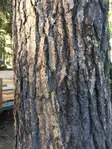
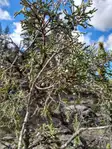
Questions
Is Black Hills ponderosa a firewise cabin tree?
Not in the first 30 feet on the opened SDSU page. SDSU Extension, reviewed by Logan Brown of South Dakota Wildland Fire: keep the immediate zone (0–5 feet) fuel free; hardscape against siding; do not use shredded bark or rubber mulch near structures. Intermediate zone 5–30 feet lean, clean, and green. There are no fireproof plant species. Common flammable trees include junipers, pines, firs and spruces. Planting conifers is discouraged in the immediate and intermediate zones; if they are already present, consider replacing them. This directory’s Pinus ponderosa currently computes as avoid and includes SD.
Is a ponderosa forest that survives fire the same as a landscape listing?
No. SDSU is writing the Home Ignition Zone, not a forest-ecology bark paragraph. Montana’s MontGuide names ponderosa among thick-bark forest survivors and still keeps it off the landscape table. See what MSU actually rated. Do not import that forest sentence onto a Spearfish cabin.
Does South Dakota print a species table on this page?
The opened SDSU page says South Dakota Wildland Fire recommends specific low flammability plants for the immediate and intermediate zones, then names functional groups (junipers, pines, firs, spruces) rather than a genus-by-genus table. Live SD Wildland Fire DPS HTML did not return a body this session. This site’s South Dakota plant evidence page currently holds 305 USDA-distribution records.
Is this a South Dakota doorway page?
No. The object is Black Hills fire frequency versus ponderosa as a 0–30-foot planting. Place claims sit on whereThisDiffers. The South Dakota plant evidence list is USDA distribution, not this article.