United States / Grow / Rosemary

Rosemary (Salvia rosmarinus)
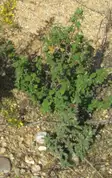
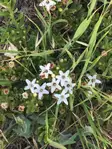
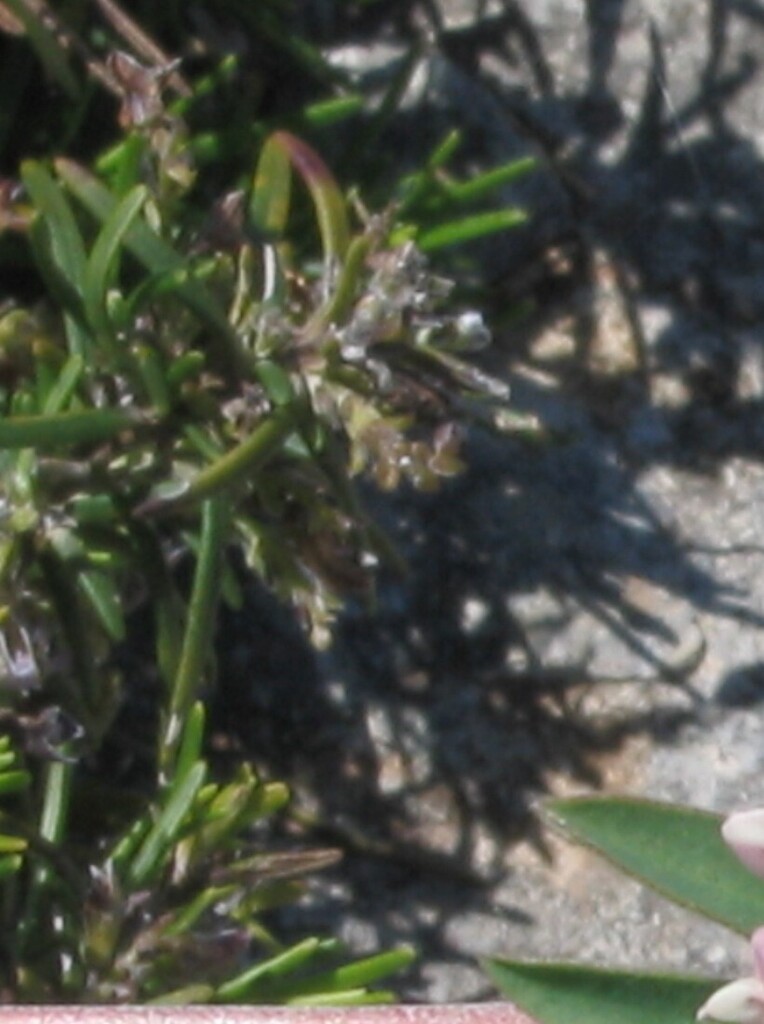
Photo: (c) zebedeugalinha, some rights reserved (CC BY) (CC BY), via iNaturalist. Species-typical, not necessarily this cultivar.

Rosemary

Salvia rosmarinus · Lamiaceae · all Salvia records · Wikipedia

View Saved

Is this one for your yard?

Enter your ZIP to see whether this is legal to plant in your state, and whether it survives your winter.

Rosemary is not reliably fire resistant: five sources warn against it, while one laboratory-based program rates it low/moderate.

The City of Grants Pass and UC Master Gardeners of Butte County both list rosemary as highly flammable. Fire Safe Marin calls it fire-prone in Marin County. A USDA Forest Service and state Firewise selector for the eastern United States gives it a Not Firewise rating of 4, the least favorable category on its four-point scale. In Valencia, the Generalitat Valenciana names rosemary among the most flammable species and says it dries rapidly in summer.

Fire and Emergency New Zealand reaches the opposing result. Its program classifies rosemary as having low/moderate flammability on a seven-level scale grounded in laboratory testing of shoots. That test addresses the flammability of sampled shoots under its method. It does not reconcile the finding with the warnings issued in Oregon, Butte County, the eastern United States, Valencia, and Marin County. The sources use different methods, scales, and regional premises, but they do not establish why their conclusions differ.

The New Zealand result means rosemary cannot be called uniformly hazardous under every form of assessment. Still, the repeated highly flammable, fire-prone, and Not Firewise findings make “fire resistant” an unreliable description. Fire Safe Marin also says placement, spacing, irrigation, and removal of dead material remain necessary within its plant guidance.

Fire-resistant shrubs instead

Form
shrub
Region
France; Italy; Mediterranean France; New Zealand; Poland; Spain; Valencia, Spain
Rated in
Austin, Texas; Butte County and California's North State; California; Catalonia, Spain +10
On this lot

1. Fire evidence and conditions

Fire evidence
Mixed evidence — location does not change the cited classification.
Placement evidence
6 source placement records; source schemes remain separate.
Evidence regions
Austin, Texas; Butte County and California's North State; California; Catalonia, Spain; Georgetown, Texas; Global; Marin County, California; Mediterranean France / Provence; New Zealand; OR; Southern California; Valencia, Spain / western Mediterranean; Yavapai County, Arizona; eastern US
Typed publication scope: 6 scopes across 6 cited fire sources
  • Fire-Resistant Plants Common to Marin County · Official scoped edition
    • Marin County (CA footprint); partial normalized coverage · 2019-01-01

      The publication is explicitly limited to plants common to Marin County. FireApproved publishes 104 exact owners as Marin regional context while retaining its placement, spacing, irrigation, and maintenance boundary. It is not statewide California guidance or parcel suitability.

  • Defensible Space Landscaping in the Urban/Wildland Interface: A Compilation of Fire Performance Ratings of Residential Landscape Plants · Official scoped edition
    • CA; partial normalized coverage · 1997-07-01

      The UC Forest Products Laboratory says the guide covers properties of common California landscaping plants and was prepared for California fire agencies. FireApproved publishes 130 exact owners at historical California publication scope. The report is a 1997 compilation, not a current endorsement, site rating, or independent test of every row.

  • Firewise Plant Guide · Official scoped edition
    • Sun City Texas, Georgetown (TX footprint); partial normalized coverage · 2015-01-14

      The guide is authored for the Sun City Texas community in Georgetown. FireApproved publishes 142 exact owners only as community-level context. It is an archived HOA exhibit with unknown rating lineage, not a current statewide Texas source or an independent Tier 1 determination.

  • Firewise Landscaping (Travis County) · Official scoped edition
    • Travis County, Austin area (TX footprint); partial normalized coverage · 2024-01-16

      Texas A&M AgriLife Extension publishes this page through its Travis County horticulture program. FireApproved publishes 56 exact owners and retains the source's zone and warning conditions. This is county/Austin regional context, not a second statewide Texas table or site clearance.

  • Firewise: Fire Resistant Plants · Official scoped edition
    • Butte County and California's North State (CA footprint); partial normalized coverage · 2023-06-02

      UC Master Gardeners of Butte County frame the article for North State residents. FireApproved publishes only the two taxonomically exact owners from its prose examples and keeps them as northern California regional context. Generic maples, broom, Echinacea, creeping thyme, and Oregon grape remain held rather than being projected to species. The article is not a statewide list or site clearance.

  • Fire-Resistant and Fire-Prone Plants Common to Yavapai County (Bulletin 34) · Official scoped edition
    • Yavapai County (AZ footprint); partial normalized coverage · 2025-03-14

      University of Arizona Cooperative Extension authors Bulletin 34 for Yavapai County. FireApproved publishes 198 exact source owners from its resistant and prone tables and keeps the county boundary visible. County publication scope is regional Arizona context, never statewide scope.

2. Why this plant is relevant here

Introduced / established
1 sourced range or established record. This is not an invasive warning.

3. Legal, ecological, and broader status

How to read this page

The status above is computed from the cited rows below: independent recommendations can support a fire-resistant result, an avoid row can produce keep-away, and disagreement stays visible as conflict. Placement notes preserve each source’s own scheme rather than translating unlike rules into one scale. This is evidence about a plant, not permission to plant it in every part of the defensible space; Zone 0 remains noncombustible.

Native and introduced range evidence

These are exact U.S. botanical-area records from the cited range source. Native and introduced describe biogeographic relationship, not fire performance or planting approval. Doubtful and extinct rows stay visible but do not count as current presence.

Current native

0

exact source areas

Current introduced

1

exact source area

Qualified

0

doubtful or extinct source rows

1 introduced source area · World Checklist of Vascular Plants, version 16 v16, as of 2026-06-04
  • Texas (TX)

The lossless worldwide derivative is retained once in the research corpus; object pages repeat only exact U.S. areas needed by the local lens. The JSON twin carries the same page assertions.

Where its sources say to plant it

Placement rules below use each source's own distances or named zones, tied to its rating. They are not interchangeable with the directory's current Zone 0 guidance.

The evidence

Grouped by what each source concluded. Primary evidence rated the plant itself (a lab, field program, or original curation); corroboration compiled or republished another source's rating and resolves to its root lineage.

Recommends (1)

Avoids (10)

Corroboration (6 rows from 6 sources)
  • Fire-Resistant vs. Highly Flammable Plants — City of Grants Pass · original source Corroboration Compilation lineage: pnw590-tree

    “listed highly flammable”

  • Fire-Resistant Plants Common to Marin County — Fire Safe Marin · 2019 · original source Corroboration Expert-curated lineage: partially-independent

    “listed as fire-prone”

    Fire Safe Marin lists this taxon among common fire-prone plants in Marin County.

  • Living More Safely in the Chaparral-Urban Interface — USDA Forest Service, Pacific Southwest Forest and Range Experiment Station (Klaus W. H. Radtke) · General Technical Report PSW-67 · original source Corroboration Compilation lineage: la-arboretum-tree

    “Low; decreases with increase in fuel — Prostrate rosemary”

    Table 5 rates this low-growing southern California landscape entry by fuel volume, inherent plant flammability, and ease of fire spread.

  • Fire-Resistant and Fire-Prone Plants Common to Yavapai County (Bulletin 34) — University of Arizona Cooperative Extension, Yavapai County · v1.2 · original source Corroboration Expert-curated lineage: unknown

    “Fire-Prone Plants”

    Listed as Rosemary — Rosmarinus officinalis. The bulletin says fire-resistant plants tend to resist ignition when irrigated and maintained, while fire-prone plants may ignite readily and burn intensely.

  • Firewise Landscaping (Travis County) — Texas A&M AgriLife Extension, Travis County · page modified 2024-01-16 · original source Corroboration Compilation lineage: unknown

    “High Flammability Plants to Consider Avoiding for all Zones”

    Listed as Rosemary, Upright — Salvia rosmarinus; Rosemary, trailing — Salvia rosmarinas Var. prostrates; Rosemary — Salvia rosmarinus. The page says Zone 1 entries should be restricted to zones 2 or 3; all-zone entries are highly flammable due to volatile oils or growth habit.

  • Firewise Plant Guide — Sun City Texas Firewise Group · updated January 14, 2015 · original source Corroboration HOA exhibit lineage: unknown

    “high”

    The table rates Rosmary, Upright — Rosmarinnus officinalis; Rosemary, Trailing — Rosmarinas offcinalis var prostratus high for flammability hazard, defined as the ease a plant can burn at high temperatures for a prolonged time.

Mid-scale / conditional (2)

Corroboration (1 rows from 1 source)
Listed without a rating (185)
Corroboration (184 rows from 1 source)
  • FLAMITS: FLAMmability plant traiTS database — Dryad / Global Ecology and Biogeography · Dryad version 9 · original source Corroboration Trait database lineage: meta-aggregator

    184 cited rows from this source; its identity, lineage and tier are stated once.

    • Primary study Alessio2008b: Alessio, G. A., Peñuelas, J., Llusià, J., Ogaya, R., Estiarte, M., & De Lillis, M. (2008). Influence of water and terpenes on flammability in some dominant Mediterranean species. International Journal of Wildland Fire, 17, 274.

      Shared row context: plant part leaves; fuel live; predrying no; device epiradiator; site Alessio2008a-1.

      • “smouldering duration (s): 383.98”

        FLAMITS record 165; Sustainability measurement; sampling november.

      • “smouldering duration (s): 273.37”

        FLAMITS record 166; Sustainability measurement; sampling february.

      • “smouldering duration (s): 258.49”

        FLAMITS record 167; Sustainability measurement; sampling may.

      • “smouldering duration (s): 291.95”

        FLAMITS record 168; Sustainability measurement; sampling june.

      • “smouldering duration (s): 315.45”

        FLAMITS record 169; Sustainability measurement; sampling august.

      • Shared measurement context: Ignitability measurement; sampling november.

        • “temperature at smouldering (°C): 358.23”

          FLAMITS record 190.

        • “temperature at smoke (°C): 127.13”

          FLAMITS record 215.

        • “time to smoke (s): 120.25”

          FLAMITS record 240.

      • Shared measurement context: Ignitability measurement; sampling february.

        • “temperature at smouldering (°C): 254.9”

          FLAMITS record 191.

        • “temperature at smoke (°C): 138.73”

          FLAMITS record 216.

        • “time to smoke (s): 102.68”

          FLAMITS record 241.

      • Shared measurement context: Ignitability measurement; sampling may.

        • “temperature at smouldering (°C): 174.15”

          FLAMITS record 192.

        • “temperature at smoke (°C): 108.48”

          FLAMITS record 217.

        • “time to smoke (s): 69.36”

          FLAMITS record 242.

      • Shared measurement context: Ignitability measurement; sampling june.

        • “temperature at smouldering (°C): 282.77”

          FLAMITS record 193.

        • “temperature at smoke (°C): 127.98”

          FLAMITS record 218.

        • “time to smoke (s): 84”

          FLAMITS record 243.

      • Shared measurement context: Ignitability measurement; sampling august.

        • “temperature at smouldering (°C): 292.93”

          FLAMITS record 194.

        • “temperature at smoke (°C): 146.34”

          FLAMITS record 219.

        • “time to smoke (s): 102.8”

          FLAMITS record 244.

    • Primary study Cui2020a: Cui, X., Paterson, A. M., Wyse, S. V., Alam, M. A., Maurin, K. J. L., Pieper, R., ... Curran, T. J. (2020a). Shoot flammability of vascular plants is phylogenetically conserved and related to habitat fire-proneness and growth form. Nature Plants, 6, 355-359.

      Shared row context: plant part branches; fuel all; predrying yes; device grill; site Cui2020a-1; sampling ND.

      • “ignition frequency (%): 100”

        FLAMITS record 1496; Ignitability measurement.

      • “maximum sample temperature (°C): 208.3”

        FLAMITS record 1690; Combustibility measurement.

      • “burning duration (s): 7”

        FLAMITS record 1884; Sustainability measurement.

      • “estimated burnt biomass (%): 15”

        FLAMITS record 2078; Consumability measurement.

    • “time to flaming (s): 39.23”

      FLAMITS record 4054; Ignitability measurement; plant part litter; fuel live; predrying no; device epiradiator; site Grigulis2005-1; sampling february. Primary study Grigulis2005: Grigulis, K., Lavorel, S., Davies, I., Dossantos, A., Lloret, F., & Vilà, M. (2005). Landscape positive feedbacks between fire and expansion of a tussock grass in Mediterranean shrublands. Global Change Biology, 11, 1042-1053.

    • Primary study Mancilla2021: Mancilla-Leytón, J. M., Hernando, C., Cambrollé, J., Muñoz-Vallés, S., Pino-Mejías, R., & Vicente, Á. M. (2021). Can Shrub Flammability be Affected by Goat Grazing? Flammability Parameters of Mediterranean Shrub Species under Grazing. Sustainability, 13, 1555.

      Shared row context: plant part twigs; fuel live; site Mancilla2021-1.

      • Shared measurement context: Ignitability measurement; predrying no; device epiradiator; sampling summer.

        • “time to flaming (s): 25”

          FLAMITS record 7529.

        • “time to flaming (s): 16”

          FLAMITS record 7530.

        • “time to flaming (s): 26”

          FLAMITS record 7531.

        • “flammability value: 3”

          FLAMITS record 7559.

        • “flammability value: 4”

          FLAMITS record 7560.

        • “flammability value: 3”

          FLAMITS record 7561.

      • Shared measurement context: Sustainability measurement; predrying no; device epiradiator; sampling summer.

        • “burning duration (s): 15”

          FLAMITS record 7556.

        • “burning duration (s): 17”

          FLAMITS record 7557.

        • “burning duration (s): 14”

          FLAMITS record 7558.

      • Shared measurement context: Combustibility measurement; predrying yes; device calorimeter; sampling spring.

        • “calorific value (kcal/kg): 5426.58”

          FLAMITS record 7566.

        • “calorific value (kcal/kg): 5631.99”

          FLAMITS record 7571.

        • “calorific value (kcal/kg): 5421.8”

          FLAMITS record 7576.

    • Primary study Martin1989: Martín, E., & Miguel, L. (1989). Inflamabilidad y energía de las especies de sotobosque

      Shared row context: plant part twigs; fuel live; predrying yes; device epiradiator.

      • Shared measurement context: Ignitability measurement; site Martin1989-5; sampling january.

        • “time to flaming (s): 24”

          FLAMITS record 7803.

        • “time to flaming (s): 22”

          FLAMITS record 7815.

        • “ignition frequency (%): 100”

          FLAMITS record 8198.

        • “ignition frequency (%): 100”

          FLAMITS record 8210.

      • Shared measurement context: Ignitability measurement; site Martin1989-5; sampling february.

        • “time to flaming (s): 30”

          FLAMITS record 7804.

        • “time to flaming (s): 28”

          FLAMITS record 7816.

        • “ignition frequency (%): 98”

          FLAMITS record 8199.

        • “ignition frequency (%): 97”

          FLAMITS record 8211.

      • Shared measurement context: Ignitability measurement; site Martin1989-5; sampling march.

        • “time to flaming (s): 38”

          FLAMITS record 7805.

        • “time to flaming (s): 40”

          FLAMITS record 7817.

        • “ignition frequency (%): 97”

          FLAMITS record 8200.

        • “ignition frequency (%): 95”

          FLAMITS record 8212.

      • Shared measurement context: Ignitability measurement; site Martin1989-5; sampling april.

        • “time to flaming (s): 30”

          FLAMITS record 7806.

        • “time to flaming (s): 30”

          FLAMITS record 7818.

        • “ignition frequency (%): 81”

          FLAMITS record 8201.

        • “ignition frequency (%): 77”

          FLAMITS record 8213.

      • Shared measurement context: Ignitability measurement; site Martin1989-5; sampling may.

        • “time to flaming (s): 29”

          FLAMITS record 7807.

        • “time to flaming (s): 29”

          FLAMITS record 7819.

        • “ignition frequency (%): 97”

          FLAMITS record 8202.

        • “ignition frequency (%): 99”

          FLAMITS record 8214.

      • Shared measurement context: Ignitability measurement; site Martin1989-5; sampling june.

        • “time to flaming (s): 21”

          FLAMITS record 7808.

        • “time to flaming (s): 24”

          FLAMITS record 7820.

        • “ignition frequency (%): 99”

          FLAMITS record 8203.

        • “ignition frequency (%): 100”

          FLAMITS record 8215.

      • Shared measurement context: Ignitability measurement; site Martin1989-5; sampling july.

        • “time to flaming (s): 14”

          FLAMITS record 7809.

        • “time to flaming (s): 15”

          FLAMITS record 7821.

        • “ignition frequency (%): 100”

          FLAMITS record 8204.

        • “ignition frequency (%): 100”

          FLAMITS record 8216.

      • Shared measurement context: Ignitability measurement; site Martin1989-5; sampling august.

        • “time to flaming (s): 15”

          FLAMITS record 7810.

        • “time to flaming (s): 17”

          FLAMITS record 7822.

        • “ignition frequency (%): 100”

          FLAMITS record 8205.

        • “ignition frequency (%): 100”

          FLAMITS record 8217.

      • Shared measurement context: Ignitability measurement; site Martin1989-5; sampling september.

        • “time to flaming (s): 13”

          FLAMITS record 7811.

        • “time to flaming (s): 19”

          FLAMITS record 7823.

        • “ignition frequency (%): 100”

          FLAMITS record 8206.

        • “ignition frequency (%): 100”

          FLAMITS record 8218.

      • Shared measurement context: Ignitability measurement; site Martin1989-5; sampling october.

        • “time to flaming (s): 26”

          FLAMITS record 7812.

        • “time to flaming (s): 25”

          FLAMITS record 7824.

        • “ignition frequency (%): 95”

          FLAMITS record 8207.

        • “ignition frequency (%): 100”

          FLAMITS record 8219.

      • Shared measurement context: Ignitability measurement; site Martin1989-5; sampling november.

        • “time to flaming (s): 24”

          FLAMITS record 7813.

        • “time to flaming (s): 24”

          FLAMITS record 7825.

        • “ignition frequency (%): 99”

          FLAMITS record 8208.

        • “ignition frequency (%): 100”

          FLAMITS record 8220.

      • Shared measurement context: Ignitability measurement; site Martin1989-5; sampling december.

        • “time to flaming (s): 25”

          FLAMITS record 7814.

        • “time to flaming (s): 24”

          FLAMITS record 7826.

        • “ignition frequency (%): 100”

          FLAMITS record 8209.

        • “ignition frequency (%): 100”

          FLAMITS record 8221.

      • Shared measurement context: Ignitability measurement; site Martin1989-4; sampling may.

        • “time to flaming (s): 49”

          FLAMITS record 7827.

        • “ignition frequency (%): 28”

          FLAMITS record 8222.

      • Shared measurement context: Ignitability measurement; site Martin1989-4; sampling july.

        • “time to flaming (s): 32”

          FLAMITS record 7828.

        • “ignition frequency (%): 91”

          FLAMITS record 8223.

      • Shared measurement context: Ignitability measurement; site Martin1989-4; sampling august.

        • “time to flaming (s): 14”

          FLAMITS record 7829.

        • “ignition frequency (%): 100”

          FLAMITS record 8224.

      • Shared measurement context: Ignitability measurement; site Martin1989-4; sampling september.

        • “time to flaming (s): 20”

          FLAMITS record 7830.

        • “ignition frequency (%): 100”

          FLAMITS record 8225.

      • Shared measurement context: Ignitability measurement; site Martin1989-4; sampling october.

        • “time to flaming (s): 24”

          FLAMITS record 7831.

        • “ignition frequency (%): 100”

          FLAMITS record 8226.

      • Shared measurement context: Ignitability measurement; site Martin1989-4; sampling november.

        • “time to flaming (s): 26”

          FLAMITS record 7832.

        • “ignition frequency (%): 100”

          FLAMITS record 8227.

      • Shared measurement context: Combustibility measurement; site Martin1989-5; sampling ND.

        • “calorific value (kcal/kg): 5325”

          FLAMITS record 7917.

        • “calorific value (kcal/kg): 5285”

          FLAMITS record 7918.

        • “calorific value (kcal/kg): 5546”

          FLAMITS record 7919.

      • Shared measurement context: Ignitability measurement; site Martin1989-5; sampling ND.

        • “flammability value: 3”

          FLAMITS record 7967.

        • “flammability value: 3”

          FLAMITS record 7968.

        • “flammability value: 2”

          FLAMITS record 7969.

      • “calorific value (kcal/kg): 5164.5”

        FLAMITS record 8291; Combustibility measurement; site Martin1989-1; sampling spring.

      • “calorific value (kcal/kg): 5407”

        FLAMITS record 8292; Combustibility measurement; site Martin1989-1; sampling summer.

      • “calorific value (kcal/kg): 5393.5”

        FLAMITS record 8293; Combustibility measurement; site Martin1989-1; sampling autumn.

      • “calorific value (kcal/kg): 5468”

        FLAMITS record 8294; Combustibility measurement; site Martin1989-1; sampling winter.

      • “calorific value (kcal/kg): 5215.5”

        FLAMITS record 8295; Combustibility measurement; site Martin1989-2; sampling spring.

      • “calorific value (kcal/kg): 5450.5”

        FLAMITS record 8296; Combustibility measurement; site Martin1989-2; sampling summer.

      • “calorific value (kcal/kg): 5326”

        FLAMITS record 8297; Combustibility measurement; site Martin1989-2; sampling autumn.

      • “calorific value (kcal/kg): 5067”

        FLAMITS record 8298; Combustibility measurement; site Martin1989-2; sampling winter.

    • Primary study Massari1998: Massari, G., & Leopaldi, A. (1998). Leaf flammability in Mediterranean species. Plant Biosystems - An International Journal Dealing with all Aspects of Plant Biology, 132, 29-38.

      Shared row context: plant part leaves; fuel live; predrying yes; device epiradiator; site Massari1998-1; sampling ND.

      • Shared measurement context: Ignitability measurement.

        • “time to flaming (s): 189”

          FLAMITS record 8959.

        • “time to smoke (s): 47”

          FLAMITS record 8993.

      • Shared measurement context: Combustibility measurement.

        • “maximum flame temperature (°C): 412”

          FLAMITS record 8976.

        • “maximum flame temperature (°C): 266”

          FLAMITS record 9010.

        • “maximum flame temperature (°C): 330”

          FLAMITS record 9043.

      • “smouldering duration (s): 113”

        FLAMITS record 9027; Sustainability measurement.

    • Primary study Molina2019: Molina, J., Lora, A., Prades, C., & Silva, F. R. (2019). Roadside vegetation planning and conservation: New approach to prevent and mitigate wildfires based on fire ignition potential. Forest ecology and management, 444, 163-173.

      Shared row context: plant part leaves; fuel live; predrying no; device epiradiator; site Molina2019-1; sampling july and september.

      • Shared measurement context: Ignitability measurement.

        • “time to flaming (s): 15.2”

          FLAMITS record 9366.

        • “flammability value: 2”

          FLAMITS record 9408.

      • “flaming duration (s): 15.91”

        FLAMITS record 9380; Sustainability measurement.

      • “flame height (cm): 12.78”

        FLAMITS record 9394; Combustibility measurement.

    • “time to flaming (s): 15.6”

      FLAMITS record 10436; Ignitability measurement; plant part twigs; fuel live; predrying yes; device epiradiator; site Pausas2016-1; sampling july. Primary study Pausas2016: Pausas, J. G., Alessio, G. A., Moreira, B., & Segarra-Moragues, J. G. (2016). Secondary compounds enhance flammability in a Mediterranean plant. Oecologia, 180, 103-10.

    • Primary study Pellizzaro2007a: Pellizzaro, G., Duce, P., Ventura, A., & Zara, P. (2007). Seasonal variations of live moisture content and ignitability in shrubs of the Mediterranean Basin. International Journal of Wildland Fire, 16, 633-641.

      Shared row context: Ignitability measurement; plant part twigs; fuel live; predrying no; device epiradiator; site Pellizzaro2007a-1; sampling october.

      • “time to flaming (s): 27”

        FLAMITS record 10441.

      • “time to flaming (s): 14”

        FLAMITS record 10442.

    • Primary study Pellizzaro2007b: Pellizzaro, G., Cesaraccio, C., Duce, P., Ventura, A., & Zara, P. (2007b). Relationships between seasonal patterns of live fuel moisture and meteorological drought indices for Mediterranean shrubland species. International Journal of Wildland Fire, 16, 232-241.

      Shared row context: Ignitability measurement; plant part twigs; fuel live; predrying no; device epiradiator; site Pellizzaro2007b-1.

      • Shared measurement context: sampling october.

        • “time to flaming (s): 27”

          FLAMITS record 10461.

        • “time to flaming (s): 22”

          FLAMITS record 10468.

      • “time to flaming (s): 28”

        FLAMITS record 10462; sampling december.

      • “time to flaming (s): 25”

        FLAMITS record 10463; sampling february.

      • “time to flaming (s): 332”

        FLAMITS record 10464; sampling may.

      • “time to flaming (s): 19”

        FLAMITS record 10465; sampling june.

      • “time to flaming (s): 16”

        FLAMITS record 10466; sampling july.

      • “time to flaming (s): 8”

        FLAMITS record 10467; sampling september.

    • Primary study Saura2010: Saura-Mas, S., Paula, S., Pausas, J. G,. & Lloret, F. (2010). Fuel loading and flammability in the Mediterranean Basin woody species with different post-fire regenerative strategies. International Journal of Wildland Fire, 19, 783.

      Shared row context: plant part leaves; fuel live; predrying no; device epiradiator; sampling august.

      • Shared measurement context: Ignitability measurement; site Saura2010-2.

        • “temperature at flaming (°C): 577”

          FLAMITS record 12155.

        • “time to smoke (s): 109.4”

          FLAMITS record 12225.

        • “temperature at smoke (°C): 167.8”

          FLAMITS record 12262.

        • “time to smouldering (s): 221.8”

          FLAMITS record 12298.

        • “temperature at smouldering (°C): 355”

          FLAMITS record 12334.

      • “flaming duration (s): 0”

        FLAMITS record 12174; Sustainability measurement; site Saura2010-1.

      • “flaming duration (s): 386”

        FLAMITS record 12189; Sustainability measurement; site Saura2010-2.

      • Shared measurement context: Ignitability measurement; site Saura2010-1.

        • “time to smoke (s): 126.1”

          FLAMITS record 12208.

        • “temperature at smoke (°C): 171.67”

          FLAMITS record 12245.

        • “time to smouldering (s): 222.1”

          FLAMITS record 12281.

        • “temperature at smouldering (°C): 306.2”

          FLAMITS record 12317.

    • Primary study Valette1990: Valette, J.-C. (1990). Flammabilities of Mediterranean forest species. Effects on the combustibility of the forest communities inflammabilités des espèces forestières méditerranéennes. Conséquences sur la combustibilité des formations forestières. Revue forestière française, 42, 76-92.

      Shared row context: Ignitability measurement; plant part leaves; fuel live; predrying no; device epiradiator; site Valette1990-1; sampling june to september.

      • “flammability value: 3”

        FLAMITS record 13331.

      • “flammability value: 3”

        FLAMITS record 13332.

    • Primary study Pellizzaro2007c: Pellizaro, G., Cesaraccio, C., Duce, P., Ventura, A., & Zara, P. (2007). Weather seasonality and pattern of thermochemical properties in vegetation living in the mediterranean basin. Seventh Symposium on Fire and Forest Meteorology. Bar Harbor, Maine,USA.

      Shared row context: Combustibility measurement; plant part twigs; fuel live; predrying no; device calorimeter; site Pellizzaro2007c-1; sampling october 2003 and october 2004.

      • “calorific value (kcal/kg): 5377.635”

        FLAMITS record 16758.

      • “calorific value (kcal/kg): 5449.3368”

        FLAMITS record 16759.

      • “calorific value (kcal/kg): 5401.5356”

        FLAMITS record 16760.

    • Primary study Wesolowski2003: Weso?owski, M., & Konieczynski, P. (2003). Thermal decomposition and elemental composition of medicinal plant materials—Leaves and flowers Principal component analysis of the results. Thermochimica Acta, 397, 171–180.

      Shared row context: plant part leaves; fuel live; predrying yes; device thermal analyzer; site Wesolowski2003-1; sampling ND.
      • Shared measurement context: consumability measurement.

        • “burnt biomass (%): 8.5”

          FLAMITS record 18375.

        • “burnt biomass (%): 8.5”

          FLAMITS record 18376.

        • “burnt biomass (%): 7”

          FLAMITS record 18377.

        • “burnt biomass (%): 46.5”

          FLAMITS record 18402.

        • “burnt biomass (%): 50”

          FLAMITS record 18403.

        • “burnt biomass (%): 50”

          FLAMITS record 18404.

        • “burnt biomass (%): 41.5”

          FLAMITS record 18429.

        • “burnt biomass (%): 41”

          FLAMITS record 18430.

        • “burnt biomass (%): 40”

          FLAMITS record 18431.

      • Shared measurement context: Combustibility measurement.

        • “maximum flame temperature (°C): 75”

          FLAMITS record 18456.

        • “maximum flame temperature (°C): 70”

          FLAMITS record 18457.

        • “maximum flame temperature (°C): 65”

          FLAMITS record 18458.

        • “maximum flame temperature (°C): 270”

          FLAMITS record 18483.

        • “maximum flame temperature (°C): 265”

          FLAMITS record 18484.

        • “maximum flame temperature (°C): 255”

          FLAMITS record 18485.

        • “maximum flame temperature (°C): 415”

          FLAMITS record 18510.

        • “maximum flame temperature (°C): 400”

          FLAMITS record 18511.

        • “maximum flame temperature (°C): 405”

          FLAMITS record 18512.

        • “flame height (cm): 0.8”

          FLAMITS record 18537.

        • “flame height (cm): 0.7”

          FLAMITS record 18538.

        • “flame height (cm): 0.6”

          FLAMITS record 18539.

        • “flame height (cm): 2.4”

          FLAMITS record 18564.

        • “flame height (cm): 2.4”

          FLAMITS record 18565.

        • “flame height (cm): 2.3”

          FLAMITS record 18566.

        • “flame height (cm): 1.3”

          FLAMITS record 18591.

        • “flame height (cm): 1.3”

          FLAMITS record 18592.

        • “flame height (cm): 1.4”

          FLAMITS record 18593.

        • “maximum flame temperature (°C): 90”

          FLAMITS record 18618.

        • “maximum flame temperature (°C): 90”

          FLAMITS record 18619.

        • “maximum flame temperature (°C): 75”

          FLAMITS record 18620.

        • “maximum flame temperature (°C): 305”

          FLAMITS record 18645.

        • “maximum flame temperature (°C): 300”

          FLAMITS record 18646.

        • “maximum flame temperature (°C): 290”

          FLAMITS record 18647.

        • “maximum flame temperature (°C): 450”

          FLAMITS record 18672.

        • “maximum flame temperature (°C): 435”

          FLAMITS record 18673.

        • “maximum flame temperature (°C): 440”

          FLAMITS record 18674.

Fire-resistant shrubs instead

Fire-resistant shrubs listed above

Guides that discuss this plant

Last verified 2026-08-23. JSON (CC BY 4.0)

Profiles: GBIF · iNaturalist · Wikidata · Wikipedia ·

Salvia rosmarinus (Rosemary). FireApproved. https://fireapproved.com/plants/salvia-rosmarinus/. Last verified 2026-08-23.