Enter your ZIP to see whether this is legal to plant in your state, and whether it survives your winter.
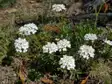
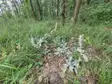
Mexican bush sage has conflicting fire-safety ratings, so it cannot be called simply fire resistant or highly flammable.
Texas A&M AgriLife Extension places the perennial among plants to avoid in Zone 1, defined as the area within 30 feet of a structure. Its guidance says this plant should be restricted to Zones 2 or 3. That is a clear warning about placement near a building.
Two other sources give favorable flammability findings. The Sun City Texas Firewise Group rates Mexican bush sage low for flammability hazard, meaning the ease with which a plant can burn at high temperatures for a prolonged period. The ACT Government’s Canberra selector marks Salvia leucantha “Fire Retardant: Yes.”
These judgments use different scales and regional premises. One addresses where a plant should be placed around a structure, another assigns a flammability-hazard level, and the third uses a yes-or-no fire-retardant attribute. None settles the disagreement among them. The practical conclusion is that Mexican bush sage has some support as a lower-hazard plant, but the favorable ratings should not erase Texas A&M’s warning against using it within 30 feet of a structure.
Form
perennial
Rated in
Austin, Texas; Australian Capital Territory, Australia; Georgetown, Texas
On this lot
1. Fire evidence and conditions
Fire evidence
Mixed evidence — location does not change the cited classification.
Sun City Texas, Georgetown (TX footprint); partial normalized coverage · 2015-01-14
The guide is authored for the Sun City Texas community in Georgetown. FireApproved publishes 142 exact owners only as community-level context. It is an archived HOA exhibit with unknown rating lineage, not a current statewide Texas source or an independent Tier 1 determination.
Travis County, Austin area (TX footprint); partial normalized coverage · 2024-01-16
Texas A&M AgriLife Extension publishes this page through its Travis County horticulture program. FireApproved publishes 56 exact owners and retains the source's zone and warning conditions. This is county/Austin regional context, not a second statewide Texas table or site clearance.
2. Why this plant is relevant here
State distribution
Native range
Introduced / established
USDA hardiness
3. Legal, ecological, and broader status
Legal-list status
Seed-list status
Reported invasive here
Broader regional context
Federal context
How to read this page
The status above is computed from the cited rows below: independent recommendations can support a fire-resistant result, an avoid row can produce keep-away, and disagreement stays visible as conflict. Placement notes preserve each source’s own scheme rather than translating unlike rules into one scale. This is evidence about a plant, not permission to plant it in every part of the defensible space; Zone 0 remains noncombustible.
Where its sources say to plant it
Placement rules below use each source's own distances or named zones, tied to its rating.
They are not interchangeable with the directory's current Zone 0 guidance.
Firewise Landscaping: Perennials [Travis County Firewise page sections] (with its avoid rating)
Firewise Plant Guide: Perennials [Sun City plant-table sections] (with its recommendation)
Canberra Plant Selector: filtered result page 12 [canberra-selector] (with its recommendation)
The evidence
Grouped by what each source concluded. Primary evidence rated the plant itself
(a lab, field program, or original curation); corroboration compiled or
republished another source's rating and resolves to its root lineage.
The table rates Sage, Mexican Bush — Salvia leucantha low for flammability hazard, defined as the ease a plant can burn at high temperatures for a prolonged time.
“Plants to Avoid for Zone 1 (within 30′ of Structure)”
Listed as Sage, Mexican bush — Salvia leucantha. The page says Zone 1 entries should be restricted to zones 2 or 3; all-zone entries are highly flammable due to volatile oils or growth habit.