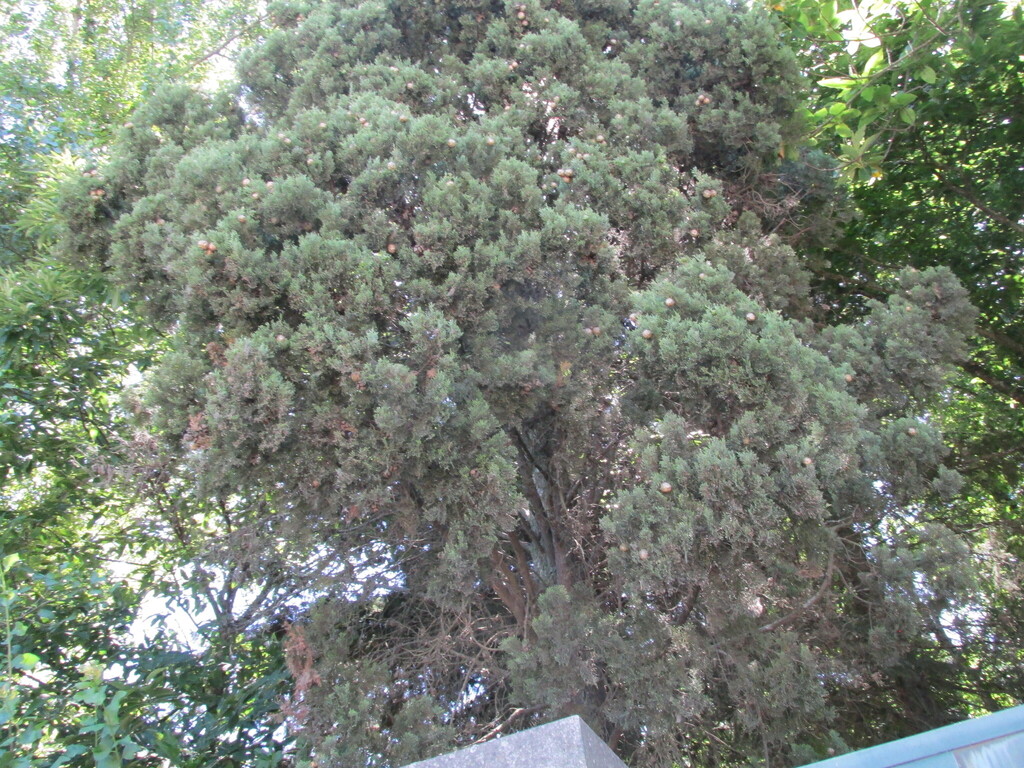
This is a genus-rank umbrella record: the evidence table preserves the rank at which the evidence was printed. Its computed result is avoid, while individual species records remain distinct from this umbrella.
The pack also identifies same-form alternatives. They appear under related plants, where the comparison can stay separate from the two lab lineages and the genus-rank result.
City of Ashland (OR footprint); partial normalized coverage · 2026-08-26
This is a City of Ashland adoption fact, not statewide Oregon guidance or an experimental flammability result. FireApproved publishes 24 taxonomy-safe owners as city-level regulatory context. It applies to new planting and propagation within 30 feet of structures, including structures on adjacent lots; it is not projected as a blanket removal order for every established listed plant.
Marin County (CA footprint); partial normalized coverage · 2019-01-01
The publication is explicitly limited to plants common to Marin County. FireApproved publishes 104 exact owners as Marin regional context while retaining its placement, spacing, irrigation, and maintenance boundary. It is not statewide California guidance or parcel suitability.
Yavapai County (AZ footprint); partial normalized coverage · 2025-03-14
University of Arizona Cooperative Extension authors Bulletin 34 for Yavapai County. FireApproved publishes 198 exact source owners from its resistant and prone tables and keeps the county boundary visible. County publication scope is regional Arizona context, never statewide scope.
2. Why this plant is relevant here
State distribution
Documented in AZ.
Native range
Introduced / established
USDA hardiness
3. Legal, ecological, and broader status
Legal-list status
Seed-list status
Reported invasive here
Broader regional context
Federal context
How to read this page
The status above is computed from the cited rows below: independent recommendations can support a fire-resistant result, an avoid row can produce keep-away, and disagreement stays visible as conflict. Placement notes preserve each source’s own scheme rather than translating unlike rules into one scale. This is evidence about a plant, not permission to plant it in every part of the defensible space; Zone 0 remains noncombustible.
Where its sources say to plant it
Placement rules below use each source's own distances or named zones, tied to its rating.
They are not interchangeable with the directory's current Zone 0 guidance.
Prohibited Flammable Plants: new planting or propagation restricted within 30 ft of any structure [Ashland Municipal Code setback] (with its avoid rating)
Time to extinguish the exotic flame: Lessons from the 202…: Urban zone; Table 1 and deposited raw workbook [macalister-2025-leaf-flammability] (mid-scale rating)
Débroussaillement: haies de conifères type cyprès (cypress-type conifer hedges) [france-old-hedge-guidance] (with its avoid rating)
Les franges perimetrals de protecció contra els incendis …: page 4 species-selection panel [catalonia-perimeter-strip-maintain-remove] (with its avoid rating)
Yanan Orman Alanlarının Rehabilitasyonu ve Yangına Direnç…: Temel prensipler; Yangın önleyici tesisler [yardop-6976-operational-fire-resistant-planting] (with its recommendation)
מסמך מאגד הנחיות למניעת שרפות ולשיקום יער לאחר שרפות: pages 4, 6, and 7 buffer-strip vegetation specifications [kkl-2024-buffer-retention-priority] (with its recommendation)
The evidence
Grouped by what each source concluded. Primary evidence rated the plant itself
(a lab, field program, or original curation); corroboration compiled or
republished another source's rating and resolves to its root lineage.
The YARDOP circular directs managers to preserve, encourage, or use this named taxon in fire-resistant or slow-burning forest and fire-prevention plantings.
“מיני העצים שיישארו ייבחרו בקפידה תוך מתן עדיפות למיני חורש ולעצי ברוש”
The guide says retained tree species should be selected carefully, prioritizing woodland species and cypress trees; later buffer specifications again prioritize cypresses over conifers.
The fiche's overall sensitivity combines experimental-bench inflammability, intensity, and combustion measurements with foresters' observations of fire damage.
“Les plus combustibles sont celles composées de conifères type “cyprès”.”
The guide warns that cypress-type conifer hedges are the most combustible; ageing trees accumulate dead material and resin that increase combustion.
Source wording: “Les arbres vieillissants présentent de nombreuses parties mortes et des concentrés de résines qui augmentent leur pouvoir de combustion.”
Listed as Cypress — Cupressus sp.. The bulletin says fire-resistant plants tend to resist ignition when irrigated and maintained, while fire-prone plants may ignite readily and burn intensely.