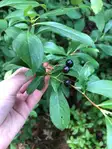
Current native
21
exact source areas
Home / Plants / Grow / Arborvitae
Thuja occidentalis
Your local evidence lens
A genus split is not a placement verdict. Set a ZIP to read the local documented split.
The status above is computed from the cited rows below: independent recommendations can support a fire-resistant result, an avoid row can produce keep-away, and disagreement stays visible as conflict. Placement notes preserve each source’s own scheme rather than translating unlike rules into one scale. This is evidence about a plant, not permission to plant it in every part of the defensible space; Zone 0 remains noncombustible.
These are exact U.S. botanical-area records from the cited range source. Native and introduced describe biogeographic relationship, not fire performance or planting approval. Doubtful and extinct rows stay visible but do not count as current presence.
Current native
exact source areas
Current introduced
exact source areas
Qualified
doubtful or extinct source rows
Eastern United States Fire Performance Plant Selector
Source prints 5 · single-value meaning unresolved
Wildfire-resistant Landscape Plants for Michigan (Extension Bulletin E2948)
3–7 explicit range
USDA PLANTS Database — Plant Characteristics
Minimum 3b · no upper limit documented
Wildfire-resistant Landscape Plants for Michigan (Extension Bulletin E2948)
“considered wildfire-resistant and are recommended for Michigan’s climate”
Table 1 rows: Thuja occidentalis (American arborvitae); Thuja occidentalis (American arborvitae).
Fire-Resistant vs. Highly Flammable Plants
“listed highly flammable”
Best Practices for Fire Resistant Landscaping
“listed highly flammable”
Eastern United States Fire Performance Plant Selector
“NOT Firewise (4)”
Commonly used upright landscape evergreen-multi-stem form opens in heavy snow-very susceptable to bagworms.
Firewise Landscaping (OSU Extension Bulletin 921)
“H flammability”
Requires good drainage; pH adaptive; drought tolerant.
Virginia Firescapes — Firewise Landscaping for Woodland Homes (430-300)
“H flammability”
Requires good drainage. Not heat tolerant.
FLAMITS: FLAMmability plant traiTS database
“time to flaming (s): 63.09”
FLAMITS record 3665; Ignitability measurement; plant part leaves; fuel all; predrying yes; device epiradiator; site Ganteaume2018-1; sampling summer. Primary study Ganteaume2018: Ganteaume, A. (2018). Does plant flammability differ between leaf and litter bed scale? Role of fuel characteristics and consequences for flammability assessment. International Journal of Wildland Fire, 27, 342-352.
“flaming duration (s): 90.86”
FLAMITS record 3680; Sustainability measurement; plant part leaves; fuel all; predrying yes; device epiradiator; site Ganteaume2018-1; sampling summer. Primary study Ganteaume2018: Ganteaume, A. (2018). Does plant flammability differ between leaf and litter bed scale? Role of fuel characteristics and consequences for flammability assessment. International Journal of Wildland Fire, 27, 342-352.
“ignition frequency (%): 33.5”
FLAMITS record 3695; Ignitability measurement; plant part leaves; fuel all; predrying yes; device epiradiator; site Ganteaume2018-1; sampling summer. Primary study Ganteaume2018: Ganteaume, A. (2018). Does plant flammability differ between leaf and litter bed scale? Role of fuel characteristics and consequences for flammability assessment. International Journal of Wildland Fire, 27, 342-352.
“flame propagation: 0.43”
FLAMITS record 3710; Combustibility measurement; plant part leaves; fuel all; predrying yes; device epiradiator; site Ganteaume2018-1; sampling summer. Primary study Ganteaume2018: Ganteaume, A. (2018). Does plant flammability differ between leaf and litter bed scale? Role of fuel characteristics and consequences for flammability assessment. International Journal of Wildland Fire, 27, 342-352.
“time to flaming (s): 17.37”
FLAMITS record 3725; Ignitability measurement; plant part leaves; fuel live; predrying no; device epiradiator; site Ganteaume2018-1; sampling summer. Primary study Ganteaume2018: Ganteaume, A. (2018). Does plant flammability differ between leaf and litter bed scale? Role of fuel characteristics and consequences for flammability assessment. International Journal of Wildland Fire, 27, 342-352.
“flaming duration (s): 9.36”
FLAMITS record 3740; Sustainability measurement; plant part leaves; fuel live; predrying no; device epiradiator; site Ganteaume2018-1; sampling summer. Primary study Ganteaume2018: Ganteaume, A. (2018). Does plant flammability differ between leaf and litter bed scale? Role of fuel characteristics and consequences for flammability assessment. International Journal of Wildland Fire, 27, 342-352.
“ignition frequency (%): 46”
FLAMITS record 3755; Ignitability measurement; plant part leaves; fuel live; predrying no; device epiradiator; site Ganteaume2018-1; sampling summer. Primary study Ganteaume2018: Ganteaume, A. (2018). Does plant flammability differ between leaf and litter bed scale? Role of fuel characteristics and consequences for flammability assessment. International Journal of Wildland Fire, 27, 342-352.
“time to flaming (s): 2.6”
FLAMITS record 11334; Ignitability measurement; plant part litter; fuel dead; predrying yes; device epiradiator; site Romero2019-1; sampling july. Primary study Romero2019: Romero, B., Fernandez, C., Lecareux, C., Ormeño, E., & Ganteaume, A. (2019). How terpene content affects fuel flammability of wildlandurban interface vegetation. International Journal of Wildland Fire, 28, 614.
“maximum flame temperature (°C): 612.6”
FLAMITS record 11340; Combustibility measurement; plant part litter; fuel dead; predrying yes; device epiradiator; site Romero2019-1; sampling july. Primary study Romero2019: Romero, B., Fernandez, C., Lecareux, C., Ormeño, E., & Ganteaume, A. (2019). How terpene content affects fuel flammability of wildlandurban interface vegetation. International Journal of Wildland Fire, 28, 614.
“flaming duration (s): 19.6”
FLAMITS record 11346; Sustainability measurement; plant part litter; fuel dead; predrying yes; device epiradiator; site Romero2019-1; sampling july. Primary study Romero2019: Romero, B., Fernandez, C., Lecareux, C., Ormeño, E., & Ganteaume, A. (2019). How terpene content affects fuel flammability of wildlandurban interface vegetation. International Journal of Wildland Fire, 28, 614.
“temperature at flaming (°C): 351.9”
FLAMITS record 11352; Ignitability measurement; plant part litter; fuel dead; predrying yes; device epiradiator; site Romero2019-1; sampling july. Primary study Romero2019: Romero, B., Fernandez, C., Lecareux, C., Ormeño, E., & Ganteaume, A. (2019). How terpene content affects fuel flammability of wildlandurban interface vegetation. International Journal of Wildland Fire, 28, 614.
“flammability value: 100”
FLAMITS record 11358; Ignitability measurement; plant part litter; fuel dead; predrying yes; device epiradiator; site Romero2019-1; sampling july. Primary study Romero2019: Romero, B., Fernandez, C., Lecareux, C., Ormeño, E., & Ganteaume, A. (2019). How terpene content affects fuel flammability of wildlandurban interface vegetation. International Journal of Wildland Fire, 28, 614.
“time to flaming (s): 26.3”
FLAMITS record 11364; Ignitability measurement; plant part leaves; fuel live; predrying no; device epiradiator; site Romero2019-1; sampling july. Primary study Romero2019: Romero, B., Fernandez, C., Lecareux, C., Ormeño, E., & Ganteaume, A. (2019). How terpene content affects fuel flammability of wildlandurban interface vegetation. International Journal of Wildland Fire, 28, 614.
“maximum flame temperature (°C): 466”
FLAMITS record 11371; Combustibility measurement; plant part leaves; fuel live; predrying no; device epiradiator; site Romero2019-1; sampling july. Primary study Romero2019: Romero, B., Fernandez, C., Lecareux, C., Ormeño, E., & Ganteaume, A. (2019). How terpene content affects fuel flammability of wildlandurban interface vegetation. International Journal of Wildland Fire, 28, 614.
“flaming duration (s): 18.5”
FLAMITS record 11378; Sustainability measurement; plant part leaves; fuel live; predrying no; device epiradiator; site Romero2019-1; sampling july. Primary study Romero2019: Romero, B., Fernandez, C., Lecareux, C., Ormeño, E., & Ganteaume, A. (2019). How terpene content affects fuel flammability of wildlandurban interface vegetation. International Journal of Wildland Fire, 28, 614.
“temperature at flaming (°C): 362.3”
FLAMITS record 11386; Ignitability measurement; plant part leaves; fuel live; predrying no; device epiradiator; site Romero2019-1; sampling july. Primary study Romero2019: Romero, B., Fernandez, C., Lecareux, C., Ormeño, E., & Ganteaume, A. (2019). How terpene content affects fuel flammability of wildlandurban interface vegetation. International Journal of Wildland Fire, 28, 614.
“flammability value: 87”
FLAMITS record 11393; Ignitability measurement; plant part leaves; fuel live; predrying no; device epiradiator; site Romero2019-1; sampling july. Primary study Romero2019: Romero, B., Fernandez, C., Lecareux, C., Ormeño, E., & Ganteaume, A. (2019). How terpene content affects fuel flammability of wildlandurban interface vegetation. International Journal of Wildland Fire, 28, 614.