Home / Guides / How to read a record / How Oregon got a deep plant page
How Oregon got a deep plant page
Oregon’s page is deep because 622 taxa on this site carry Oregon occurrence evidence. That is not 622 grades from PNW 590. This directory stores 155 exact PNW 590 owners and now exposes 172 OSU EM 9103 owners only as Willamette Valley context. EM 9103 points readers back to PNW 590, so it is not a second independent lineage. Ashland’s 2025 prohibited sheet and Grants Pass’s examples remain municipal descendants on that same tree. Source depth is useful local context; it is not four votes.
You opened /plants/state/oregon/ and saw a number that looks like a catalog. It is an occurrence count. Fire-resistant does not mean fireproof is the PNW 590 caveat. This page is how the 622-row surface was assembled and how not to plant from it.
This is not an Oregon doorway.
Why it matters
When almost nothing is rated is Delaware’s empty forestry page next to 755 USDA rows. Oregon is the inverse illusion: a fat page that is still mostly occurrence, plus one Western list that every municipal PDF learned to echo. The Steward rule is Ohio’s version of the same counting habit. Ohio Bulletin 921 died off Ohioline. PNW 590 is still in the OSU catalog; the live HTML returned no body this session, so this page quotes the opened 2023 extract.
Zone 0 is still not a planting list. PNW 590 Figure 1 already draws 0–5 / 5–30 / 30–100 as NFPA Home Ignition Zone. Ashland’s sheet recommends no plants within 5 feet; AMC 9.04 restricts new planting or propagation of listed plants within 30 feet of any structure in Ashland, including structures on adjacent lots.
How it works
What 622 is:
- Oregon plant evidence: 623 occurrence records as of this writing. Occurrence is a range answer, not a fire grade.
- Top sources sitting on those OR-flagged records: Idaho Firewise 189, FireSmart BC 189, PNW 590 155. The first two are not Oregon lists. They hitchhike on USDA range.
List 1 — PNW 590 (October 2023 extract):
- Joint land-grant publication for Oregon, Washington, and Idaho. First issued August 2006.
- Developed from existing scientific literature. Research on ornamental flammability is limited.
- Most listed plants still need irrigation in drier regions.
- Use the characteristic list for plants not in the guide. Check local Extension. Avoid invasives.
- Figure 1: NFPA HIZ 0–5, 5–30, 30–100.
- This directory: 155 stored citations.
List 2 — Ashland prohibited (2025 sheet, AMC 9.04):
- Not newly planted or allowed to propagate within 30 feet of any structure, including outbuildings and decks.
- No plants recommended within 5 feet of a building.
- Bark mulches not allowed within 5 feet of new structures; strongly recommended not within 5 feet of existing wood-sided buildings, decks, or wood fence attachments.
- Genera: juniper, pine (starred), cedar, cypress, arborvitae, fir, hemlock, spruce (starred), yew, plus Douglas-fir and incense cedar. Starred taxa: dwarf/prostrate exceptions only with Fire Dept. approval, beyond 5 feet, and spaced.
- This directory: 25 stored rows (14 also OR). Regulatory evidence, not a lab.
List 3 — Grants Pass (opened HTML):
- Fire-resistant definition matches PNW 590: do not readily ignite; can be damaged or killed; foliage and stems do not significantly contribute to the fuel.
- Points you at the Fire Resistant Plants for Home Landscapes guide. Their DocumentCenter PDF returned 404 this session.
- Highly flammable examples: ornamental juniper, Leyland cypress, Italian cypress, rosemary, arborvitae, eucalyptus, some ornamental grasses. Preferably not within 30 feet.
- This directory: 6 stored rows (3 also OR).
How to read the fat page:
- The state page is a filter, not a palette.
- Open the plant. Read how to read a plant page. Lineage chips vote. Reprints do not.
- If Ashland, Grants Pass, and PNW 590 all point the same way, that is one
pnw590-treevote plus, in Ashland, an ordinance. - Oregon defensible-space checklist is OSFM’s walk-the-yard list, not this plant table.
- Do not plant in the first five feet.
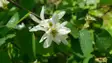
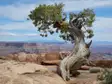
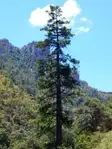
See Amelanchier (on-list, cites PNW 590, OR) and the Juniperus genus record (Ashland prohibits Juniperus spp. within 30 feet). Pseudotsuga menziesii is on Ashland’s prohibited tree list by species and currently computes as avoid with OR.
The paths
| Claim | Opened source | What it is not |
|---|---|---|
| 622 Oregon plants | occurrence evidence on this site | 622 PNW 590 grades |
| PNW 590 is the Oregon list | Joint OR/WA/ID; 155 stored citations | Three land-grants as three votes |
| Ashland prohibited | AMC 9.04, 30 feet / 5 feet | A statewide planting ban |
| Grants Pass highly flammable | Named examples; points at PNW 590 | An independent rating |
| Idaho 189 / FireSmart BC 189 on OR records | USDA range overlap | Oregon Extension lists |
| 0–5 in Figure 1 | PNW 590 / NFPA HIZ | A planting list for Zone 0 |
What people mix up
- 622 occurrence records with 155 exact PNW 590 owners.
- PNW 590, Ashland, and Grants Pass as three lineages.
- Ashland’s ordinance with a statewide plant law.
- Idaho Firewise scores on Oregon-distributed taxa as OSU ratings.
- The fireproof caveat page as this counting page.
- OSFM’s checklist as PNW 590.
- Ohio’s recovered Bulletin 921 as the same document.
How to check
- Open Oregon plant evidence. Read the count as USDA, not as PNW 590.
- Open PNW 590. Read limited ornamental research. Read Figure 1’s 0–5.
- Open the Ashland 2025 prohibited sheet. Read 5 feet and 30 feet.
- Open Grants Pass. Read the copied definition and the 30-foot examples.
- Open a plant. Group rows by lineage.
- Do not plant in Zone 0.
Limits
This page quotes the opened October 2023 PNW 590 extract, the complete OSU EM 9103 Willamette Valley publication, the opened Ashland 2025 prohibited PDF, Ashland best-practices HTML, and Grants Pass HTML. Grants Pass’s linked PNW 590 PDF returned HTTP 404 this session. The 622, 155, and 172 counts are stored relationships, not printed totals in PNW 590. Ashland’s ordinance applies in Ashland. PNW 590, EM 9103, Ashland, and Grants Pass are not counted as independent lineages. Zone 0 is not a planting list.
Related records
- Amelanchier
- Pinus ponderosa
- Pseudotsuga menziesii
- PNW 590 source record
- Oregon plant evidence
- Fire-resistant is not fireproof
- Oregon defensible-space checklist
- Glossary: Zone 0
Plant records this page rests on
Questions
How did Oregon get a deep plant page?
Range evidence, not a secret Oregon rating bureau. This site’s Oregon plant evidence page currently holds 622 occurrence records. Only 155 plant records cite exact-state PNW 590 evidence, while 172 cite the Willamette Valley EM 9103 companion. Ashland and Grants Pass are municipal descendants on the same pnw590-tree lineage.
Are PNW 590, Ashland, and Grants Pass three independent lists?
No. This site stores all three on lineage pnw590-tree. Grants Pass tells you to open the Fire Resistant Plants for Home Landscapes guide and copies PNW 590’s definition of fire-resistant plants. Ashland’s best-practices page points at a Living With Fire generator and Valachovic 2021; its prohibited list is a municipal prohibition within 30 feet (AMC 9.04), assigned to the same tree because independence was not demonstrated. One lineage, not three votes. See the Steward rule for the counting habit.
How do I actually use a 622-row list?
Do not plant from the count. Open the Oregon plant evidence page to see what is stored as occurring in Oregon. Open the plant. Read the lineage chips, not the row count. If the only Oregon-touching lists are PNW 590 and its municipal descendants, that is one vote. PNW 590 (October 2023): the research on ornamental flammability is limited; most listed plants still need irrigation in drier regions; fire-resistant does not mean fireproof. Ashland’s sheet recommends no plants within 5 feet; AMC 9.04 restricts new planting or propagation of listed plants within 30 feet of structures. Zone 0 is still not a planting list.
Is this an Oregon doorway page?
No. The object is 622 occurrence rows versus 155 exact PNW 590 owners, 172 Willamette Valley owners, and municipal descendants on one lineage. Place claims sit on whereThisDiffers. Oregon defensible-space checklist and Oregon WUI construction pages are different objects.