This hub compares 3 species records. Across all 4 records, it carries 50 evidence rows from 18 distinct cited sources. The species split is 2 in documented conflict and 1 awaiting directional evidence. 1 genus-rank record is shown separately; genus-rank claims do not override a species record, and species evidence does not become one verdict for the genus.
Plant forms recorded in this group: tree, shrub. The records span published USDA zones 3–5. Recorded trait flags: 1 carry resinous foliage flags; 1 carry traps dead material flags — each cited on its page. These are record-level fields, not a whole-genus flammability claim.
More about Thuja: Wikipedia
— external references; not evidence sources.
FA Exhibit ID-001. Juniper or redcedar? The scale-leaf lookalikes. Claims quoted from USFS FEIS species reviews (Scher 2002, Juniperus scopulorum; Tesky 1992, Thuja plicata). Specimen art traced from public-domain USDA plates — Bulletin 207 (1915) Plate IX and Sudworth, Forest Trees of the Pacific Slope (1908), Fig. 60 — via Internet Archive / Wikimedia Commons. Identification only — no flammability claim. Confirm uncertain material with a regional key or a botanist. CC BY 4.0.
 Rated as a group: arborvitae Thuja sp. Keep away Consensus 6 sources rate the genus as a
whole. Species evidence never rolls upward into a genus verdict, and genus claims never
override a species record.
›
Rated as a group: arborvitae Thuja sp. Keep away Consensus 6 sources rate the genus as a
whole. Species evidence never rolls upward into a genus verdict, and genus claims never
override a species record.
›  arborvitae Documented conflict Thuja occidentalis
 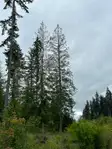 western redcedar Documented conflict Thuja plicata