Enter your ZIP to see whether this is legal to plant in your state, and whether it survives your winter.
White fir is not fire resistant; three extension services rate it a fire hazard, and none rates it safe.
Ohio State University Extension marks it H, the second-highest step of a five-band scale. Virginia Cooperative Extension gives it the top rating on its own three-band scale, the same rating it gives every evergreen tree and shrub it lists. Nevada's forestry and extension services print "high" in a table the guide itself calls a rough estimate, not a scientific-trial result.
The Forest Service's eastern Firewise program calls white fir "At Risk," one step short of its worst mark on a four-band scale, and notes it tolerates urban conditions better than other firs even as resin blisters on its bark can burn readily. That still stops short of any rating that calls it safe.
Two lab records measure white fir without taking a side. A Forest Service cone-calorimeter study found 113 percent foliage moisture, a peak heat release of 140 kilowatts per square meter, and a heat of combustion of 17.8 megajoules per kilogram, without placing it among the high- or low-flammability trees the same study named elsewhere. The FLAMITS trait database, published through Dryad and Global Ecology and Biogeography, timed its litter catching flame at 6.6 seconds, one measurement it keeps apart from a verdict, since it sets no single threshold across devices.
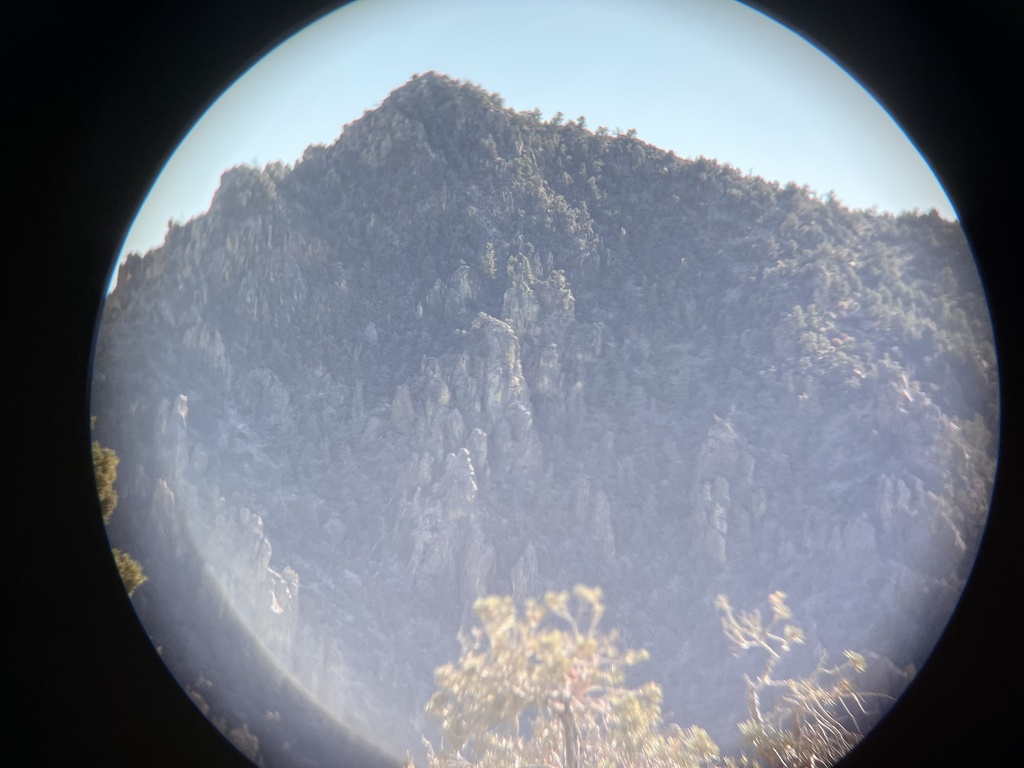
White fir is a tree in the pine family, reaching about 80 feet in full sun with moderate water. It is native to the Southwestern, Northwestern, and South-Central United States and hardy to USDA zone 4a. Three extension programs on three separate scales each place it in a hazard band, and none in a safe one, and the lab measurements do not pull the other way. Near a house, no source here argues for planting it close.
Colorado, California, and northeastern United States; Global; Lake Tahoe Basin, Nevada and California; Ohio / Midwest; Virginia / Mid-Atlantic; eastern US
Maintenance
Typed publication scope: 3 scopes across 3 cited fire sources
Nevada Division of Forestry and University of Nevada Cooperative Extension publish Bulletin 06-01 for the Lake Tahoe Basin and vicinity. FireApproved publishes 83 exact rated owners as basin context across Nevada and California. Rough estimates are not statewide or site ratings.
Ohio State University Extension Bulletin 921 is an Ohio publication that describes Ohio fire seasons and landscape conditions and labels nativity to Ohio. FireApproved publishes 352 exact source-owning plant records from its eight rated tables. This historical publication scope does not assert current extension endorsement or that a listed plant suits every Ohio site.
Virginia Cooperative Extension's publication opens with Virginia wildfire conditions, identifies its Virginia Firewise Landscaping Task Force, and labels plants native to Virginia. FireApproved publishes 306 exact source owners. Publication scope does not establish parcel suitability or current endorsement of this archived 2009 list.
2. Why this plant is relevant here
State distribution
Documented in AZ, CO, DC, DE, ID, MA, MD, ME, NJ, NM, NV, OH, OR, PA, UT, WV, WY.
Native range
Current cited native range in AZ, CA, CO, ID, NM, NV, OR, UT, WY.
Introduced / established
1 sourced range or established record. This is not an invasive warning.
USDA hardiness
Documented minimum 3a; no upper limit is documented.
3. Legal, ecological, and broader status
Legal-list status
Seed-list status
Reported invasive here
Broader regional context
Federal context
How to read this page
The status above is computed from the cited rows below: independent recommendations can support a fire-resistant result, an avoid row can produce keep-away, and disagreement stays visible as conflict. Placement notes preserve each source’s own scheme rather than translating unlike rules into one scale. This is evidence about a plant, not permission to plant it in every part of the defensible space; Zone 0 remains noncombustible.
Native and introduced range evidence
These are exact U.S. botanical-area records from the cited range source. Native and
introduced describe biogeographic relationship, not fire performance or planting approval.
Doubtful and extinct rows stay visible but do not count as current presence.
The lossless worldwide derivative is retained once in the research corpus; object pages repeat only exact U.S. areas needed by the local lens. The JSON twin carries the same page assertions.
Plant hardiness evidence
These values describe the plant source. Your ZIP zone comes from the separate 2023 USDA
Plant Hardiness Zone Map. Whole-zone values stay whole-zone, and a single unresolved value
is not treated as a tolerance range. Different source boundaries stay separate: overlapping
statements are compared independently, while only ranges with no shared zone are called a conflict.
Source prints 4 · single-value meaning unresolved · whole zone precision · source stated
Source taxon: Abies concolor · exact match.
Source location: Cold Hardiness Zone field in the recovered selector record.
Not used for comparison: The recovered selector prints one Cold Hardiness Zone value but does not define it as a minimum threshold or a one-zone range.
Placement rules below use each source's own distances or named zones, tied to its rating.
They are not interchangeable with the directory's current Zone 0 guidance.
Eastern United States Fire Performance Plant Selector: Landscape Zone 4 — beyond 30 ft; outside the selector's recommendation area [Fire Performance Plant Selector landscape zone] (mid-scale rating)
Firewise Landscaping: keep 30 ft from the home (Zone 3) [OSU B921 source-category siting] (with its avoid rating)
Home Landscaping Guide for Lake Tahoe and Vicinity: Fire Hazard column: high [tahoe-guide-2006] (with its avoid rating)
The evidence
Grouped by what each source concluded. Primary evidence rated the plant itself
(a lab, field program, or original curation); corroboration compiled or
republished another source's rating and resolves to its root lineage.
Table 1's Fire Hazard column prints “high” for this taxon. The guide calls the rating a rough estimate of potential flammability, not a result of scientific trials. Its footnote says plants that turn brown often become high fire hazards and tells readers to mow grasses and forbs when they begin to turn brown.
51 cited rows from this source; its identity, lineage and tier are stated once.
Primary study Belcher2016: Belcher, C. M. (2016). The influence of leaf morphology on litter flammability and its utility for interpreting palaeofire. Philosophical Transactions of the Royal Society B: Biological Sciences, 371, 20150163.
Shared row context: plant part litter; fuel all; predrying yes; device calorimeter; site Belcher2016-1; sampling ND.
Primary study deMagalhaes2012: De Magalhães, R. M. Q., & Schwilk, D. W. (2012). Leaf traits and litter flammability: evidence for non-additive mixture effects in a temperate forest. Journal of Ecology, 100, 1153-1163.
Shared row context: plant part litter; fuel all; predrying no; device burning bench; site deMagalhaes2012-1; sampling summer.
Primary study vanWagtendonk1998: Van Wagdendonk, J., Sydoriak, W. M., & Benedict, J. M. (1998). Heat content variation of Sierra Nevada conifers. International Journal of Wildland Fire, 8, 147-158.
Primary study White2002: White, R. H., Weise, D. R., Mackes, K., & Dibble, A. C. (2002). Cone calorimeter testing of vegetation--an update. Ninth International Conference on Electrical and Electronic Products. Columbus, Ohio, USA.
Shared row context: Combustibility measurement; plant part leaves; fuel live; device calorimeter; site White2002-2; sampling ND.
“maximum energy flux (kW/m²): 140”
FLAMITS record 14135; predrying no.
Shared measurement context: predrying yes.
“calorific value (kcal/kg): 4251.46”
FLAMITS record 14188.
“calorific value (kcal/kg): 4251.46”
FLAMITS record 14279.
Primary study deMagalhaes2017: de Magalhães, R. (2017). The effect of leaf traits on litter flammability in mixed-conifer forest. PhD. Dissertation. Texas Tech University.
Shared row context: plant part litter; fuel all; predrying no; device burning bench; site deMagalhaes2017-1; sampling ND.
Primary study Clements1973: Clements, H. B., & Alkidas, A. (1973). Combustion of Wood in Methanol Flames. Combustion Science and Technology, 7, 1318.
Shared row context: Sustainability measurement; plant part wood; fuel live; predrying no; device burning bench; site Clements1973-1; sampling ND.
“burning duration (s): 154.8”
FLAMITS record 17963.
“burning duration (s): 122.4”
FLAMITS record 17964.
“burning duration (s): 222”
FLAMITS record 17965.
“burning duration (s): 241.8”
FLAMITS record 17966.
“burning duration (s): 363”
FLAMITS record 17967.
“burning duration (s): 372.6”
FLAMITS record 17968.
“burning duration (s): 440.4”
FLAMITS record 17969.
“burning duration (s): 451.2”
FLAMITS record 17970.
“burning duration (s): 511.2”
FLAMITS record 17971.
“burning duration (s): 517.8”
FLAMITS record 17972.
“burning duration (s): 537”
FLAMITS record 17973.
“burning duration (s): 562.8”
FLAMITS record 17974.
“burning duration (s): 575.4”
FLAMITS record 17975.
“burning duration (s): 616.8”
FLAMITS record 17976.
Primary study Pickett2010: Pickett, B. M., Isackson, C., Wunder, R., Fletcher, T. H., Butler, B. W., & Weise, D. R. (2010). Experimental measurements during combustion of moist individual foliage samples. International Journal of Wildland Fire, 19, 153-162 .
Shared row context: Combustibility measurement; plant part twigs; fuel live; predrying no; device flat flame burner; site Pickett2010-2; sampling ND.