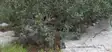
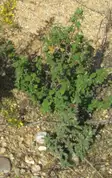
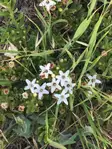
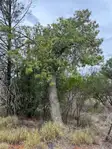
Enter your ZIP to see whether this is legal to plant in your state, and whether it survives your winter.
Italian buckthorn has mixed fire evidence: most guides favor it, but a laboratory study rates its fresh material highly flammable.
Five sources favor the shrub, though their judgments are not interchangeable. The University of California Agricultural Extension Service includes it among plants for irrigated hillsides, provided fuel volume is minimized, watering meets the plant’s needs, and litter is removed. Assuming care suited to the species, the guide from Girona’s provincial government and Catalonia’s fire service places Italian buckthorn in its most favorable garden-suitability category. Its method combines fire research with fuel structure, upkeep, origin, invasiveness, and fire-service experience. Barcelona and CREAF also place it among the less-flammable species to retain first in perimeter protection strips.
The contrary result comes from a laboratory test in western Algeria. The European Scientific Journal assigns Italian buckthorn note 3, or high flammability, a category defined by fresh-material ignition delays of 65 seconds or less. That test measures ignition delay under set conditions, while the favorable guides make broader landscaping judgments. The difference in methods is real, but the sources do not establish that it accounts for the disagreement.
Two California compilations add weight to the favorable side, each tracing the shrub to twelve supporting references. Yet one warns that many underlying plant lists used undefined terms and often lacked a scientific basis. Italian buckthorn, a Rhamnaceae shrub introduced in California, therefore cannot be called simply fire resistant. Its favorable use depends on the conditions stated by the guides, while the high laboratory flammability result remains unresolved.
The guide presents itself as fire performance ratings for common landscape plants in a fire-prone California setting. FireApproved publishes 104 exact owners as republished California context. It is not an independent rating, a current endorsement, or parcel suitability.
The UC Forest Products Laboratory says the guide covers properties of common California landscaping plants and was prepared for California fire agencies. FireApproved publishes 130 exact owners at historical California publication scope. The report is a 1997 compilation, not a current endorsement, site rating, or independent test of every row.
2. Why this plant is relevant here
State distribution
Native range
Introduced / established
1 sourced range or established record. This is not an invasive warning.
USDA hardiness
3. Legal, ecological, and broader status
Legal-list status
Seed-list status
Reported invasive here
Broader regional context
Federal context
How to read this page
The status above is computed from the cited rows below: independent recommendations can support a fire-resistant result, an avoid row can produce keep-away, and disagreement stays visible as conflict. Placement notes preserve each source’s own scheme rather than translating unlike rules into one scale. This is evidence about a plant, not permission to plant it in every part of the defensible space; Zone 0 remains noncombustible.
Native and introduced range evidence
These are exact U.S. botanical-area records from the cited range source. Native and
introduced describe biogeographic relationship, not fire performance or planting approval.
Doubtful and extinct rows stay visible but do not count as current presence.
The lossless worldwide derivative is retained once in the research corpus; object pages repeat only exact U.S. areas needed by the local lens. The JSON twin carries the same page assertions.
Conditions in the fire evidence
These describe tested or rated plant material. They are not horticultural maintenance instructions.
Placement rules below use each source's own distances or named zones, tied to its rating.
They are not interchangeable with the directory's current Zone 0 guidance.
Landscape for Fire Protection: irrigated hillsides [maire-1968-fire-protection-landscape] (with its recommendation)
Guía de pirojardinería: suitable inside or outside the 25-metre maximum-risk zone [girona-2020-iuf-25m-suitability] (with its recommendation)
The fire risk of the plant groupings with Cistus in the a…: Table 1 [henaoui-2013-fresh-material-flammability] (with its avoid rating)
Defensible Space Landscaping in the Urban/Wildland Interf…: Chapter 4, Landscape Vegetation Database [ucfpl-1997] (with its recommendation)
Les franges perimetrals de protecció contra els incendis …: page 4 species-selection panel [catalonia-perimeter-strip-maintain-remove] (with its recommendation)
Fire Performance of Common Plants: Table 1 (favorable in 3 or more references) [diablo-guide-to-plants-three-reference-vote] (with its recommendation)
The evidence
Grouped by what each source concluded. Primary evidence rated the plant itself
(a lab, field program, or original curation); corroboration compiled or
republished another source's rating and resolves to its root lineage.
Rhamnus alaternus (Italian buckthorn) appears in the source's conditioned examples for landscaping irrigated hillsides. Fuel volume is to be minimized, plants watered to their needs, and accumulated litter removed.
Rhamnus alaternus is rated “MUY RECOMENDADA” by the guide's qualitative IUF garden-suitability method. The method assumes species-specific care and integrates fire evidence with fuel structure, maintenance, origin, invasiveness, and expert fire-service experience.
“Cal mantenir prioritàriament les espècies menys inflamables. — Aladern — Rhamnus alaternus”
The guide says to maintain this printed taxon first among the less-flammable species when opening and maintaining perimeter protection strips.
Fire Performance of Common Plants (Guide to Plants) — Diablo Firesafe Council · live page captured 2026-08-29 · original sourceCorroborationMirrorlineage: ucfpl-berkeley resolves to Defensible Space Landscaping in the Urban/Wildland Interface: A Compilation of Fire Performance Ratings of Residential Landscape Plants
“Table 1: favorable fire performance rating in 3 or more references (refs 5,9,11,12,13,22,30,32,40,41,42,53)”
The Diablo Firesafe Council Guide to Plants lists Rhamnus alaternus (Italian buckthorn) as shrub, evergreen, in Table 1: plants with a favorable fire performance rating in 3 or more references. The guide cites 12 of its 57 numbered references for this row (5,9,11,12,13,22,30,32,40,41,42,53). The guide states the ranking terms in its underlying references were mostly undefined and makes no attempt to rank within the list, and that fire performance is compromised without maintenance.
23 cited rows from this source; its identity, lineage and tier are stated once.
Primary study Henaoui2013: Henaoui, S. E. -A., Bouazza, M., & Amara, M. (2013). The fire risk of the plant groupings with Cistus in the area of Tlemcen (Western Algeria). European Scientific Journal, 9, 84-103.
Shared row context: plant part twigs; fuel live; predrying yes; device infrared burner; site Henaoui2013-1; sampling spring.
“flame height (cm): 28.18”
FLAMITS record 4894; Combustibility measurement.
“time to flaming (s): 65.12”
FLAMITS record 4932; Ignitability measurement.
“burning duration (s): 144.72”
FLAMITS record 4970; Sustainability measurement.
“flammability value: 0”
FLAMITS record 7965; Ignitability measurement; plant part twigs; fuel live; predrying yes; device epiradiator; site Martin1989-1; sampling ND. Primary study Martin1989: Martín, E., & Miguel, L. (1989). Inflamabilidad y energía de las especies de sotobosque
Primary study Salvo2015: Salvo-Aires, F. (2015). Effects of woody weeds on fuels and fire behaviour in Eastern Australian forests and woodlands. PhD. Dissertation. University of Sydney.
Shared row context: plant part leaves; fuel live; predrying yes; device calorimeter; site Salvo2015-1; sampling ND.
Primary study Saura2010: Saura-Mas, S., Paula, S., Pausas, J. G,. & Lloret, F. (2010). Fuel loading and flammability in the Mediterranean Basin woody species with different post-fire regenerative strategies. International Journal of Wildland Fire, 19, 783.