United States / Grow / Gall Oak Tree

Gall Oak Tree (Quercus faginea)
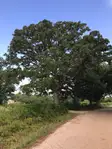
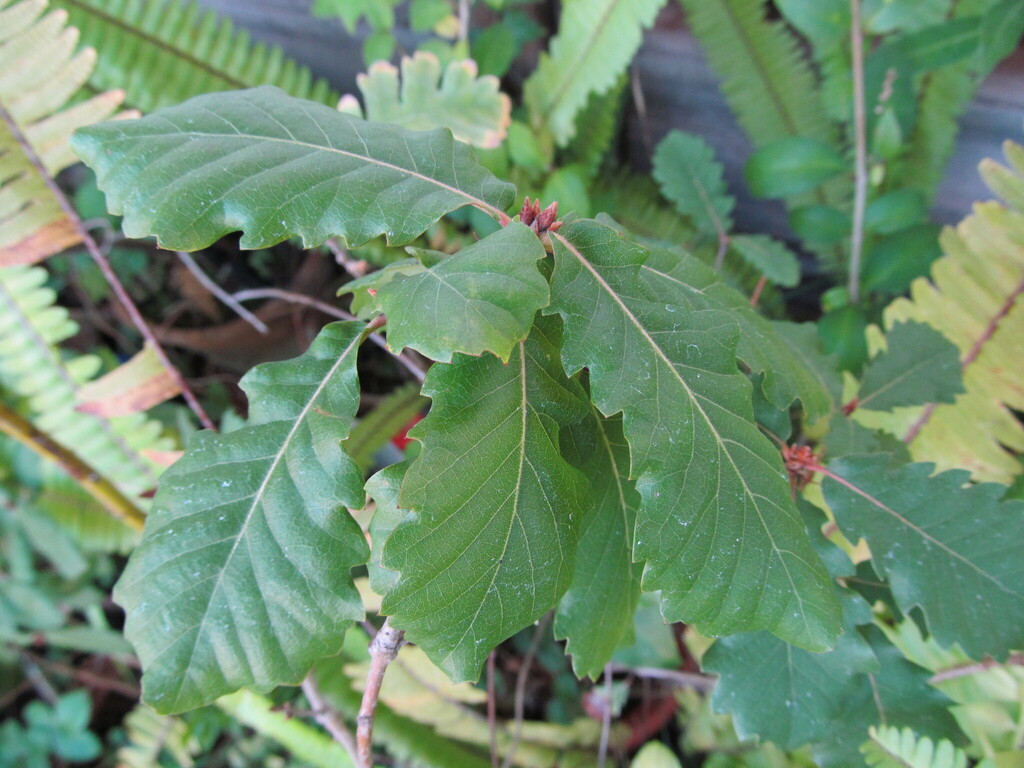
Photo: (c) zebedeugalinha, some rights reserved (CC BY) (CC BY), via iNaturalist. Species-typical, not necessarily this cultivar.

Gall Oak Tree

Quercus faginea · Fagaceae · all Quercus records · also called Portuguese oak · Wikipedia

View Saved

Is this one for your yard?

Enter your ZIP to see whether this is legal to plant in your state, and whether it survives your winter.

Gall oak cannot be called reliably fire resistant because a regional planting guide recommends it while a laboratory study rates it highly flammable.

The Generalitat Valenciana’s 2019 guidance includes Gall Oak Tree, Quercus faginea, among recommended low-flammability native or forest trees for gardens at the wildland-urban edge. That is an expert-curated recommendation suited to Valencia and the western Mediterranean. In contrast, a European Scientific Journal study from western Algeria puts gall oak in its high-flammability band, note 3, defined by fresh-material ignition delays of 65 seconds or less.

Other testing adds detail without resolving the disagreement. Annals of Forest Science measured fresh and oven-dried shoots, but the species shifted among condition-dependent clusters and received no overall resistant or flammable class. The FLAMITS database also reports 4.7 seconds to flaming for leaves taken live and dried before testing in a calorimeter. It describes one ignition test under stated conditions, not a universal threshold for the whole tree.

The sources use different approaches: a regional planting recommendation, a fresh-material ignition classification, and condition-specific laboratory measurements. They establish a genuine conflict but do not establish that these differences caused it. For a fire-conscious planting choice, Gall Oak Tree should therefore be treated as unsettled rather than confidently fire resistant.

Fire-resistant trees instead

Form
tree
Region
Algeria; Italy; Morocco; Spain; Valencia, Spain
Rated in
Global; Tlemcen Mountains, western Algeria; Tlemcen, western Algeria; Valencia, Spain / western Mediterranean
On this lot

1. Fire evidence and conditions

Fire evidence
Mixed evidence — location does not change the cited classification.
Fire-performance conditions
1 condition stated in cited fire-evidence rows.
Placement evidence
1 source placement record; source schemes remain separate.
Evidence regions
Global; Tlemcen Mountains, western Algeria; Tlemcen, western Algeria; Valencia, Spain / western Mediterranean

2. Why this plant is relevant here

3. Legal, ecological, and broader status

How to read this page

The status above is computed from the cited rows below: independent recommendations can support a fire-resistant result, an avoid row can produce keep-away, and disagreement stays visible as conflict. Placement notes preserve each source’s own scheme rather than translating unlike rules into one scale. This is evidence about a plant, not permission to plant it in every part of the defensible space; Zone 0 remains noncombustible.

Conditions in the fire evidence

These describe tested or rated plant material. They are not horticultural maintenance instructions.

Where its sources say to plant it

Placement rules below use each source's own distances or named zones, tied to its rating. They are not interchangeable with the directory's current Zone 0 guidance.

The evidence

Grouped by what each source concluded. Primary evidence rated the plant itself (a lab, field program, or original curation); corroboration compiled or republished another source's rating and resolves to its root lineage.

Recommends (1)

Avoids (1)

Mid-scale / conditional (1)

Listed without a rating (39)
Corroboration (39 rows from 1 source)
  • FLAMITS: FLAMmability plant traiTS database — Dryad / Global Ecology and Biogeography · Dryad version 9 · original source Corroboration Trait database lineage: meta-aggregator

    39 cited rows from this source; its identity, lineage and tier are stated once.

    • Primary study Dehane2017: Dehane, B., Hernando, C., Guijarro, M., & Madrigal, J. (2017). Flammability of some companion species in cork oak (Quercus suber L.) forests. Annals of Forest Science, 74, 60.

      Shared row context: plant part leaves; fuel live; device calorimeter; site Dehane2017-1; sampling september.

      • “time to flaming (s): 4.7”

        FLAMITS record 2295; Ignitability measurement; predrying yes.

      • Shared measurement context: Combustibility measurement; predrying yes.

        • “calorific value (kcal/kg): 2622.52”

          FLAMITS record 2305.

        • “maximum energy flux (kW/m²): 223.27”

          FLAMITS record 2315.

      • “burnt biomass (%): 92.3”

        FLAMITS record 2325; Consumability measurement; predrying yes.

      • “time to flaming (s): 13”

        FLAMITS record 2335; Ignitability measurement; predrying no.

      • Shared measurement context: Combustibility measurement; predrying no.

        • “calorific value (kcal/kg): 319.32”

          FLAMITS record 2345.

        • “maximum energy flux (kW/m²): 80.32”

          FLAMITS record 2355.

      • “burnt biomass (%): 94.26”

        FLAMITS record 2365; Consumability measurement; predrying no.

    • Primary study DellaRocca2018: Della Rocca, G., Danti, R., Hernando, C., Guijarro, M., & Madrigal, J. (2018). Flammability of Two Mediterranean Mixed Forests: Study of the Non-additive Effect of Fuel Mixtures in Laboratory. Frontiers in Plant Science, 9, 825.

      Shared row context: fuel live; predrying no; device calorimeter; site DellaRocca2018-1; sampling september.

      • “time to flaming (s): 69.3”

        FLAMITS record 2591; Ignitability measurement; plant part twigs.

      • Shared measurement context: Combustibility measurement; plant part twigs.

        • “maximum energy flux (kW/m²): 147.8”

          FLAMITS record 2592.

        • “calorific value (kcal/kg): 1886.88”

          FLAMITS record 2593.

        • “mass loss rate (g/s): 0.13”

          FLAMITS record 2594.

      • “burnt biomass (%): 91.7”

        FLAMITS record 2595; Consumability measurement; plant part twigs.

      • “time to flaming (s): 2.7”

        FLAMITS record 2611; Ignitability measurement; plant part litter.

      • Shared measurement context: Combustibility measurement; plant part litter.

        • “maximum energy flux (kW/m²): 210.4”

          FLAMITS record 2612.

        • “calorific value (kcal/kg): 5015.76”

          FLAMITS record 2613.

        • “mass loss rate (g/s): 0.06”

          FLAMITS record 2614.

      • “burnt biomass (%): 84.6”

        FLAMITS record 2615; Consumability measurement; plant part litter.

      • “time to flaming (s): 94.5”

        FLAMITS record 2625; Ignitability measurement; plant part bark.

      • “maximum energy flux (kW/m²): 58”

        FLAMITS record 2626; Combustibility measurement; plant part bark.

      • “flaming duration (s): 1149”

        FLAMITS record 2627; Sustainability measurement; plant part bark.

    • Primary study Guijarro2002: Guijarro, M., Hernando, C., Díez, C., Martínez, E., Madrigal, J., Lampin-Cabaret, C., ... Vega, J. (2002). Flammability of some fuel beds common in the South-European ecosystems. IV International Conference Forest Fire Research. Coimbra, Portugal.

      Shared row context: plant part litter; fuel all; predrying no; device burning bench; site Guijarro2002-1; sampling ND.

      • Shared measurement context: Ignitability measurement.

        • “time to flaming (s): 12.8”

          FLAMITS record 4651.

        • “ignition frequency (%): 40”

          FLAMITS record 4674.

        • “time to flaming (s): 12.8”

          FLAMITS record 4682.

      • “flame height (cm): 17”

        FLAMITS record 4657; Combustibility measurement.

      • Shared measurement context: Sustainability measurement.

        • “rate of burning spread (cm/s): 0.18”

          FLAMITS record 4664.

        • “rate of burning spread (cm/s): 0.18”

          FLAMITS record 4690.

      • “burnt biomass (%): 53”

        FLAMITS record 4667; Consumability measurement.

    • Primary study Hachmi2011: Hachmi, M. H., Sesbou, A., Benjelloun, H., El Handouz, N., & Bouanane, F. (2011). A Simple Technique to Estimate the Flammability Index of Moroccan Forest Fuels. Journal of Combustion, 2011, 1-11.

      Shared row context: plant part twigs; fuel live; predrying no; device epiradiator; site Hachmi2011-1; sampling ND.

      • Shared measurement context: Ignitability measurement.

        • “time to flaming (s): 4”

          FLAMITS record 4721.

        • “flammability value: 2.83”

          FLAMITS record 4792.

      • “flame height (cm): 17”

        FLAMITS record 4777; Combustibility measurement.

      • “burning duration (s): 11.4”

        FLAMITS record 4778; Sustainability measurement.

    • Primary study Henaoui2013: Henaoui, S. E. -A., Bouazza, M., & Amara, M. (2013). The fire risk of the plant groupings with Cistus in the area of Tlemcen (Western Algeria). European Scientific Journal, 9, 84-103.

      Shared row context: plant part twigs; fuel live; predrying yes; device infrared burner; site Henaoui2013-1; sampling spring.

      • “flame height (cm): 16.11”

        FLAMITS record 4892; Combustibility measurement.

      • “time to flaming (s): 62.6”

        FLAMITS record 4930; Ignitability measurement.

      • “burning duration (s): 105.3”

        FLAMITS record 4968; Sustainability measurement.

    • Primary study Benhalima2019: Benhalima, Y., & Dehane, B. (2019). Flammability of certain conifers and oak species of north west Algeria. Proceedings of the X International Scientific Agricultural Symposium “Agrosym 2019”. Jahorina.

      Shared row context: plant part twigs; fuel live; predrying no; device calorimeter; site Benhalima2019-1; sampling september 2017.

      • “time to flaming (s): 12.42”

        FLAMITS record 16781; Ignitability measurement.

      • Shared measurement context: Combustibility measurement.

        • “maximum energy flux (kW/m²): 80.94”

          FLAMITS record 16782.

        • “calorific value (kcal/kg): 1062.864242”

          FLAMITS record 16783.

      • “burnt biomass (%): 94.55”

        FLAMITS record 16784; Consumability measurement.
Fire-resistant trees instead

Fire-resistant trees listed above

Last verified 2026-08-23. JSON (CC BY 4.0)

Profiles: GBIF · iNaturalist · Wikidata · Wikipedia ·

Quercus faginea (Portuguese oak). FireApproved. https://fireapproved.com/plants/quercus-faginea/. Last verified 2026-08-23.