Home / Guides / How to read a record / Does anything burn here besides stubble
Does anything burn here besides stubble
Yes. Stubble is in the statute. It is not the only fuel. NDSU (15 Nov 2024): 2024 wildfires impacted more than 110,000 acres. Ray/Tioga burned almost 89,000 acres of rangeland, cropland, and hay land. The last fire of that size was 1999, Halloween, from Sidney, Montana, more than 70,000 acres of western North Dakota range. R2077 (March 2023): the grasslands evolved with fire. Naturally ignited fires about every 5 to 10 years in mesic country and about every 25 years in the drier portions. Century Code names grass or stubble lands. NDFS Fire Management links Firewise USA. It does not print a plant list. Juniperus scopulorum and Pinus ponderosa currently compute as avoid and include ND.
You are on a prairie-pothole farmstead, looking at last year’s stubble, and concluding wildfire is a western-forest problem. NDSU’s 110,000 acres were grass and hay. The juniper row on the north side of the house is the plant that dies in that fire. Those are not the same job.
This is not a North Dakota doorway.
Why it matters
“Nothing burns here but stubble” skips the grass. R2077 says the grassland needs episodic fire. NDSU says native grasses come back and conifers do not. A recovering pasture is not a permit to keep Rocky Mountain juniper against the siding. Deep-rooted native is not fire-safe. Flint Hills burning is the ranch-scale version. This page is the 2024 acreage and the woody farmstead.
Zone 0 is still not a planting list. The 50-foot plow strip in Century Code is for setting a breaking-land fire. It is not the five feet.
This site’s North Dakota plant evidence currently holds 277 USDA-distribution records (176 on-list, 20 avoid, 3 conflict, 78 candidate). That is occurrence. NDFS did not rate those rows.
How it works
What burned (NDSU, 15 Nov 2024):
- More than 110,000 acres in 2024.
- Ray/Tioga: almost 89,000 acres of rangeland, cropland, and hay land.
- 1999 Halloween fire: more than 70,000 acres, started in Sidney, Montana, primarily range and grazing lands.
- Extreme (D3) drought in western North Dakota at the time of the release. Cool-season grasses lose vigor after a burn. Expect 30% to 40% less forage the next year if spring precipitation is normal; 40% to 60% less with the drought stacked on.
What the grassland does with fire (R2077 and the same NDSU release):
- Evolved with episodic fire. 5 to 10 years mesic; about 25 years drier.
- Native grasses and forbs: no long-term negative impact. Litter back to normal by year two or three.
- Kentucky bluegrass and smooth brome: injured.
- Conifers, including cedars and pines, die. Rocky Mountain juniper named. Trees should not be found on upland grasslands.
- Green ash draws: green ash, box elder, American elm sprout. That is a draw, not a windbreak recipe for Zone 0.
What NDFS opened here:
- 357 fire departments. Training, grants, fire reporting, FEPP, fire-danger signs.
- Firewise USA: a link to nfpa.org. No species table on the opened page.
What the 2026 Forest Service / NDFS fact sheet counts (FY 2025 work, updated 13 Feb 2026):
- 823,407 acres of forest land. 31,878,661 acres of private land under state fire protection.
- 803 wildfire incidents documenting 62,048 acres. 26 acres of hazardous fuels reduction.
- Windbreak renovation: 36.5 acres reimbursed. Keeping a windbreak functional is not a Firewise plant table.
Do not add the 2024 NDSU acres to the 2025 reporting acres. They are different sentences.
The paths
| Claim | Opened source | What it is not |
|---|---|---|
| “Only stubble burns” | Century Code names grass or stubble; 2024 Ray/Tioga was rangeland, cropland, and hay | A forest-only problem |
| Native grass recovers | NDSU: no long-term negative impact on native grasses and forbs | Little bluestem as a foundation plant |
| Conifer farmstead row | NDSU: cedars and pines die; trees should not be on upland grasslands | A Firewise windbreak |
| 50-foot plow strip | R2077 / § 18-08-02 for breaking land | Zone 0 |
| 276 North Dakota plant records | USDA distribution | An NDFS Firewise list |
| Firewise on the NDFS page | NFPA community program | A species table |
What people mix up
- Stubble burning with rangeland fire.
- A grassland that needs fire with a house that will not ignite.
- Native grass recovery with on-list at the wall.
- Rocky Mountain juniper as a prairie native exemption. This directory’s Juniperus scopulorum currently computes as avoid, consensus, and includes ND.
- Schizachyrium scoparium as a Firewise turf. It currently computes as avoid and includes ND.
- Nebraska’s cedar-as-seed-source page as this page. Shelterbelts again on the plains is NFS H-multiples and 333,134 cedar acres. This page is 110,000 burned acres and NDSU’s conifer-kill sentence.
- The 50-foot breaking-land strip as the five feet.
- 803 incidents / 62,048 acres (2025 reporting) as the 2024 110,000-acre year.
How to check
- Open the NDSU 15 Nov 2024 release. Read 110,000 acres, Ray/Tioga, and the conifer-kill sentence.
- Open R2077. Read 5-to-10 and 25 years. Read grass or stubble lands and the 50-foot strip.
- Open NDFS Fire Management. Note the missing plant table.
- Open the 2026 fact sheet. Separate 823,407 forest acres from 31.8 million acres under fire protection.
- Open Juniperus scopulorum, Juniperus virginiana, Pinus ponderosa, and Schizachyrium scoparium.
- Open North Dakota plant evidence. Distribution is not a recommendation.
- Do not plant in Zone 0.
Limits
This page quotes opened NDSU HTML, the opened R2077 PDF, the opened NDFS Fire Management HTML, and the opened 2026 Forest Service fact sheet. The 2020 North Dakota Forest Action Plan was not opened. Dakota Prairie Grasslands prescribed-burn HTML was not quoted. NDFS Firewise is a link to NFPA, not a local landscaping PDF. 276 is a count of stored USDA-distribution rows as of this writing, not an NDFS statistic. 2024 NDSU acres and 2025 NDFS reporting acres are not added together. Zone 0 is not a planting list.
Related records
- Juniperus scopulorum
- Juniperus virginiana
- Pinus ponderosa
- Schizachyrium scoparium
- Fraxinus pennsylvanica
- Artemisia tridentata
- North Dakota plant evidence
- Shelterbelts again on the plains
- What Flint Hills burning teaches a homeowner
- Glossary: Firewise USA
- Glossary: defensible space
Plant records this page rests on
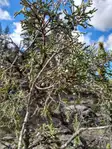

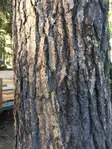
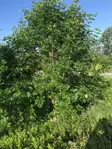
Questions
Does anything burn in North Dakota besides stubble?
Yes. NDSU Extension (15 Nov 2024): 2024 wildfires impacted more than 110,000 acres. The Ray/Tioga wildfires burned almost 89,000 acres of rangeland, cropland, and hay land. The state had not seen wildfires of that magnitude since the 1999 Halloween fire that started in Sidney, Montana, and burned more than 70,000 acres of western North Dakota, primarily range and grazing lands. NDSU R2077 (March 2023): the grasslands evolved with episodic fire; naturally ignited fires about every 5 to 10 years in mesic areas and about every 25 years in the drier portions. North Dakota Century Code § 18-08-02 names grass or stubble lands.
If native grass recovers, is prairie planting Firewise at the house?
No. NDSU: native grasses and forbs do not experience long-term negative impacts due to fire. North Dakota is a cool-season, grass-dominated state. Conifers, including cedars and pines, die from fire. Rocky Mountain juniper is named as killed. Trees should not be found on upland grasslands. This directory’s Schizachyrium scoparium currently computes as avoid and includes ND. Recovering rangeland is not a foundation planting list.
Does North Dakota publish a Firewise plant table?
Not on the opened NDFS Fire Management page. That page is 357 fire departments, training, grants, fire reporting, and a Firewise USA link to nfpa.org. It is not a species list. This site’s North Dakota plant evidence page currently holds 276 USDA-distribution records. Those rows are not an NDFS palette.
Is the 50-foot plow strip Zone 0?
No. R2077 quotes Century Code § 18-08-02: a person may set grass or stubble lands on fire when commencing to break or plow those lands if a strip at least 50 feet wide of well-plowed or burned land completely encompasses the land where the fire is set. That is an open-burning rule for breaking land. It is not IBHS Essential’s 0-to-5-foot noncombustible zone.
Is this a North Dakota doorway page?
No. The object is 110,000 burned acres versus stubble-only folklore, and woody farmstead plantings on a grassland that kills conifers. Place claims sit on whereThisDiffers. The North Dakota plant evidence list is USDA distribution, not this article.