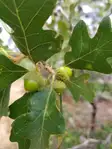
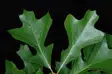
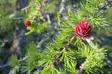
United States / Grow / messmate

messmate (Eucalyptus obliqua)
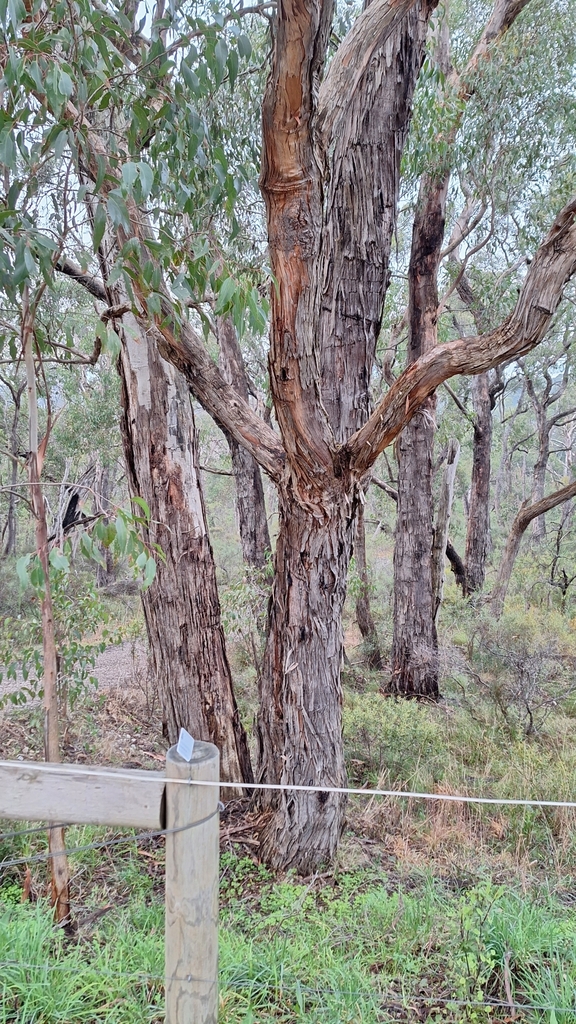
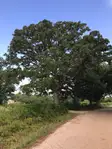
Photo: no rights reserved (CC0), via iNaturalist. Species-typical, not necessarily this cultivar.

messmate

Eucalyptus obliqua · Myrtaceae · all Eucalyptus records · also called Brown Stringybark · Wikipedia

View Saved

Is this one for your yard?

Enter your ZIP to see whether this is legal to plant in your state, and whether it survives your winter.

Brown stringybark has an avoid result in the evidence table. A 2017 source classifies Eucalyptus obliqua as highly flammable, calling for removal from the Building Protection Zone and avoidance within the Fuel Modified Zone.

The evidence pack also contains non-rated measurements of live and dead leaves, including time to flaming, flame duration, calorific value, and burning spread. Those rows provide experimental detail but do not add another directional recommendation. This leaves the page at limited evidence for its computed verdict.

Inspect the source table for the guidance and measurements. Comparisons provide same-form alternatives; the genus index organizes other entries for the genus without transferring their findings to brown stringybark.

Fire-resistant trees instead

Form
tree
Region
Australia; Tasmania, Australia
Rated in
Global; Tasmania, Australia
On this lot

1. Fire evidence and conditions

Fire evidence
Highly flammable — location does not change the cited classification.
Placement evidence
1 source placement record; source schemes remain separate.
Evidence regions
Global; Tasmania, Australia

2. Why this plant is relevant here

3. Legal, ecological, and broader status

How to read this page

The status above is computed from the cited rows below: independent recommendations can support a fire-resistant result, an avoid row can produce keep-away, and disagreement stays visible as conflict. Placement notes preserve each source’s own scheme rather than translating unlike rules into one scale. This is evidence about a plant, not permission to plant it in every part of the defensible space; Zone 0 remains noncombustible.

Where its sources say to plant it

Placement rules below use each source's own distances or named zones, tied to its rating. They are not interchangeable with the directory's current Zone 0 guidance.

The evidence

Grouped by what each source concluded. Primary evidence rated the plant itself (a lab, field program, or original curation); corroboration compiled or republished another source's rating and resolves to its root lineage.

Avoids (1)

Listed without a rating (38)
Corroboration (38 rows from 1 source)
  • FLAMITS: FLAMmability plant traiTS database — Dryad / Global Ecology and Biogeography · Dryad version 9 · original source Corroboration Trait database lineage: meta-aggregator

    38 cited rows from this source; its identity, lineage and tier are stated once.

    • Primary study Clarke2014: Clarke, P. J., Prior, L. D., French, B. J., Vincent, B., Knox, K. J., & Bowman, D. M. (2014). Using a rainforest-flame forest mosaic to test the hypothesis that leaf and litter fuel flammability is under natural selection. Oecologia, 176, 1123-33.

      Shared row context: plant part leaves; device burning bench; site Clarke2014-1; sampling october.

      • “time to flaming (s): 3.7”

        FLAMITS record 1211; Ignitability measurement; fuel dead; predrying yes.

      • “flaming duration (s): 10.6”

        FLAMITS record 1235; Sustainability measurement; fuel dead; predrying yes.

      • “time to flaming (s): 17.9”

        FLAMITS record 1259; Ignitability measurement; fuel live; predrying no.

      • “flaming duration (s): 10.9”

        FLAMITS record 1283; Sustainability measurement; fuel live; predrying no.

    • Primary study Dickinson1985: Dickinson, K. J. M., & Kirkpatrick, J. B. (1985). The flammability and energy content of some important plant-species and fuel components in the forests of Southeastern Tasmania. Journal of Biogeography, 12, 121-134.

      Shared row context: predrying yes; device calorimeter; site Dickinson1985-1; sampling winter.

      • “calorific value (kcal/kg): 5574.8”

        FLAMITS record 2899; Combustibility measurement; plant part leaves; fuel dead.

      • “rate of burning spread (cm/s): 0.29”

        FLAMITS record 2909; Sustainability measurement; plant part leaves; fuel dead.

      • “calorific value (kcal/kg): 5254.06”

        FLAMITS record 2922; Combustibility measurement; plant part leaves; fuel live.

      • “calorific value (kcal/kg): 4902.48”

        FLAMITS record 2929; Combustibility measurement; plant part twigs; fuel live.

      • “rate of burning spread (cm/s): 0.21”

        FLAMITS record 2950; Sustainability measurement; plant part leaves; fuel live.

    • Primary study Mutch1970: Mutch, R. W. (1970). Wildland Fires and Ecosystems--A Hypothesis. Ecology, 51, 1046-1051.

      Shared row context: plant part leaves; fuel live; predrying no; site Mutch1970-1; sampling ND.

      • “calorific value (kcal/kg): 5598”

        FLAMITS record 9727; Combustibility measurement; device calorimeter.

      • Shared measurement context: Combustibility measurement; device burning bench.

        • “flame height (cm): 90”

          FLAMITS record 9729.

        • “energy flux (kW/m²): 280.53”

          FLAMITS record 9736.

      • “burnt biomass (%): 92.7”

        FLAMITS record 9731; Consumability measurement; device burning bench.

    • Primary study Miller2022: Miller, T. S., Filkov, A. I., & Penman, T. D. (2022). Improved laboratory method to test flammability metrics of live plants under dynamic conditions and future implications. International Journal of Wildland Fire, 32, 277-295.

      Shared row context: plant part bark; fuel live; predrying yes; device radiant panel; site Miller2022-1; sampling may 2019.

      • Shared measurement context: Ignitability measurement.

        • “time to smoke (s): 1”

          FLAMITS record 16508.

        • “time to smoke (s): 128”

          FLAMITS record 16509.

        • “time to smoke (s): 1”

          FLAMITS record 16510.

        • “time to smoke (s): 130”

          FLAMITS record 16511.

        • “time to smouldering (s): 4”

          FLAMITS record 16524.

        • “time to smouldering (s): 184”

          FLAMITS record 16525.

        • “time to smouldering (s): 2”

          FLAMITS record 16526.

        • “time to smouldering (s): 171”

          FLAMITS record 16527.

        • “time to flaming (s): 7”

          FLAMITS record 16540.

        • “time to flaming (s): 278”

          FLAMITS record 16541.

        • “time to flaming (s): 3”

          FLAMITS record 16542.

        • “time to flaming (s): 198”

          FLAMITS record 16543.

      • Shared measurement context: Sustainability measurement.

        • “burning duration (s): 118”

          FLAMITS record 16556.

        • “burning duration (s): 433”

          FLAMITS record 16557.

        • “burning duration (s): 66”

          FLAMITS record 16558.

        • “burning duration (s): 306”

          FLAMITS record 16559.

    • Primary study Wang2021: Wang, H., van Eyk, P. J., Medwell, P. R., Birzer, C., Tian, Z., Possell, M., & Huan, X. (2021). Smouldering fire and emission characteristics of Eucalyptus litter fuel. Fire and Materials, 46, 576- 586.
      Shared row context: fuel live; predrying yes; site Wang2021-1; sampling ND.

      • “calorific value (kcal/kg): 4251.456967”

        FLAMITS record 16806; Combustibility measurement; plant part bark; device calorimeter.

      • “calorific value (kcal/kg): 4657.494992”

        FLAMITS record 16807; Combustibility measurement; plant part leaves; device calorimeter.

      • “calorific value (kcal/kg): 4203.687787”

        FLAMITS record 16808; Combustibility measurement; plant part twigs; device calorimeter.

      • Shared measurement context: Combustibility measurement; plant part twigs; device thermal analyzer.

        • “maximum flame temperature (°C): 664.76”

          FLAMITS record 16818.

        • “maximum flame temperature (°C): 656.7”

          FLAMITS record 16819.

        • “maximum flame temperature (°C): 659.26”

          FLAMITS record 16820.

      • Shared measurement context: Sustainability measurement; plant part twigs; device thermal analyzer.

        • “rate of burning spread (cm/s): 8.15”

          FLAMITS record 16830.

        • “rate of burning spread (cm/s): 6.4”

          FLAMITS record 16831.

        • “rate of burning spread (cm/s): 9.46”

          FLAMITS record 16832.

Fire-resistant trees instead

Fire-resistant trees listed above

Last verified 2026-08-23. JSON (CC BY 4.0)

Profiles: USDA PLANTS · GBIF · iNaturalist · Wikidata · Wikipedia · ITIS

Eucalyptus obliqua (Brown Stringybark). FireApproved. https://fireapproved.com/plants/eucalyptus-obliqua/. Last verified 2026-08-23.