Enter your ZIP to see whether this is legal to plant in your state, and whether it survives your winter.
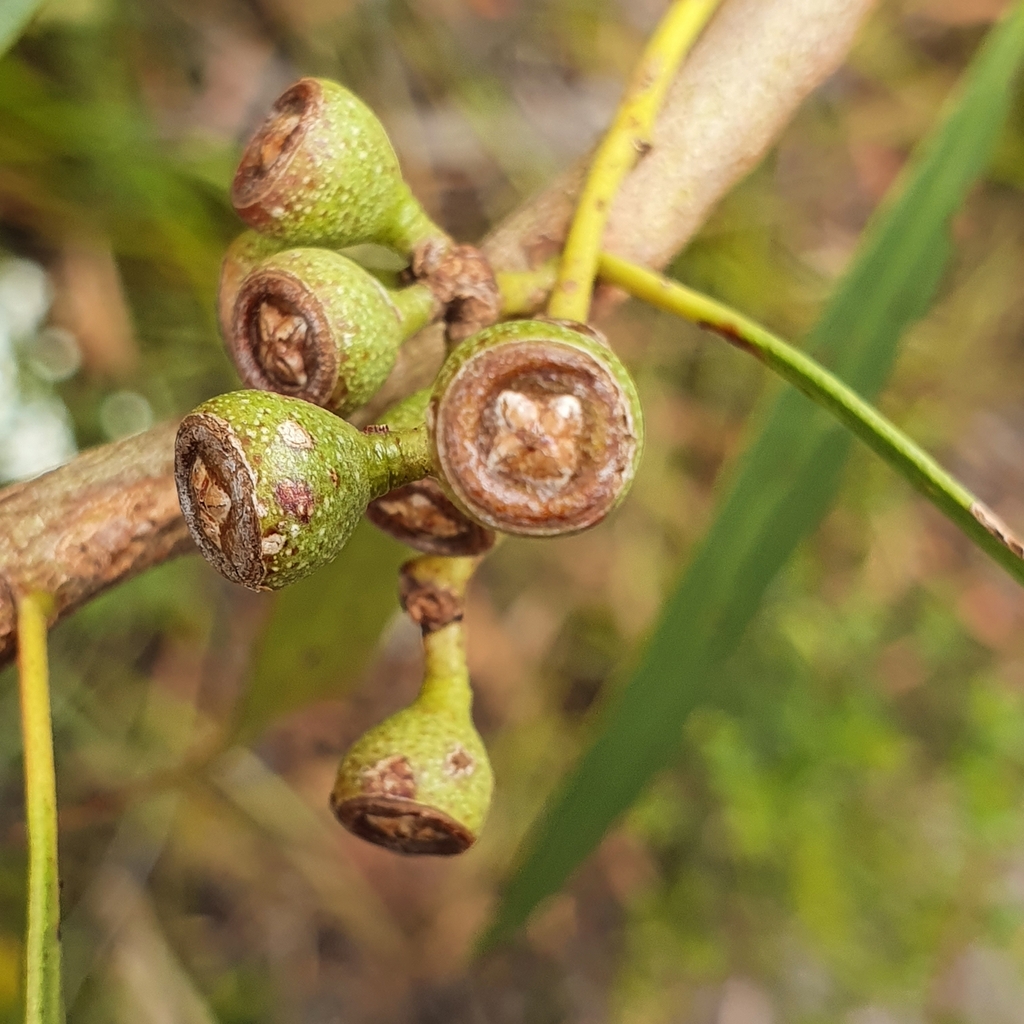
Tasmania Fire Service rates black peppermint highly flammable and advises moving it away from houses.
The fire service's plant list identifies Eucalyptus amygdalina, black peppermint, in its high-flammability group. Its direction is to remove such plants from the Building Protection Zone and avoid them in the surrounding Fuel Modified Zone. The inner zone keeps vegetation and other fuels minimal; the outer zone maintains a low fuel level. Their widths depend on the site and slope.
The species is marked as native to Tasmania in the same list. That origin does not make it a low-flammability choice: the guide warns that plants containing substantial volatile oils, including eucalypts, should be avoided. It recommends replacing high-flammability plants near the house with better alternatives.
1 sourced range or established record. This is not an invasive warning.
USDA hardiness
3. Legal, ecological, and broader status
Legal-list status
Seed-list status
Reported invasive here
Broader regional context
Federal context
How to read this page
The status above is computed from the cited rows below: independent recommendations can support a fire-resistant result, an avoid row can produce keep-away, and disagreement stays visible as conflict. Placement notes preserve each source’s own scheme rather than translating unlike rules into one scale. This is evidence about a plant, not permission to plant it in every part of the defensible space; Zone 0 remains noncombustible.
Native and introduced range evidence
These are exact U.S. botanical-area records from the cited range source. Native and
introduced describe biogeographic relationship, not fire performance or planting approval.
Doubtful and extinct rows stay visible but do not count as current presence.
The lossless worldwide derivative is retained once in the research corpus; object pages repeat only exact U.S. areas needed by the local lens. The JSON twin carries the same page assertions.
Where its sources say to plant it
Placement rules below use each source's own distances or named zones, tied to its rating.
They are not interchangeable with the directory's current Zone 0 guidance.
Fire Resisting Garden Plants for the Urban Fringe and Rur…: remove from the Building Protection Zone; avoid in the Fuel Modified Zone [Texas Building Protection Zone] (with its avoid rating)
The evidence
Grouped by what each source concluded. Primary evidence rated the plant itself
(a lab, field program, or original curation); corroboration compiled or
republished another source's rating and resolves to its root lineage.
6 cited rows from this source; its identity, lineage and tier are stated once.
Primary study Dickinson1985: Dickinson, K. J. M., & Kirkpatrick, J. B. (1985). The flammability and energy content of some important plant-species and fuel components in the forests of Southeastern Tasmania. Journal of Biogeography, 12, 121-134.