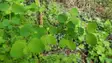
hoaryleaf ceanothus
Ceanothus crassifolius
A genus split is not a placement verdict.
Is this one for your yard?
Enter your ZIP to see whether this is legal to plant in your state, and whether it survives your winter.
- Form
- shrub
- Rated in
- Global
United States / Grow / hoaryleaf ceanothus
Ceanothus crassifolius
A genus split is not a placement verdict.
Is this one for your yard?
Enter your ZIP to see whether this is legal to plant in your state, and whether it survives your winter.
The status above is computed from the cited rows below: independent recommendations can support a fire-resistant result, an avoid row can produce keep-away, and disagreement stays visible as conflict. Placement notes preserve each source’s own scheme rather than translating unlike rules into one scale. This is evidence about a plant, not permission to plant it in every part of the defensible space; Zone 0 remains noncombustible.
These are exact U.S. botanical-area records from the cited range source. Native and introduced describe biogeographic relationship, not fire performance or planting approval. Doubtful and extinct rows stay visible but do not count as current presence.
Current native
exact source area
Current introduced
exact source areas
Qualified
doubtful or extinct source rows
FLAMITS: FLAMmability plant traiTS database
“temperature at flaming (°C): 319”
FLAMITS record 3302; Ignitability measurement; plant part leaves; fuel live; predrying no; device flat flame burner; site Engstrom2004-1; sampling ND. Primary study Engstrom2004: Engstrom, J. D., Butler, J. K., Smith, S. G., Baxter, L. L., Fletcher, T. H., & Weise, D. R. (2004). Ignition behavior of live California chaparral leaves. Combustion Science and Technology, 176, 1577-1591.
Primary study Fletcher2007: Fletcher, T. H., Pickett, B. M., Smith, S. G., Spittle, G. S., Woodhouse, M. M., Haake, E., & Weise, D. R. (2007). Effects of moisture on ignition behavior of moist California chaparral and Utah leaves. Combustion Science and Technology, 179, 1183-1203.
“temperature at flaming (°C): 455.7”
FLAMITS record 3340.
“time to flaming (s): 304.8”
FLAMITS record 3346.
Primary study McAllister2017: McAllister, S., & Weise, D. (2017). Effects of season on ignition of live wildland fuels using the forced ignition and flame spread test apparatus. Combustion Science and Technology, 189, 231-247.
“time to flaming (s): 25.88”
FLAMITS record 9097.
“time to flaming (s): 30.04”
FLAMITS record 9107.
“time to flaming (s): 18.87”
FLAMITS record 9098; sampling june.
“time to flaming (s): 21.19”
FLAMITS record 9099; sampling july.
“time to flaming (s): 17.94”
FLAMITS record 9100; sampling august.
“time to flaming (s): 24.21”
FLAMITS record 9101; sampling october.
“time to flaming (s): 26.44”
FLAMITS record 9102; sampling november.
“time to flaming (s): 26.06”
FLAMITS record 9103; sampling january.
“time to flaming (s): 26.62”
FLAMITS record 9104; sampling february.
“time to flaming (s): 30.47”
FLAMITS record 9105; sampling march.
“time to flaming (s): 29.63”
FLAMITS record 9106; sampling april.
Primary study Pickett2009: Pickett, B. M., Isackson, C., Wunder, R., Fletcher, T. H., Butler, B. W., & Weise, D. R. (2009). Flame interactions and burning characteristics of two live leaf samples1. International Journal of Wildland Fire, 18, 865-874.
“time to flaming (s): 6.21”
FLAMITS record 10537.
“temperature at flaming (°C): 319”
FLAMITS record 10557.
“time to flaming (s): 0.05”
FLAMITS record 10567.
“time to flaming (s): 6.26”
FLAMITS record 10577.
“time to flaming (s): 6.35”
FLAMITS record 10578.
“temperature at flaming (°C): 293”
FLAMITS record 10619.
“temperature at flaming (°C): 269”
FLAMITS record 10620.
“flaming duration (s): 10.1”
FLAMITS record 10547.
“flaming duration (s): 13.62”
FLAMITS record 10598.
“flaming duration (s): 9.85”
FLAMITS record 10599.
Primary study Sun2006: Sun, L., Zhou, X., Mahalingam, S., & Weise, D. R. (2006). Comparison of burning characteristics of live and dead chaparral fuels. Combustion and Flame, 144, 349-359.
“mass loss rate (g/s): 23.19”
FLAMITS record 12966.
“mass loss rate (g/s): 16.03”
FLAMITS record 12969.
“mass loss rate (g/s): 5.49”
FLAMITS record 12972.
Primary study Smith2005: Smith, S. G. (2005). Effects of Moisture on Combustion Characteristics of Live California Chaparral and Utah Foliage. Master dissertations. Brigham Young University - Provo.
“temperature at flaming (°C): 231”
FLAMITS record 16699.
“time to flaming (s): 0.69”
FLAMITS record 16700.
“temperature at flaming (°C): 396”
FLAMITS record 16731.
“temperature at flaming (°C): 420”
FLAMITS record 16732.
“temperature at flaming (°C): 462”
FLAMITS record 16733.
“temperature at flaming (°C): 515”
FLAMITS record 16734.
“temperature at flaming (°C): 463”
FLAMITS record 16735.
“temperature at flaming (°C): 496”
FLAMITS record 16736.
“time to flaming (s): 4.99”
FLAMITS record 16737.
“time to flaming (s): 3.19”
FLAMITS record 16738.
“time to flaming (s): 3.28”
FLAMITS record 16739.
“time to flaming (s): 5.62”
FLAMITS record 16740.
“time to flaming (s): 6.7”
FLAMITS record 16741.
“time to flaming (s): 7.11”
FLAMITS record 16742.
Primary study Pickett2010: Pickett, B. M., Isackson, C., Wunder, R., Fletcher, T. H., Butler, B. W., & Weise, D. R. (2010). Experimental measurements during combustion of moist individual foliage samples. International Journal of Wildland Fire, 19, 153-162 .
“mass loss rate (g/s): 0.0089”
FLAMITS record 18236.
“mass loss rate (g/s): 0.0078”
FLAMITS record 18237.