United States / Grow / chamise

chamise

Adenostoma fasciculatum · Rosaceae · all Adenostoma records · also called Chamise, greasewood · Wikipedia

View Saved

Is this one for your yard?

Enter your ZIP to see whether this is legal to plant in your state, and whether it survives your winter.

Chamise has been rated, but the primary evidence does not yet establish it as either fire resistant or hazardous.

California landscape guidance does lean against it. The University of California Forest Products Laboratory reported that eight earlier references did not recommend chamise for high-fire-risk areas. The Diablo Firesafe Council likewise lists greasewood chamise as a shrub with unfavorable fire-performance ratings in at least three references, citing eight references for the row. Both sources compile earlier plant lists rather than setting a single scientific test standard. Their rating terms were often undefined, and the university report cautions that the underlying lists frequently lacked a scientific basis.

A laboratory measurement answers a narrower question. In a study stored by Dryad, live chamise leaves that had not been predried had a flaming temperature of 311°C when tested with a flat-flame burner. That figure belongs to that plant part and experimental setup. The database does not apply one threshold across different devices, materials, and flammability measurements, so the temperature alone does not classify a whole shrub in a landscape.

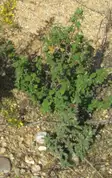
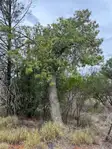
Chamise is a shrub in the rose family, native to the southwestern United States. The compiled guidance gives homeowners reason for caution in high-fire-risk areas, but the measured leaf temperature does not turn those warnings into a settled primary verdict.

Form
shrub
Region
EE. UU.
Rated in
California; Global
On this lot

1. Fire evidence and conditions

Fire evidence
Mixed evidence — location does not change the cited classification.
Placement evidence
2 source placement records; source schemes remain separate.
Evidence regions
California; Global
Typed publication scope: 2 scopes across 2 cited fire sources

2. Why this plant is relevant here

Native range
Current cited native range in CA.

3. Legal, ecological, and broader status

How to read this page

The status above is computed from the cited rows below: independent recommendations can support a fire-resistant result, an avoid row can produce keep-away, and disagreement stays visible as conflict. Placement notes preserve each source’s own scheme rather than translating unlike rules into one scale. This is evidence about a plant, not permission to plant it in every part of the defensible space; Zone 0 remains noncombustible.

Native and introduced range evidence

These are exact U.S. botanical-area records from the cited range source. Native and introduced describe biogeographic relationship, not fire performance or planting approval. Doubtful and extinct rows stay visible but do not count as current presence.

Current native

1

exact source area

Current introduced

0

exact source areas

Qualified

0

doubtful or extinct source rows

1 native source area · World Checklist of Vascular Plants, version 16 v16, as of 2026-06-04
  • California (CA)

The lossless worldwide derivative is retained once in the research corpus; object pages repeat only exact U.S. areas needed by the local lens. The JSON twin carries the same page assertions.

Where its sources say to plant it

Placement rules below use each source's own distances or named zones, tied to its rating. They are not interchangeable with the directory's current Zone 0 guidance.

The evidence

Grouped by what each source concluded. Primary evidence rated the plant itself (a lab, field program, or original curation); corroboration compiled or republished another source's rating and resolves to its root lineage.

Avoids (2)

Corroboration (2 rows from 2 sources)
  • Defensible Space Landscaping in the Urban/Wildland Interface: A Compilation of Fire Performance Ratings of Residential Landscape Plants — University of California Forest Products Laboratory · Internal Report 36.01.137 (July 1997) · original source Corroboration Compilation lineage: ucfpl-berkeley

    “Not recommended by 8 references for use in high fire risk areas.”

    1997 Landscape Vegetation Database row: Adenostoma fasciculatum (Chamise, greasewood). Preserved UCFPL transcription marker: U8.

  • Fire Performance of Common Plants (Guide to Plants) — Diablo Firesafe Council · live page captured 2026-08-29 · original source Corroboration Mirror lineage: ucfpl-berkeley resolves to Defensible Space Landscaping in the Urban/Wildland Interface: A Compilation of Fire Performance Ratings of Residential Landscape Plants

    “Table 2: unfavorable fire performance rating in 3 or more references (refs 3,4,8,9,30,40,41,42)”

    The Diablo Firesafe Council Guide to Plants lists Adenostoma fasciculatum (Greasewood chamise) as shrub, evergreen, in Table 2: plants with a unfavorable fire performance rating in 3 or more references. The guide cites 8 of its 57 numbered references for this row (3,4,8,9,30,40,41,42). The guide states the ranking terms in its underlying references were mostly undefined and makes no attempt to rank within the list, and that fire performance is compromised without maintenance.

Listed without a rating (105)
Corroboration (105 rows from 1 source)
  • FLAMITS: FLAMmability plant traiTS database — Dryad / Global Ecology and Biogeography · Dryad version 9 · original source Corroboration Trait database lineage: meta-aggregator

    105 cited rows from this source; its identity, lineage and tier are stated once.

    • “temperature at flaming (°C): 311”

      FLAMITS record 3301; Ignitability measurement; plant part leaves; fuel live; predrying no; device flat flame burner; site Engstrom2004-1; sampling ND. Primary study Engstrom2004: Engstrom, J. D., Butler, J. K., Smith, S. G., Baxter, L. L., Fletcher, T. H., & Weise, D. R. (2004). Ignition behavior of live California chaparral leaves. Combustion Science and Technology, 176, 1577-1591.

    • Primary study Gallacher2014: Gallacher, J. R., Lansinger, V., Hansen, S., Jack, D., Weise, D. R., & Fletcher, T. H. (2014). Effects of season and heating mode on ignition and burning behavior of three species of live fuel measured in a flat-flame burner system. Spring Technical Meeting of the Western States Section of the Combustion Institute, Pasadena, CA.

      Shared row context: plant part twigs; fuel live; predrying no; device flat flame burner; site Gallacher2014-1.

      • Shared measurement context: Ignitability measurement; sampling ND.

        • “time to flaming (s): 2.09”

          FLAMITS record 3526.

        • “time to flaming (s): 1.78”

          FLAMITS record 3527.

        • “time to flaming (s): 2.1”

          FLAMITS record 3528.

        • “time to flaming (s): 2.4”

          FLAMITS record 3529.

        • “time to flaming (s): 2.53”

          FLAMITS record 3530.

        • “time to flaming (s): 2.66”

          FLAMITS record 3531.

        • “time to flaming (s): 2.98”

          FLAMITS record 3532.

        • “time to flaming (s): 1.8”

          FLAMITS record 3533.

        • “time to flaming (s): 4”

          FLAMITS record 3534.

        • “time to flaming (s): 6.7”

          FLAMITS record 3535.

        • “time to flaming (s): 5.65”

          FLAMITS record 3536.

        • “temperature at flaming (°C): 335.03”

          FLAMITS record 3582.

        • “temperature at flaming (°C): 336.24”

          FLAMITS record 3583.

        • “temperature at flaming (°C): 298.84”

          FLAMITS record 3584.

        • “temperature at flaming (°C): 320.03”

          FLAMITS record 3585.

        • “temperature at flaming (°C): 347.37”

          FLAMITS record 3586.

        • “temperature at flaming (°C): 385.94”

          FLAMITS record 3587.

        • “temperature at flaming (°C): 405.32”

          FLAMITS record 3588.

        • “temperature at flaming (°C): 447.7”

          FLAMITS record 3589.

        • “temperature at flaming (°C): 463.52”

          FLAMITS record 3590.

      • Shared measurement context: Combustibility measurement; sampling may.

        • “flame height (cm): 5.66”

          FLAMITS record 3556.

        • “flame height (cm): 9.14”

          FLAMITS record 3557.

        • “flame height (cm): 8.59”

          FLAMITS record 3558.

        • “flame height (cm): 8.1”

          FLAMITS record 3559.

        • “flame height (cm): 11.66”

          FLAMITS record 3560.

        • “flame height (cm): 9.88”

          FLAMITS record 3561.

        • “flame height (cm): 5.9”

          FLAMITS record 3562.

        • “flame height (cm): 9.7”

          FLAMITS record 3563.

        • “flame height (cm): 7.37”

          FLAMITS record 3564.

        • “flame height (cm): 10.92”

          FLAMITS record 3565.

    • Primary study McAllister2017: McAllister, S., & Weise, D. (2017). Effects of season on ignition of live wildland fuels using the forced ignition and flame spread test apparatus. Combustion Science and Technology, 189, 231-247.

      Shared row context: Ignitability measurement; plant part twigs; fuel live; predrying no; device scale wind tunnel; site McAllister2017-2.

      • “time to flaming (s): 22.02”

        FLAMITS record 9052; sampling april.

      • “time to flaming (s): 20.34”

        FLAMITS record 9053; sampling may.

      • “time to flaming (s): 19.58”

        FLAMITS record 9054; sampling june.

      • “time to flaming (s): 19.11”

        FLAMITS record 9055; sampling july.

      • “time to flaming (s): 22.41”

        FLAMITS record 9056; sampling august.

      • “time to flaming (s): 21.14”

        FLAMITS record 9057; sampling september.

      • “time to flaming (s): 23.91”

        FLAMITS record 9058; sampling october.

      • “time to flaming (s): 20.91”

        FLAMITS record 9059; sampling november.

      • “time to flaming (s): 20.99”

        FLAMITS record 9060; sampling december.

      • “time to flaming (s): 25.48”

        FLAMITS record 9061; sampling january.

      • “time to flaming (s): 27.04”

        FLAMITS record 9062; sampling february.

      • “time to flaming (s): 26.44”

        FLAMITS record 9063; sampling march.

    • Primary study Sun2006: Sun, L., Zhou, X., Mahalingam, S., & Weise, D. R. (2006). Comparison of burning characteristics of live and dead chaparral fuels. Combustion and Flame, 144, 349-359.

      Shared row context: Combustibility measurement; plant part twigs; fuel dead; predrying no; device burning bench; site Sun2006-1; sampling spring and fall.

      • “mass loss rate (g/s): 22.19”

        FLAMITS record 12964.

      • “mass loss rate (g/s): 15.3”

        FLAMITS record 12967.

      • “mass loss rate (g/s): 6.11”

        FLAMITS record 12970.

    • Primary study Weise2005: Weise, D. R., White, R. H., Beall, F. C., & Etlinger, M. (2005). Use of the cone calorimeter to detect seasonal differences in selected combustion characteristics of ornamental vegetation. International Journal of Wildland Fire, 14, 321-338.

      Shared row context: plant part leaves; fuel live; device calorimeter; site Weise2005-1.

      • “time to flaming (s): 138”

        FLAMITS record 13754; Ignitability measurement; predrying no; sampling august.

      • “time to flaming (s): 108”

        FLAMITS record 13755; Ignitability measurement; predrying no; sampling december.

      • “time to flaming (s): 104”

        FLAMITS record 13756; Ignitability measurement; predrying no; sampling march.

      • “time to flaming (s): 100”

        FLAMITS record 13757; Ignitability measurement; predrying no; sampling may.

      • Shared measurement context: Combustibility measurement; predrying yes; sampling august.

        • “maximum energy flux (kW/m²): 260”

          FLAMITS record 13779.

        • “calorific value (kcal/kg): 3964.84”

          FLAMITS record 13817.

      • Shared measurement context: Combustibility measurement; predrying yes; sampling december.

        • “maximum energy flux (kW/m²): 287”

          FLAMITS record 13780.

        • “calorific value (kcal/kg): 4275.34”

          FLAMITS record 13818.

      • Shared measurement context: Combustibility measurement; predrying yes; sampling march.

        • “maximum energy flux (kW/m²): 302”

          FLAMITS record 13781.

        • “calorific value (kcal/kg): 4132.03”

          FLAMITS record 13819.

      • Shared measurement context: Combustibility measurement; predrying yes; sampling may.

        • “maximum energy flux (kW/m²): 264”

          FLAMITS record 13782.

        • “calorific value (kcal/kg): 3845.42”

          FLAMITS record 13820.

      • Shared measurement context: Combustibility measurement; predrying no; sampling august.

        • “maximum energy flux (kW/m²): 127”

          FLAMITS record 13855.

        • “calorific value (kcal/kg): 1648.04”

          FLAMITS record 13893.

      • Shared measurement context: Combustibility measurement; predrying no; sampling december.

        • “maximum energy flux (kW/m²): 165”

          FLAMITS record 13856.

        • “calorific value (kcal/kg): 2030.19”

          FLAMITS record 13894.

      • Shared measurement context: Combustibility measurement; predrying no; sampling march.

        • “maximum energy flux (kW/m²): 140”

          FLAMITS record 13857.

        • “calorific value (kcal/kg): 2197.38”

          FLAMITS record 13895.

      • Shared measurement context: Combustibility measurement; predrying no; sampling may.

        • “maximum energy flux (kW/m²): 127”

          FLAMITS record 13858.

        • “calorific value (kcal/kg): 1767.46”

          FLAMITS record 13896.

    • Primary study White1996: White, R. H., Weise, D. R., & Frommer, S. (1996). Preliminary evaluation of the flammability of native and ornamental plants with the cone calorimeter. 21st International Conference on Fire Safety. Coimbra, Portugal.

      Shared row context: plant part leaves; fuel live; device calorimeter; site White1996-1; sampling ND.

      • Shared measurement context: Combustibility measurement; predrying no.

        • “energy flux (kW/m²): 94”

          FLAMITS record 13935.

        • “maximum energy flux (kW/m²): 127”

          FLAMITS record 13936.

        • “calorific value (kcal/kg): 1218.11”

          FLAMITS record 13943.

        • “energy flux (kW/m²): 50”

          FLAMITS record 13952.

        • “maximum energy flux (kW/m²): 91”

          FLAMITS record 13953.

        • “calorific value (kcal/kg): 1456.95”

          FLAMITS record 13961.

        • “energy flux (kW/m²): 69”

          FLAMITS record 13969.

        • “maximum energy flux (kW/m²): 96”

          FLAMITS record 13970.

        • “calorific value (kcal/kg): 1624.15”

          FLAMITS record 13975.

        • “maximum energy flux (kW/m²): 102”

          FLAMITS record 13982.

        • “maximum energy flux (kW/m²): 156”

          FLAMITS record 13984.

        • “energy flux (kW/m²): 76”

          FLAMITS record 13985.

        • “energy flux (kW/m²): 79”

          FLAMITS record 14003.

        • “calorific value (kcal/kg): 1839.11”

          FLAMITS record 14010.

        • “calorific value (kcal/kg): 2173.49”

          FLAMITS record 14055.

      • Shared measurement context: Ignitability measurement; predrying no.

        • “time to maximum heat release rate (s): 579”

          FLAMITS record 13945.

        • “time to maximum heat release rate (s): 101”

          FLAMITS record 13965.

        • “time to maximum heat release rate (s): 164”

          FLAMITS record 13977.

      • Shared measurement context: Combustibility measurement; predrying yes.

        • “maximum energy flux (kW/m²): 246”

          FLAMITS record 13983.

        • “energy flux (kW/m²): 161”

          FLAMITS record 13994.

        • “calorific value (kcal/kg): 4346.99”

          FLAMITS record 14045.

    • Primary study White2002: White, R. H., Weise, D. R., Mackes, K., & Dibble, A. C. (2002). Cone calorimeter testing of vegetation--an update. Ninth International Conference on Electrical and Electronic Products. Columbus, Ohio, USA.

      Shared row context: Combustibility measurement; plant part leaves; fuel live; device calorimeter; site White2002-1.

      • Shared measurement context: predrying yes; sampling august.

        • “calorific value (kcal/kg): 4920.23”

          FLAMITS record 14146.

        • “maximum energy flux (kW/m²): 246”

          FLAMITS record 14199.

      • Shared measurement context: predrying yes; sampling november.

        • “calorific value (kcal/kg): 5302.38”

          FLAMITS record 14147.

        • “maximum energy flux (kW/m²): 254”

          FLAMITS record 14200.

      • Shared measurement context: predrying yes; sampling march.

        • “calorific value (kcal/kg): 4657.49”

          FLAMITS record 14148.

        • “maximum energy flux (kW/m²): 253”

          FLAMITS record 14201.

      • Shared measurement context: predrying yes; sampling may.

        • “calorific value (kcal/kg): 4323.11”

          FLAMITS record 14149.

        • “maximum energy flux (kW/m²): 189”

          FLAMITS record 14202.

      • “maximum energy flux (kW/m²): 102”

        FLAMITS record 14237; predrying no; sampling august.

      • “maximum energy flux (kW/m²): 118”

        FLAMITS record 14238; predrying no; sampling november.

      • “maximum energy flux (kW/m²): 150”

        FLAMITS record 14239; predrying no; sampling march.

      • “maximum energy flux (kW/m²): 91”

        FLAMITS record 14240; predrying no; sampling may.

    • Primary study McAllister2014: McAllister S., & Finney, M. (2014). Convection Ignition of Live Forest Fuels. Fire Safety Science - Proceedings of the eleventh International Symposium 11th conference. Christchurch, New Zealand.

      Shared row context: Ignitability measurement; plant part leaves; fuel live; predrying no; device burning bench; site McAllister2014-2; sampling ND.

      • “time to flaming (s): 42.85”

        FLAMITS record 17481.

      • “time to flaming (s): 8”

        FLAMITS record 17482.

    • Primary study Pickett2010: Pickett, B. M., Isackson, C., Wunder, R., Fletcher, T. H., Butler, B. W., & Weise, D. R. (2010). Experimental measurements during combustion of moist individual foliage samples. International Journal of Wildland Fire, 19, 153-162 .

      Shared row context: Combustibility measurement; plant part twigs; fuel live; predrying no; device flat flame burner; site Pickett2010-1; sampling ND.

      • “mass loss rate (g/s): 0.0225”

        FLAMITS record 18240.

      • “mass loss rate (g/s): 0.0177”

        FLAMITS record 18241.

    • Primary study Leventon2023: Leventon, I. T., Yang, J., & Bruns, M. C. (2023). Thermal decomposition of vegetative fuels and the impact of measured variations on simulations of wildfire spread. Fire Safety Journal, 137, 103762.

      Shared row context: Combustibility measurement; fuel live; predrying no; device thermal analyzer; site Leventon2023-1; sampling may and july 2017.

      • “calorific value (kcal/kg): 11.7”

        FLAMITS record 19951; plant part leaves.

      • “calorific value (kcal/kg): 8.9”

        FLAMITS record 19957; plant part stems.
Fire-resistant shrubs instead

Last verified 2026-08-25. JSON (CC BY 4.0)

Profiles: USDA PLANTS · GBIF · iNaturalist · Wikidata · Wikipedia · ITIS

Adenostoma fasciculatum (Chamise, greasewood). FireApproved. https://fireapproved.com/plants/adenostoma-fasciculatum/. Last verified 2026-08-25.