Home / Guides / How to read a record / What FORFS 17-01 told Kentuckians to plant
What FORFS 17-01 told Kentuckians to plant
A 13-name prose sentence, not a scored table. FORFS 17-01 (Christopher Reeves, issued January 2017) says there’s no such thing as a fireproof plant. Remove eastern red cedar, any pine, and holly near the home because of resin, oils, and waxes. Trees and shrubs that work well: elms, oaks, sycamore, birch, dogwood, redbud, hazelnut, viburnum, sumac, and spicebush. Minimum 30 feet of defensible space; on 40-degree slopes, 100 feet. This directory stores those 13 names on 13 records. The source’s broad holly and dogwood labels remain on the exact Ilex and Cornus genus owners.
You opened a two-page UK Forestry factsheet looking for a Kentucky plant list. You got two sentences and a partnership logo with the Kentucky Division of Forestry. That is the list.
This is not a Kentucky doorway.
Why it matters
“Told Kentuckians to plant” is easy to hear as a state palette. FORFS 17-01 is Small Woods, Big Opportunities: past-decade average 1,490 fires burning 38,979 acres a year, then a defensible-space how-to. This site’s plant-source file stores it as tier 2 compiled: a prose sentence, not a rated table. Fire-resistant is not fireproof is the factsheet’s first plant sentence. Source-verbatim names is why holly is not silently a hybrid cultivar.
This site’s Kentucky plant evidence combines 578 occurrence records with 13 exact FORFS source owners. The rows retain their prose-example grain; nothing multiplies them into a rated table.
How it works
The factsheet (issued 1-2017):
- Average 1,490 fires / 38,979 acres per year in the past decade.
- Small woodland owners: homes and other structures first.
- Defensible space: fuels treated, cleared, or reduced. Minimum 30 feet around the entire home. Steeper terrain needs more. 40-degree slopes: you might need 100 feet.
- Remove: dead branches, firewood stacks, gasoline, propane. Litter off gutters and roofs. No branches within 10 feet of the house. Prune 10 feet up. Overhanging limbs off the roof, porch, deck, chimney.
- No fireproof plant. Highly flammable near the home: eastern red cedar, any pine, and holly.
- Work well: elms, oaks, sycamore, birch, dogwood, redbud, hazelnut, viburnum, sumac, spicebush.
- Two fire-hazard seasons: February 15–April 30 and October 1–December 15. Illegal to burn 6 a.m. to 6 p.m. in or within 150 feet of woodland or bushland, including trash. About a quarter of Kentucky fires start from out-of-control debris burning.
- Driveway: 12 feet wide, 15 feet vertical clearance, able to support a fire truck. Address visible.
- Nonflammable metal roofs aid a Firewise home.
- Produced in partnership with the Kentucky Division of Forestry.
The ingest (13 rows, live on this site):
| FORFS common name | Record this site attached | Banner now | KY in USDA states? |
|---|---|---|---|
| eastern red cedar | Juniperus virginiana | avoid | yes |
| any pine | Pinus genus | avoid | no (states array currently AZ) |
| holly | Ilex genus | avoid | yes |
| elms | Ulmus genus | candidate | no |
| oaks | Quercus genus | on-list | no |
| sycamore | Platanus occidentalis | on-list | yes |
| birch | Betula genus | on-list | no |
| dogwood | Cornus genus | on-list | yes |
| redbud | Cercis canadensis | on-list | yes |
| hazelnut | Corylus genus | candidate | no |
| viburnum | Viburnum genus | conflict | no |
| sumac | Rhus genus | on-list | no |
| spicebush | Lindera benzoin | on-list | yes |
Each FORFS row stores verdictRaw as named highly flammable (remove) or named as a tree or shrub that works well, plus a claims note that the factsheet’s common name was resolved to that taxon.
Nearby records that are not the ingest target:
- Quercus alba currently computes as on-list, consensus, and includes KY. FORFS printed oaks, stored on the genus page.
- Cornus florida currently computes as on-list and includes KY. FORFS printed dogwood, stored on the genus owner.
- Pinus strobus currently computes as avoid and includes KY. FORFS printed any pine, stored on the genus page.
See how to read a plant page. See the steward rule: banners are computed from independent lineages, not hand-copied from one sentence.
The paths
| Claim | Opened source | What it is not |
|---|---|---|
| Kentucky told you what to plant | Two prose sentences, issued 1-2017 | A scored Firewise table |
| Remove cedar, pine, holly | Resin, oils, waxes near the home | A genus-wide USDA rating |
| Holly = Ilex genus | Exact common-name resolution | A named species or cultivar |
| Dogwood = Cornus genus | Exact common-name resolution | A KY native-dogwood endorsement |
| 578 Kentucky plant records | USDA distribution | 13 FORFS ratings |
| No fireproof plant | FORFS sentence | Zone 0 as a planting list |
| 30 feet, or 100 on 40° slopes | Defensible space | Zone 0 |
What people mix up
- A two-page factsheet with a state plant catalog.
- The common name holly with a named hybrid. The PDF supports only the Ilex genus owner.
- The common name dogwood with a named cultivar or species. The PDF supports only the Cornus genus owner.
- “Any pine” on the Pinus genus page with white pine’s species page. Both currently compute as avoid; only the species record includes KY.
- Oaks on the genus page with white oak’s species page. White oak includes KY; the genus page’s states array currently does not.
- 578 USDA rows as FORFS ratings.
- Illegal 6 a.m.–6 p.m. debris burning in fire-hazard season with a prescribed-fire permit. FORFS is warning about out-of-control debris burning.
- Metal roofs as a plant list.
How to check
- Open FORFS 17-01. Read the fireproof sentence, the three remove-names, and the ten work-well names. Count them. There is no table.
- Open the 13 records in the table above. Read the FORFS evidence row and the claims note that the factsheet’s common name was resolved to that taxon.
- Open the Ilex and Cornus genus owners. Both preserve the source’s broad printed label and include KY.
- Open Juniperus virginiana, Cercis canadensis, Platanus occidentalis, and Lindera benzoin. Those four currently include KY.
- Open Kentucky plant evidence. Distribution is not a recommendation.
- Do not plant in Zone 0.
Limits
This page quotes the opened January 2017 FORFS 17-01 PDF and the live uk-forfs rows on this site. Kentucky Division of Forestry Firewise handouts named in the factsheet’s references (Creating Defensible Space, Is Your Home Firewise?, The Homeowner’s Role in Firewise) were not opened and are not quoted. 578 is a count of stored USDA-distribution rows as of this writing, not a UK statistic. Zone 0 is not a planting list. The idea-ledger called this a Tier-1 ingest; the live plant-source file stores it as tier 2 compiled. This page follows the source file.
Related records
- Juniperus virginiana
- Pinus
- Ilex
- Cercis canadensis
- Platanus occidentalis
- Lindera benzoin
- Cornus
- Kentucky plant evidence
- Source-verbatim names
- Glossary: defensible space
- Glossary: Zone 0
Plant records this page rests on
-
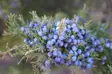 eastern redcedar Juniperus virginiana Keep away
 -
 pine Pinus sp. Keep away
 - holly Ilex sp. Keep away
-
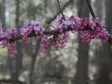 eastern redbud Cercis canadensis Fire-resistant
 -
 American sycamore Platanus occidentalis Awaiting evidence
 -
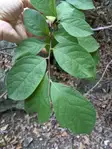 northern spicebush Lindera benzoin Fire-resistant
 -
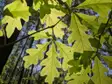 white oak Quercus alba Fire-resistant
 - dogwood Cornus sp. Fire-resistant
Questions
What did FORFS 17-01 tell Kentuckians to plant?
A short prose list, not a scored table. Christopher Reeves, FORFS 17-01 (issued January 2017): there’s no such thing as a fireproof plant. Plants with high resin, oils, and waxes should be removed near the home: eastern red cedar, any pine, and holly. Trees and shrubs that work well include elms, oaks, sycamore, birch, dogwood, redbud, hazelnut, viburnum, sumac, and spicebush. Create a minimum of 30 feet of defensible space; on very steep slopes such as 40 degrees, you might need 100 feet.
Did that ingest land on this site?
Yes. Thirteen records currently carry a uk-forfs evidence row. This site’s plant-source file stores FORFS 17-01 as tier 2 compiled: a prose sentence, not a rated table. Verdict map: named-flammable = avoid; works-well = recommend. Resolution from common names is recorded on each row.
Why does holly point at the Ilex genus?
Because the factsheet printed only the common name holly. The exact-only audit stores that evidence on the Ilex genus owner rather than inventing a species or cultivar. The genus record computes as avoid and includes KY. The PDF did not print Nellie R. Stevens.
Why does dogwood point at the Cornus genus?
FORFS printed only dogwood, so the exact-only audit stores the mention on the Cornus genus owner. That record computes as on-list and includes KY. Cornus florida is a separate species record; the factsheet did not endorse a named dogwood species or cultivar.
Is this a Kentucky doorway page?
No. The object is a 13-name prose sentence versus the 13 records this site attached it to. Place claims sit on whereThisDiffers. The Kentucky plant surface keeps 578 occurrence records distinct from 13 exact FORFS source owners.