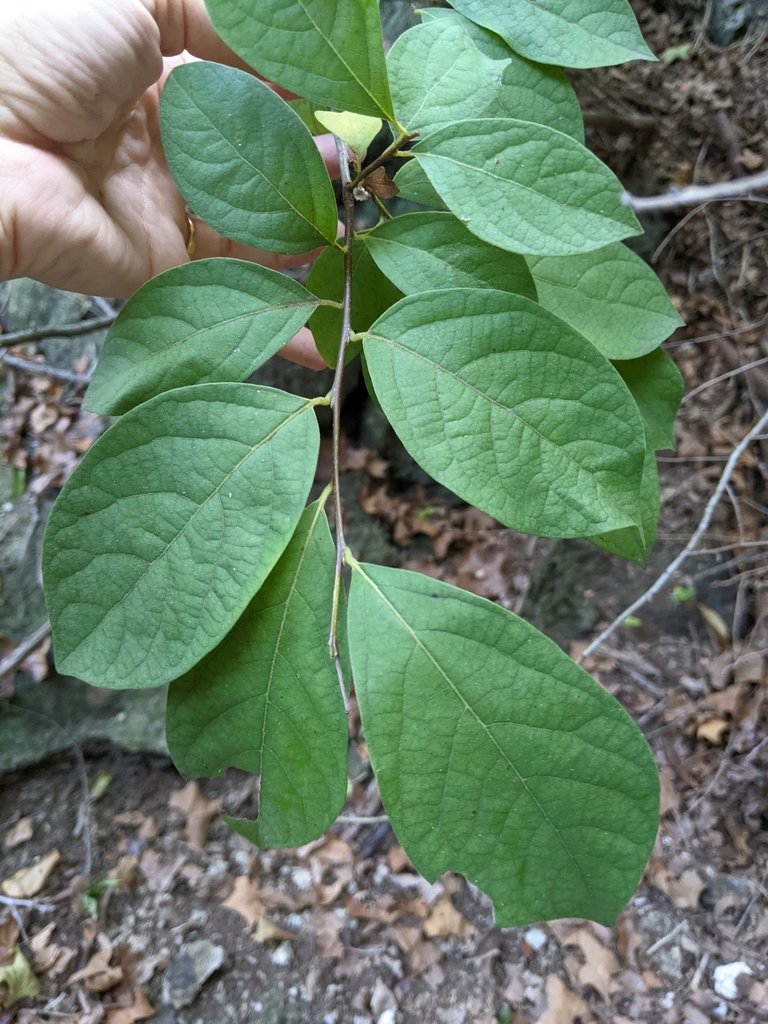
northern spicebush
Lindera benzoin
A genus split is not a placement verdict.
Is this one for your yard?
Enter your ZIP to see whether this is legal to plant in your state, and whether it survives your winter.
Northern spicebush is rated fire resistant, with extension guidance from four states reaching the same practical conclusion.
NC State’s extension service, working with the U.S. Fish and Wildlife Service in 2005, gave northern spicebush the lowest category on a four-level flammability scale. NC State again called it low in 2025, and its live Plant Toolbox also carries that classification. Ohio State University Extension placed the shrub in the low band of its five-point scale, while Virginia Cooperative Extension and Virginia Tech assigned it the low rating on a three-point scale. Although the scales differ, low is the recommended category in each one.
The University of Kentucky Cooperative Extension and Kentucky Division of Forestry approached the question through planting guidance rather than a graded scale. They named spicebush among the trees and shrubs that work well in defensible space. That practical recommendation agrees with the low-flammability ratings from North Carolina, Ohio, and Virginia.
Northern spicebush is a shrub in the Lauraceae family and reaches about eight feet at maturity. The shrub is hardy to USDA zone 5a; choose a site in part sun and provide moderate water. Across the separate grading systems and Kentucky’s planting guidance, the conclusion remains steady: northern spicebush is a fire-resistant landscaping choice.
- Form
- shrub
- Mature height
- ~8 ft
- Light
- Part sun
- Water need
- moderate
- Rated in
- Kentucky; Maryland, New Jersey, and West Virginia; NC; North Carolina +4