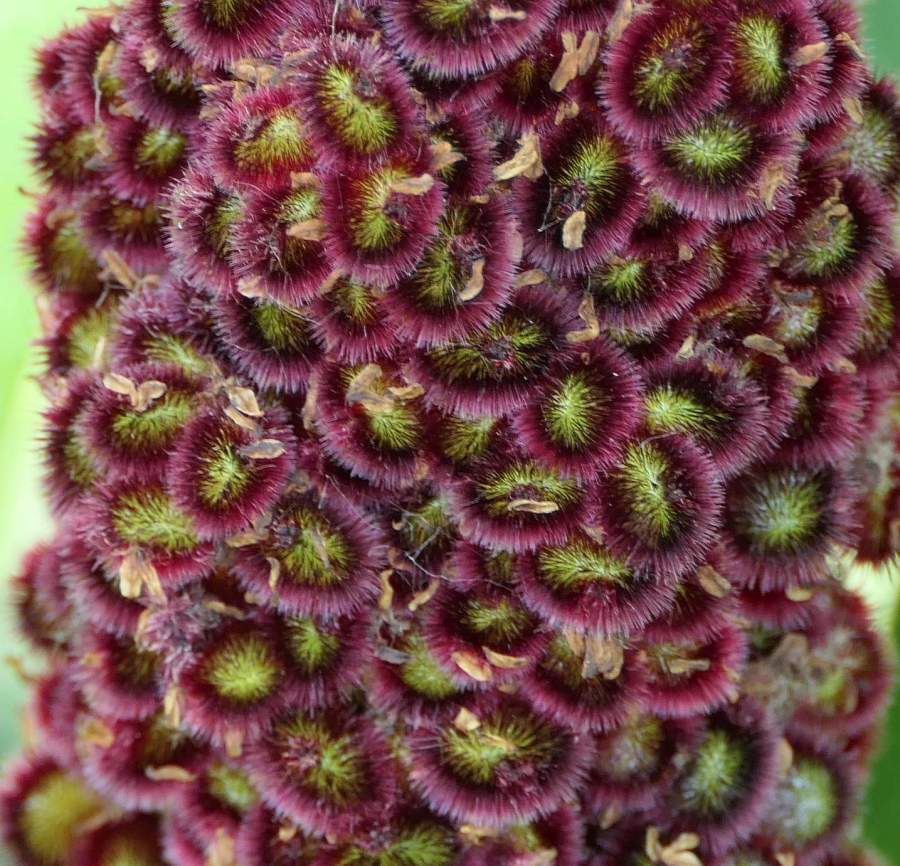
Enter your ZIP to see whether this is legal to plant in your state, and whether it survives your winter.
Sumac is on-list on this record's evidence. Its green condition remains under test conditions, attached to the source context that produced it. Both details belong to a genus-rank umbrella record rather than to every sumac species. The page keeps source context and taxonomic scope together without merging them.
Return to the cited rows to keep that rank visible while reading the on-list result. The genus picker keeps individual records available. A species-level planting choice should rely on those narrower pages instead of extending this umbrella's green condition by name alone.
Form
shrub
Rated in
Black Hills, South Dakota; Fremont County, Wyoming; Kentucky; Michigan / Great Lakes +5
On this lot
1. Fire evidence and conditions
Fire evidence
Fire-resistant — location does not change the cited classification.
Black Hills, South Dakota; Fremont County, Wyoming; Kentucky; Michigan / Great Lakes; Nevada / Great Basin; Oregon; Oregon (Willamette Valley); Utah / Intermountain West; Yavapai County, Arizona
Maintenance
Typed publication scope: 8 scopes across 8 cited fire sources
Black Hills (SD footprint); partial normalized coverage
The page explicitly limits itself to the Black Hills, and NFPA Firewise's archived 2006 plant-list index files it under South Dakota. FireApproved publishes 47 exact genus or species owners from 48 printed rows. This is bounded Black Hills context, not statewide South Dakota coverage or a finding that a plant suits a particular site.
Fremont County (WY footprint); partial normalized coverage · 2011-02-25
The source identifies itself as the Fremont County Firewise Plant List. FireApproved publishes its 92 exact source owners as Fremont County regional context. No methodology, current county endorsement, statewide Wyoming scope, or site-specific suitability is inferred.
Michigan State University Extension Bulletin E2948 is explicitly a list of wildfire-resistant landscape plants for Michigan and includes a Michigan-native field. FireApproved publishes 221 exact GBIF owners from 226 represented source rows and holds 15 complex or non-exact rows. This dated publication scope is not a current site-suitability determination.
Willamette Valley (OR footprint); partial normalized coverage · 2015-02-01
OSU Extension says EM 9103 highlights fire-resistant plants that thrive under Willamette Valley growing conditions. FireApproved publishes 172 exact owners only as valley context. The guide shares the PNW 590 lineage and is not a second independent vote or statewide site clearance.
University of Kentucky Cooperative Extension and the Kentucky Division of Forestry publish this small-woodland guidance for Kentuckians. FireApproved exposes its 13 exact species or genus owners while retaining the prose-example grain. It is not a scored or comprehensive state table.
University of Nevada Cooperative Extension compiled plants suited to Nevada climate zones and reported favorably by at least two upstream firewise lists. FireApproved publishes 126 exact source owners at Nevada publication scope. The source explicitly makes no independent flammability determination, so these rows remain corroborative.
Utah State University Extension states that this fact sheet selects examples for Utah landscapes and that they require proper placement and maintenance. FireApproved publishes 83 exact source owners at Utah publication scope. The table is not a site-specific planting clearance.
Yavapai County (AZ footprint); partial normalized coverage · 2025-03-14
University of Arizona Cooperative Extension authors Bulletin 34 for Yavapai County. FireApproved publishes 198 exact source owners from its resistant and prone tables and keeps the county boundary visible. County publication scope is regional Arizona context, never statewide scope.
2. Why this plant is relevant here
State distribution
Documented in MI.
Native range
Introduced / established
USDA hardiness
3. Legal, ecological, and broader status
Legal-list status
Seed-list status
Reported invasive here
Broader regional context
Federal context
How to read this page
The status above is computed from the cited rows below: independent recommendations can support a fire-resistant result, an avoid row can produce keep-away, and disagreement stays visible as conflict. Placement notes preserve each source’s own scheme rather than translating unlike rules into one scale. This is evidence about a plant, not permission to plant it in every part of the defensible space; Zone 0 remains noncombustible.
Conditions in the fire evidence
These describe tested or rated plant material. They are not horticultural maintenance instructions.
Placement rules below use each source's own distances or named zones, tied to its rating.
They are not interchangeable with the directory's current Zone 0 guidance.
Save Your Home from Wildfire: works well in defensible space [uk-forfs-home] (with its recommendation)
Fire-Resistant Plants for Oregon Home Landscapes: Oregon [osu-frn6-oregon-regions] (with its recommendation)
Fire-resistant Landscape Plants for the Willamette Valley: Sumac profile (PDF page 158) [osu-em-9103-profile] (with its recommendation)
Firewise Plant Material for the Black Hills: Shrubs [black-hills-plant-form-table] (with its recommendation)
The evidence
Grouped by what each source concluded. Primary evidence rated the plant itself
(a lab, field program, or original curation); corroboration compiled or
republished another source's rating and resolves to its root lineage.
“Fire-Resistant Plant Materials for Oregon”
· condition: green
Rhus species (Sumac) is listed under “Shrubs—deciduous”. The guide says most listed plants require some irrigation during Oregon's dry summer months and must be maintained in a healthy condition.
Listed as Lemonade berry, 3-leaf sumac — Rhus sp.. The bulletin says fire-resistant plants tend to resist ignition when irrigated and maintained, while fire-prone plants may ignite readily and burn intensely.