Enter your ZIP to see whether this is legal to plant in your state, and whether it survives your winter.
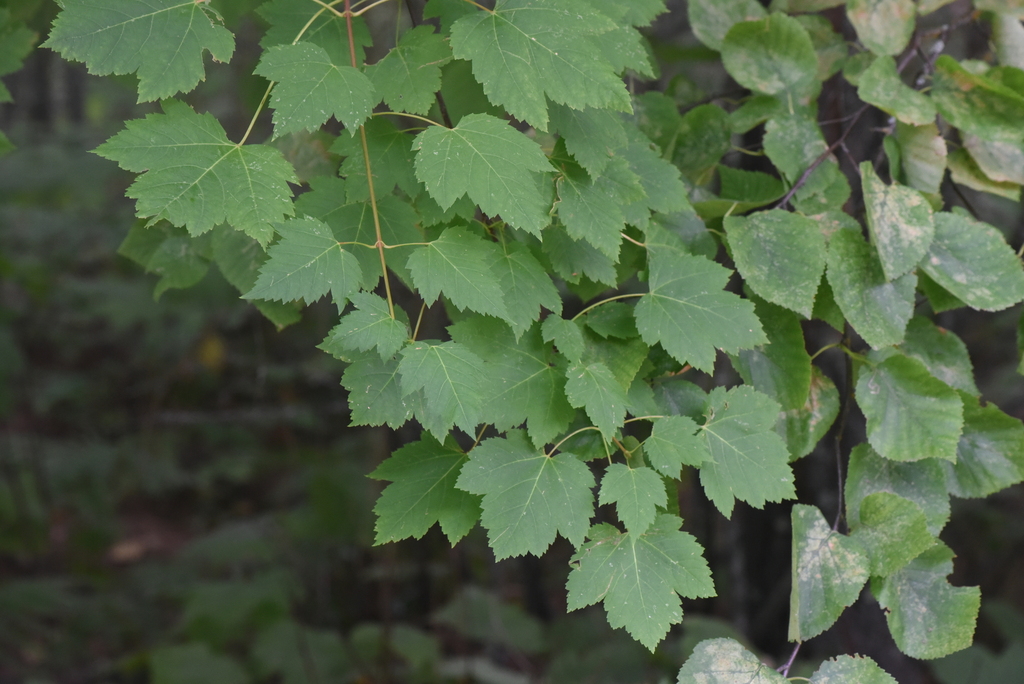
Yes, Rocky Mountain maple is well supported as a fire-resistant landscape plant.
All six assessments place it among fire-resistant or FireSmart plants. The joint Oregon State, Washington State, and University of Idaho extension service, Washington State’s Department of Natural Resources, and FireSmart BC agree on that verdict. University of Nevada Cooperative Extension also includes it in a compilation requiring support from at least two named western sources. University of Arizona Cooperative Extension lists it for Arizona above 3,000 feet, while Montana State University Extension lists it among fire-resistant species adapted to Montana.
These findings are practical landscape guidance, not laboratory measurements of ignition or heat release. Most use a simple listed-or-not-listed judgment, while Nevada’s compilation requires agreement among earlier sources. Together they provide consistent support for treating Rocky Mountain maple as fire resistant.
Fremont County (WY footprint); partial normalized coverage · 2011-02-25
The source identifies itself as the Fremont County Firewise Plant List. FireApproved publishes its 92 exact source owners as Fremont County regional context. No methodology, current county endorsement, statewide Wyoming scope, or site-specific suitability is inferred.
Southern Idaho (ID footprint); partial normalized coverage · 2013-11-08
The official database labels itself "For Southern Idaho" and describes Idaho residents at the urban-rangeland interface. FireApproved publishes 419 existing plant owners that cite its scored rows. This bounded Southern Idaho scope is regional context, not statewide coverage or a conclusion that the score transfers unchanged to every Idaho site.
The April 2022 MontGuide explicitly presents fire-resistant species adapted to Montana. FireApproved publishes 92 exact plant records from the source while retaining excluded genus, family, and unresolved rows; the guide itself says not every listed species grows in every part of the state.
New Mexico Forestry Division publishes this as its FireWise Plant List for New Mexico. FireApproved accounts for all 140 printed rows and publishes 95 exact same-rank owners already represented in the directory; 29 exact taxa without an existing record, 14 unresolved spellings or higher-rank matches, one compound taxon cell, and one species row whose only apparent owner has an infraspecific printed identity remain held. Every published row retains the source's Y, N, ?, or blank elevation cells. Publication scope does not erase those elevation limits or establish suitability for every New Mexico site.
Willamette Valley (OR footprint); partial normalized coverage · 2015-02-01
OSU Extension says EM 9103 highlights fire-resistant plants that thrive under Willamette Valley growing conditions. FireApproved publishes 172 exact owners only as valley context. The guide shares the PNW 590 lineage and is not a second independent vote or statewide site clearance.
The October 2023 joint Pacific Northwest Extension publication explicitly names Oregon, Washington, and Idaho and publishes more than 150 plant profiles. FireApproved has normalized 155 exact plant records from the source; publication scope does not assert that every listed plant suits every site within the three states.
Arizona at or above 3,000 feet (AZ footprint); partial normalized coverage · 2011-12-01
AZ1289 is explicitly limited to Arizona elevations of 3,000 feet and higher. FireApproved publishes 69 exact owners as regional Arizona context, retaining every water and elevation condition. It is never promoted to statewide low-desert guidance or an independent Tier 1 vote.
University of Nevada Cooperative Extension compiled plants suited to Nevada climate zones and reported favorably by at least two upstream firewise lists. FireApproved publishes 126 exact source owners at Nevada publication scope. The source explicitly makes no independent flammability determination, so these rows remain corroborative.
Eastern Washington (WA footprint); partial normalized coverage
Washington DNR publishes the guide for Eastern Washington and says it compiles plants from other Firewise documents that are likely to thrive there. FireApproved publishes 46 exact owners only as eastern Washington context. The rows are corroborative, not empirical or statewide.
2. Why this plant is relevant here
State distribution
Documented in AK, AZ, CA, CO, ID, MT, NE, NM, NV, OR, SD, UT, WA, WY.
Native range
Current cited native range in AK, AZ, CA, CO, ID, MT, NE, NM, NV, OR, SD, UT, WA, WY.
Introduced / established
USDA hardiness
3 applicable cited hardiness statements overlap but have different boundaries; compare each complete source row.
3. Legal, ecological, and broader status
Legal-list status
Seed-list status
Reported invasive here
Broader regional context
Federal context
How to read this page
The status above is computed from the cited rows below: independent recommendations can support a fire-resistant result, an avoid row can produce keep-away, and disagreement stays visible as conflict. Placement notes preserve each source’s own scheme rather than translating unlike rules into one scale. This is evidence about a plant, not permission to plant it in every part of the defensible space; Zone 0 remains noncombustible.
Native and introduced range evidence
These are exact U.S. botanical-area records from the cited range source. Native and
introduced describe biogeographic relationship, not fire performance or planting approval.
Doubtful and extinct rows stay visible but do not count as current presence.
The lossless worldwide derivative is retained once in the research corpus; object pages repeat only exact U.S. areas needed by the local lens. The JSON twin carries the same page assertions.
Plant hardiness evidence
These values describe the plant source. Your ZIP zone comes from the separate 2023 USDA
Plant Hardiness Zone Map. Whole-zone values stay whole-zone, and a single unresolved value
is not treated as a tolerance range. Different source boundaries stay separate: overlapping
statements are compared independently, while only ranges with no shared zone are called a conflict.
Placement rules below use each source's own distances or named zones, tied to its rating.
They are not interchangeable with the directory's current Zone 0 guidance.
Fire Resistance of Plants Master Database: plantable at 50' from home [Idaho minimum planting distance] (mid-scale rating)
FireSmart BC Plant Program: suitable for HIZ extended zone (30-100 m) [FireSmart BC Home Ignition Zone] (with its recommendation)
Fire-Resistant Plants for Oregon Home Landscapes: Oregon [osu-frn6-oregon-regions] (with its recommendation)
Fire-resistant Landscape Plants for the Willamette Valley: Rocky Mountain Maple profile (PDF page 150) [osu-em-9103-profile] (with its recommendation)
Fire-resistant plant profile galleries: Rocky Mountain maple — Acer glabrum [osu-2023-shrubs-gallery] (with its recommendation)
FireWise Plant List for New Mexico: PDF page 3, Trees and Large Shrubs, p3-r01 [nm-emnrd-firewise-table-row] (with its recommendation)
The evidence
Grouped by what each source concluded. Primary evidence rated the plant itself
(a lab, field program, or original curation); corroboration compiled or
republished another source's rating and resolves to its root lineage.
“Fire-Resistant Plant Materials for Oregon”
· condition: green
Acer glabrum (Rocky Mountain maple) is listed under “Shrubs—deciduous”. The guide says most listed plants require some irrigation during Oregon's dry summer months and must be maintained in a healthy condition.
“Fremont County Firewise Plant List — Acer glabrum — Rocky Mountain Maple”
Listed in the source's Large Shrubs and Trees section; the page describes its listed Firewise plants as generally low-growing, low-debris, and relatively moist.
FireWise Plant List for New Mexico — New Mexico Energy, Minerals and Natural Resources Department, Forestry Division · 2003 Forestry Division PDF · original sourceCorroborationCompilationlineage: csu-nmsu-firewise
“FireWise Plant List for New Mexico”
Listed as Acer glabrum (Rocky Mountain maple) in Trees and Large Shrubs. Printed elevation cells: 4,000 ft=N, 5,000 ft=?, 6,000 ft=Y, 7,000 ft=Y, 8,000 ft=Y, 9,000+ ft=Y. Water need: M-H; sun/shade: S/PS/ Sh; mature height: 6-10’; approximate bloom: n/a.