Current native
30
exact source areas
Home / Plants / Grow / Bur oak
Quercus macrocarpa
Your local evidence lens
A genus split is not a placement verdict. Set a ZIP to read the local documented split.
The status above is computed from the cited rows below: independent recommendations can support a fire-resistant result, an avoid row can produce keep-away, and disagreement stays visible as conflict. Placement notes preserve each source’s own scheme rather than translating unlike rules into one scale. This is evidence about a plant, not permission to plant it in every part of the defensible space; Zone 0 remains noncombustible.
These are exact U.S. botanical-area records from the cited range source. Native and introduced describe biogeographic relationship, not fire performance or planting approval. Doubtful and extinct rows stay visible but do not count as current presence.
Current native
exact source areas
Current introduced
exact source areas
Qualified
doubtful or extinct source rows
Eastern United States Fire Performance Plant Selector
Source prints 5 · single-value meaning unresolved
Wildfire-resistant Landscape Plants for Michigan (Extension Bulletin E2948)
3–8 explicit range
USDA PLANTS Database — Plant Characteristics
Minimum 3a · no upper limit documented
Eastern United States Fire Performance Plant Selector
“Firewise (1)”
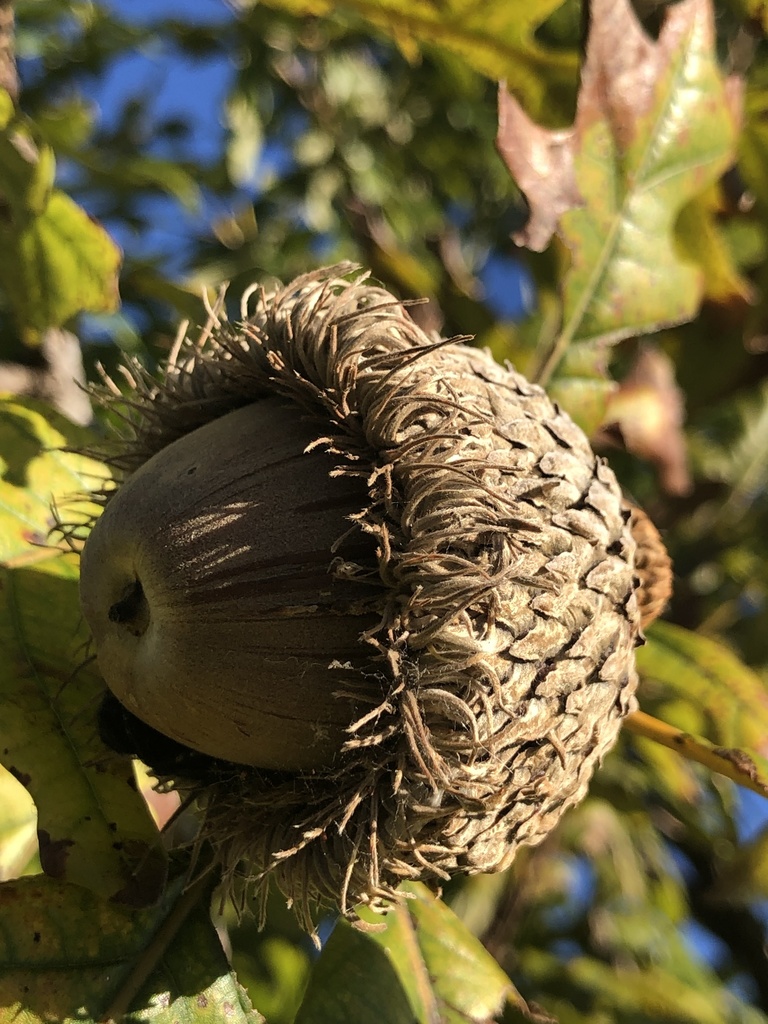
Corky ridges on branches. Feathery scales around bottom of cap on acorn.
Firewise Landscaping (OSU Extension Bulletin 921)
“L flammability”
High pH tolerant; construction tolerant; fire resistant bark.
FireSmart BC Plant Program — fire-resistant plant chart
“FireSmart-approved fire-resistant plant”
Wildfire-resistant Landscape Plants for Michigan (Extension Bulletin E2948)
“considered wildfire-resistant and are recommended for Michigan’s climate”
Table 1 row: Quercus macrocarpa (Bur oak).
Fire Resistance of Plants Master Database
“fire-resistance score 4 of 10”