Home / Guides / How to read a record / Does anything here not grow fast and wet
Does anything here not grow fast and wet
No. The humidity grows the fuel too. LSU AgCenter (Get It Growing, 21 February 2025) says a low-maintenance landscape is virtually impossible in Louisiana. The warm, wet climate and long growing season promote explosive weed growth. Even desirable plants quickly outgrow their appointed spaces. Hammond Research Station (2 December 2008) still says we do not hear a lot about this topic in Louisiana, then tells you to remove pine trees, wax myrtles, and ornamental grasses in the furthest zone. This directory’s Magnolia grandiflora and Quercus virginiana currently compute as avoid and include LA.
You are in a Hammond-parish yard where everything is green in February, asking whether Firewise is a western problem. LSU’s own horticulture column is about outgrowing the bed. Hammond’s Zone 4 is about pine straw. Those are the same moisture, different jobs.
This is not a Louisiana doorway.
Why it matters
“Fast and wet” is easy to hear as “will not burn.” Get It Growing is maintenance. Hammond is fuel reduction. Unpruned evergreen volume in a 12-month growing season is Hammond’s ladder fuel. Southeast humidity is the longleaf-pyrogenic-litter version of the same split. Hurricane-tough and ember-tough is the Florida palmetto version. This page is the Louisiana growth-rate version.
This site’s Louisiana plant evidence combines 521 USDA occurrence records with 31 exact Hammond source owners. The Hammond rows remain untiered corroboration, not independent rating evidence. Zone 0 is still not a planting list.
How it works
The climate (Get It Growing, 21 February 2025):
- A landscape that stays attractive year-round without lifting a finger is virtually impossible.
- Warm, wet climate. Long growing season. Explosive weed growth.
- Even desirable plants outgrow their appointed spaces.
- Gravel, boulders, and pavement still need periodic weeding: wind, rain, wildlife, and mowing carry dirt and seed.
- Storm-resistant trees named: bald cypress, pond cypress, Southern magnolia, live oak.
- For winter look: 75% evergreen / 25% deciduous. That is an appearance mix, not a Firewise mix.
- Foundation shrubs named: camellias, Japanese yew, Florida sunshine anise, dwarf hollies.
The firewise page (Hammond, 2 December 2008):
- “We do not hear a lot about this topic in Louisiana,” then: the effort needs to be considered.
- LDAF public-education program for WUI. Brochures named: Fire Safe Homes in the Louisiana Wildland/Urban Interface and Prevention: A Home’s Best Defense from Wildfire. Those files were not opened this session.
- Primary goal: fuel reduction. Zones 1–4.
- Zone 1: well-irrigated, at least 30 feet on all sides, space for fire equipment, fire-resistant species spaced for mature spread.
- Zone 4: natural area. Thin. Remove highly flammable vegetation such as pine trees, wax myrtles, ornamental grasses. Remove brown leaf litter and pine straw needles.
- Ladder fuels. Fuel breaks: driveways, gravel, lawns. Prune trees 6 to 10 feet. Thirty feet for equipment.
The 31-name list:
- Hammond: ornamentals commonly used in Louisiana that would be recommended for firewise landscaping. Genus-level names: Penstemon, daylilies, Echinacea, Vinca major, river birch, Quercus, honeylocust, Ligustrum, dogwood, viburnum, and others.
- This site’s plant-source file stores lsu-hammond with no tier. No methodology. Rows corroborate and cannot move a rating on their own. Same structural treatment as the NC Plant Toolbox.
- Thirty-one records currently carry an lsu-hammond row.
This directory (Louisiana USDA flags):
- Louisiana: 521 records. 274 on-list, 61 avoid, 13 conflict, 173 candidate.
- Magnolia grandiflora avoid, consensus, LA. Get It Growing named Southern magnolia for storm resistance.
- Quercus virginiana avoid, consensus, LA. Get It Growing named live oak for storms. Hammond named Quercus as a firewise ornamental at genus level.
- Taxodium distichum conflict, disputed, LA. Get It Growing named bald cypress for storms.
- Taxodium ascendens avoid, limited-evidence, LA. Get It Growing named pond cypress for storms.
- Pinus palustris avoid, LA. Hammond Zone 4: remove pine trees. See southeast humidity.
- Serenoa repens avoid, LA. See hurricane-tough.
- Betula nigra on-list, LA. Hammond named river birch.
- Vinca major on-list, LA. Hammond named Vinca major.
- Ligustrum on-list, no LA on the genus states array. Hammond named Ligustrum. On-list from an un-tiered corroborator is not a planting permit against the wall.
See how to read a plant page. See what limited evidence means.
The paths
| Claim | Opened source | What it is not |
|---|---|---|
| Everything grows | Explosive weeds; plants outgrow beds | A claim nothing ignites |
| 75% evergreen for winter | Get It Growing appearance mix | Hammond Zone 4 |
| Storm-resistant magnolia / live oak | Wind and hurricanes | An on-list flammability banner |
| 31 Hammond names | Untiered corroboration | A Louisiana scored table |
| Ligustrum on the list | Commonly used ornamental | A native Firewise endorsement |
| 521 Louisiana records | USDA distribution | Hammond ratings |
| Zone 1 = 30 feet irrigated | Hammond 2008 | Zone 0 |
What people mix up
- Wet climate with no fire. Hammond: we do not hear a lot about it, and still prints pine, wax myrtle, and pine straw.
- Storm-tough with ember-tough. Get It Growing’s four storm trees include two avoid records and one conflict on this site.
- 75% evergreen for winter color with Firewise spacing.
- Hammond’s 31 names with a methodology. The source file stores no tier.
- Ligustrum on a firewise list with a plant to put in the first five feet.
- 521 USDA rows as an LSU rating.
- Florida palmetto (FOR 71) with this page. Related, not a duplicate.
- Alabama longleaf pyrogenic litter with Louisiana yard growth rate.
How to check
- Open Get It Growing, 21 February 2025. Read “virtually impossible” and the storm-resistant tree sentence.
- Open Hammond Firewise Landscaping. Read “we do not hear a lot,” Zone 1 at 30 feet, and Zone 4 pine / wax myrtle / ornamental grass.
- Open Magnolia grandiflora, Quercus virginiana, and Taxodium distichum.
- Open Pinus palustris and Ligustrum.
- Open Louisiana plant evidence. Distribution is not a recommendation.
- Do not plant in Zone 0.
Limits
This page quotes opened LSU AgCenter HTML from 21 February 2025 and 2 December 2008. LDAF brochures named on the Hammond page were not opened and are not quoted. 521 is a count of stored USDA-distribution rows as of this writing, not an LSU statistic. Zone 0 is not a planting list.
Related records
- Magnolia grandiflora
- Quercus virginiana
- Taxodium distichum
- Taxodium ascendens
- Pinus palustris
- Ligustrum
- Louisiana plant evidence
- Southeast humidity and firewise planting
- Can one yard be hurricane-tough and ember-tough
- Glossary: Zone 0
Plant records this page rests on
-
 southern magnolia Magnolia grandiflora Keep away
 -
 live oak Quercus virginiana Keep away
 -
 bald cypress Taxodium distichum Documented conflict
 -
 bald cypress Taxodium ascendens Keep away
 -
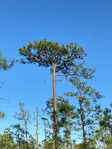 longleaf pine Pinus palustris Keep away
 -
 saw palmetto Serenoa repens Keep away
 -
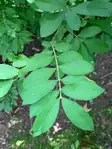 privet Ligustrum sp. Fire-resistant
 -
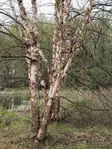 river birch Betula nigra Fire-resistant
Questions
Does anything in Louisiana not grow fast and wet?
LSU AgCenter’s Get It Growing column (21 February 2025) says a low-maintenance landscape is virtually impossible here. The warm, wet climate and long growing season promote explosive weed growth, and even desirable plants quickly outgrow their appointed spaces. Fast, wet growth is fuel volume if it is not cut. It is not a Firewise exemption.
Does LSU still talk about wildfire in a wet state?
Yes. Hammond Research Station’s opened Firewise Landscaping page (2 December 2008): we do not hear a lot about this topic in Louisiana, but the firewise effort in home construction and landscaping needs to be considered. Zone 1 is a well-irrigated area at least 30 feet on all sides. Zone 4: remove highly flammable vegetation such as pine trees, wax myrtles, ornamental grasses; remove brown leaf litter and pine straw needles.
LSU named live oak and Southern magnolia as storm-resistant. Are they fire-safe?
Storm resistance is not a flammability rating. Get It Growing names bald cypress, pond cypress, Southern magnolia, and live oak as species with innate storm resistance. This directory’s Magnolia grandiflora, Quercus virginiana, and Taxodium ascendens currently compute as avoid and include LA. Taxodium distichum currently computes as conflict and includes LA. Fire-resistant is not fireproof.
Is the Hammond ornamental list a Louisiana Firewise table?
It is a prose list of 31 ornamentals commonly used in Louisiana that would be recommended for firewise landscaping. This site’s plant-source file stores it with no tier: no methodology is cited, so the rows corroborate and cannot move a rating on their own. Ligustrum is on that list. The genus page currently computes as on-list and does not include LA in USDA states.
Is this a Louisiana doorway page?
No. The object is explosive wet-season growth versus Hammond’s pine/wax-myrtle Zone 4 and the avoid records for storm-resistant evergreens. Place claims sit on whereThisDiffers. The Louisiana plant surface keeps 521 USDA occurrence records distinct from 31 exact Hammond source owners.