Home / Guides / How to read a record / Can one yard be hurricane-tough and ember-tough
Can one yard be hurricane-tough and ember-tough
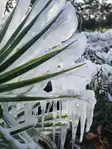
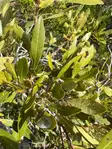
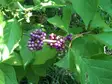
Yes, as two jobs, not one plant. UF/IFAS FOR 71 (July 2023) says just as coastal residents prepare for hurricane season, prepare for Florida’s spring wildfire season, and to remove saw palmetto, wax myrtle, yaupon holly, red cedar, and gallberry within 30 or more feet of the home. They contain resins, oils, and waxes that burn readily. UF/IFAS FOR119 lists wax myrtle among the highest-survival species in Hurricane Ivan at 130 mph. This directory’s Serenoa repens and Morella cerifera currently compute as avoid. Callicarpa americana currently computes as on-list.
You are in Florida looking at saw palmetto and wax myrtle that held through a hurricane, and asking whether that is the 30-foot plant. Wind survival is not an ember permit.
This is not a Florida doorway. Florida plant evidence combines 553 occurrence records with eight Florida Forest Service owners bounded to South Florida. Regional evidence is not a statewide planting code.
Why it matters
A plant that stands in 130 mph wind can still carry embers to the wall. FOR 71 writes the two seasons in one sentence so you will not pick only the hurricane. Averaging FOR119 survival with FOR 71’s 30-foot remove list invents a shrub neither paper described.
Fire-resistant is not fireproof. Zone 0 is not a planting list.
How it works
Embers (FOR 71, July 2023):
- Fire maintains Florida ecosystems and is a safety concern near houses. Lightning and carelessness guarantee accidental wildfire near natural areas.
- Fire reaches the house by burning through vegetation or when embers ignite plants.
- A yard full of flammable or dense plants such as saw palmetto and gallberry is a risk. Palmetto shrubs burn intensely; clumps spread fire directly or via embers.
- Choose plants less likely to burn, such as beautyberry and coontie (Behm et al. 2004; Doran et al. 2022).
- Remove saw palmetto, wax myrtle, yaupon holly, red cedar, and gallberry within 30 or more feet. Farther out, and in natural areas under prescribed fire, those shrubs can stay. They contain resins, oils, and waxes.
- Keep large leafy hardwoods, especially east and west, for shade and moisture. Trim lower branches. Rake pine needles. No thick combustible mulch at the foundation.
- Defensible space in this paper is 100–300 feet depending on slope, citing Kays et al. 2020.
Wind (FOR119, opened HTML):
- Ten hurricanes; 18,200 trees; 100 neighborhoods.
- Highest standing-survival in Ivan (209 km/h): sand live oak, American holly, southern magnolia, live oak, wax myrtle, sweetgum, crape myrtle, dogwood, sabal palm.
- Live oak survival stays high across named storms and drops to 78% in Charley and Andrew at 145–165 mph.
- Losing leaves correlated with higher survival.
- That is an urban-forest wind list. It is not FOR 71’s 30-foot ember list.
This directory:
| Taxon | FOR 71 / FOR119 | This site |
|---|---|---|
| Serenoa repens saw palmetto | Remove within 30+ feet; burns intensely | Avoid, limited-evidence. Behm 2004: most flammable species studied in that set. USDA includes FL. |
| Morella cerifera wax myrtle | Remove within 30+ feet (resins/oils/waxes). FOR119: high Ivan survival | Avoid, consensus. USDA includes FL. |
| Callicarpa americana beautyberry | Named less likely to burn | On-list, consensus. USDA includes FL. |
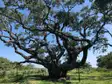
| Quercus virginiana live oak | FOR119: high wind survival. FOR 71 names “oaks” among less-flammable examples, not this species by name | Currently avoid. Do not treat FOR 71’s genus word as a species grade. |
The paths
| Job | Document | Shortcut that fails |
|---|---|---|
| Hurricane wind | FOR119 survival and wind-resistance ranks | Planting wax myrtle in the first 30 feet because it stood in Ivan |
| Ember / 30 feet | FOR 71 remove list | Native palmetto as on-list at the wall |
| Shade and cooling | FOR 71 hardwoods east and west | Skipping needle rake under pines |
| This catalog | USDA + computed rows | A Florida Forest Service planting code |
What people mix up
- Hurricane survival with a 30-foot planting permit.
- Native saw palmetto with on-list.
- FOR 71’s word “oaks” with this site’s live-oak avoid row.
- Prescribed fire farther out as a reason to keep palmetto on the foundation.
- Zone 0 as the 30-foot FOR 71 band. They are different distances.
How to check
- Open FOR 71. Read the hurricane-season sentence and item 6, the 30-foot remove list.
- Open FOR119. Read the Ivan survival paragraph that names wax myrtle.
- Open Serenoa repens, Morella cerifera, and Callicarpa americana.
- Open Florida plant evidence. Distribution is not a recommendation.
- Do not plant in Zone 0.
Limits
This page quotes opened FOR 71 (July 2023 PDF) and opened FOR119 HTML. Circular 1445 / FR147 and FOR272 shrub tables were not required once FOR 71 named the 30-foot list. Behm 2004 is cited as stored on the saw palmetto record; the full paper was not re-opened this session. Zone 0 is not a planting list.
Related records
- Serenoa repens
- Morella cerifera
- Callicarpa americana
- Quercus virginiana
- Florida plant evidence
- Southeast humidity and firewise planting
- Glossary: ember
- Glossary: Zone 0
Plant records this page rests on
Questions
Can one yard be hurricane-tough and ember-tough?
It can be both jobs. It is not one plant list. UF/IFAS FOR 71 (July 2023) says just as coastal residents prepare for hurricane season, prepare for Florida’s spring wildfire season, and to remove saw palmetto, wax myrtle, yaupon holly, red cedar, and gallberry within 30 or more feet of the home because they contain resins, oils, and waxes that burn readily. UF/IFAS FOR119 lists wax myrtle among the highest-survival species in Hurricane Ivan (130 mph). Wind survival is not a 30-foot planting permit.
Is saw palmetto firewise if it is native?
FOR 71 names saw palmetto among flammable plants to remove within 30 or more feet. Palmetto shrubs burn intensely and can spread fire directly or via embers. This directory’s Serenoa repens currently computes as avoid. Behm 2004, stored on that record, calls it the most flammable species studied in that understory set. Native is not on-list at the wall.
What does this site do with wax myrtle?
Morella cerifera currently computes as avoid, consensus. FOR 71 wants it out of the first 30 feet. FOR119 measured high standing-survival in Ivan. Those sentences are not averaged.
What does FOR 71 name as less likely to burn?
Beautyberry and coontie among the examples of plants less likely to burn. A longer list includes dogwood, viburnum, redbud, sycamore, magnolia, beautyberry, oaks, and others. Callicarpa americana currently computes as on-list. Zone 0 is still not a planting list.
Is this a Florida doorway page?
No. The object is hurricane wind lists versus ember plant lists. Place claims sit on whereThisDiffers. The Florida plant surface keeps 553 occurrence records distinct from eight South Florida Forest Service hazard owners.