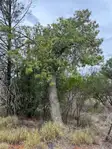
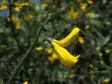
The accepted rows compute to avoid on the evidence table. Same-form alternatives are cited under related plants, but they do not combine the source lines from Valette and Tlemcen or change that direction. This separation keeps both studies, the green condition, and the comparison set within the parviflorus record. These studies are not presented as stand-ins for each other.
Catalonia, Spain; Global; Mediterranean France / Provence; Tlemcen, western Algeria
Maintenance
2. Why this plant is relevant here
State distribution
Native range
Introduced / established
USDA hardiness
3. Legal, ecological, and broader status
Legal-list status
Seed-list status
Reported invasive here
Broader regional context
Federal context
How to read this page
The status above is computed from the cited rows below: independent recommendations can support a fire-resistant result, an avoid row can produce keep-away, and disagreement stays visible as conflict. Placement notes preserve each source’s own scheme rather than translating unlike rules into one scale. This is evidence about a plant, not permission to plant it in every part of the defensible space; Zone 0 remains noncombustible.
Conditions in the fire evidence
These describe tested or rated plant material. They are not horticultural maintenance instructions.
Placement rules below use each source's own distances or named zones, tied to its rating.
They are not interchangeable with the directory's current Zone 0 guidance.
Guía de pirojardinería: not suitable inside or outside the 25-metre maximum-risk zone [girona-2020-iuf-25m-suitability] (with its avoid rating)
The fire risk of the plant groupings with Cistus in the a…: Table 1 [henaoui-2013-fresh-material-flammability] (with its avoid rating)
The evidence
Grouped by what each source concluded. Primary evidence rated the plant itself
(a lab, field program, or original curation); corroboration compiled or
republished another source's rating and resolves to its root lineage.
Ulex parviflorus is rated “MUY DESACONSEJADA” by the guide's qualitative IUF garden-suitability method. The method assumes species-specific care and integrates fire evidence with fuel structure, maintenance, origin, invasiveness, and expert fire-service experience.
43 cited rows from this source; its identity, lineage and tier are stated once.
Primary study Doat1981: Doat, J., Valette, J. C., Askri, D., Caumartin, L., Bettachini, M., & Moro, M. (1981). Le pouvoir calorifique supérieur d'espèces forestières méditerranéennes. Annales des Sciences forestières, 38, 469-486.
Shared row context: Combustibility measurement; plant part twigs; fuel live; predrying yes; device calorimeter; site Doat1981-1; sampling ND.
“calorific value (kcal/kg): 5093”
FLAMITS record 3054.
“calorific value (kcal/kg): 5072”
FLAMITS record 3055.
“calorific value (kcal/kg): 4960”
FLAMITS record 3056.
“calorific value (kcal/kg): 4965”
FLAMITS record 3057.
“calorific value (kcal/kg): 4950”
FLAMITS record 3058.
“calorific value (kcal/kg): 4985”
FLAMITS record 3059.
“calorific value (kcal/kg): 5011”
FLAMITS record 3060.
“calorific value (kcal/kg): 5018”
FLAMITS record 3061.
“calorific value (kcal/kg): 4926”
FLAMITS record 3062.
“calorific value (kcal/kg): 5028”
FLAMITS record 3063.
“calorific value (kcal/kg): 4991”
FLAMITS record 3064.
“calorific value (kcal/kg): 5020”
FLAMITS record 3065.
“calorific value (kcal/kg): 5002”
FLAMITS record 3066.
“calorific value (kcal/kg): 4952”
FLAMITS record 3067.
“calorific value (kcal/kg): 4980”
FLAMITS record 3068.
“calorific value (kcal/kg): 4973”
FLAMITS record 3069.
“calorific value (kcal/kg): 4936”
FLAMITS record 3070.
“calorific value (kcal/kg): 4930”
FLAMITS record 3071.
“calorific value (kcal/kg): 4995”
FLAMITS record 3072.
“calorific value (kcal/kg): 4974”
FLAMITS record 3073.
“calorific value (kcal/kg): 4979”
FLAMITS record 3074.
“calorific value (kcal/kg): 5000”
FLAMITS record 3075.
“calorific value (kcal/kg): 5067”
FLAMITS record 3076.
“calorific value (kcal/kg): 5067”
FLAMITS record 3077.
“calorific value (kcal/kg): 5147.13”
FLAMITS record 3949; Combustibility measurement; plant part twigs; fuel live; predrying yes; device calorimeter; site Gillon1997-1; sampling june to september. Primary study Gillon1997: Gillon, D., Hernando, C., Valette, J.-C., & Joffre, R. (1997). Fast estimation of the calorific values of forest fuels by near infrared-reflectance spectroscopy. Canadian Journal of Forest Research, 27, 760-765.
Primary study Henaoui2013: Henaoui, S. E. -A., Bouazza, M., & Amara, M. (2013). The fire risk of the plant groupings with Cistus in the area of Tlemcen (Western Algeria). European Scientific Journal, 9, 84-103.
Shared row context: plant part twigs; fuel live; predrying yes; device infrared burner; site Henaoui2013-1; sampling spring.
“flame height (cm): 33.12”
FLAMITS record 4902; Combustibility measurement.
“time to flaming (s): 41.21”
FLAMITS record 4940; Ignitability measurement.
“burning duration (s): 114.17”
FLAMITS record 4978; Sustainability measurement.
Primary study Martin1989: Martín, E., & Miguel, L. (1989). Inflamabilidad y energía de las especies de sotobosque
Shared row context: plant part twigs; fuel live; predrying yes; device epiradiator; site Martin1989-4.
FLAMITS record 7925; Combustibility measurement; sampling ND.
“flammability value: 3”
FLAMITS record 7975; Ignitability measurement; sampling ND.
“flammability value: 3”
FLAMITS record 13335; Ignitability measurement; plant part leaves; fuel live; predrying no; device epiradiator; site Valette1990-1; sampling june to september. Primary study Valette1990: Valette, J.-C. (1990). Flammabilities of Mediterranean forest species. Effects on the combustibility of the forest communities inflammabilités des espèces forestières méditerranéennes. Conséquences sur la combustibilité des formations forestières. Revue forestière française, 42, 76-92.