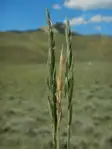
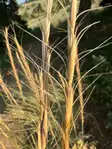
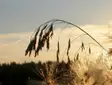
spiked crinkleawn
Trachypogon spicatus
A genus split is not a placement verdict.
Is this one for your yard?
Enter your ZIP to see whether this is legal to plant in your state, and whether it survives your winter.
- Form
- grass
- Rated in
- Global
United States / Grow / spiked crinkleawn
Trachypogon spicatus
A genus split is not a placement verdict.
Is this one for your yard?
Enter your ZIP to see whether this is legal to plant in your state, and whether it survives your winter.
The status above is computed from the cited rows below: independent recommendations can support a fire-resistant result, an avoid row can produce keep-away, and disagreement stays visible as conflict. Placement notes preserve each source’s own scheme rather than translating unlike rules into one scale. This is evidence about a plant, not permission to plant it in every part of the defensible space; Zone 0 remains noncombustible.
These are exact U.S. botanical-area records from the cited range source. Native and introduced describe biogeographic relationship, not fire performance or planting approval. Doubtful and extinct rows stay visible but do not count as current presence.
Current native
exact source areas
Current introduced
exact source areas
Qualified
doubtful or extinct source rows
FLAMITS: FLAMmability plant traiTS database
Primary study SantosMoreira2018: Santos, M. M., Batista, A. C., de Carvalho, E. V., da Silva, F. d. C., Pedro, C. M., & Giongo, M. (2018). Relationships between moisture content and flammability of campestral Cerrado species in Jalapão. Revista Brasileira de Ciências Agrárias, 13, 1-9.
“time to flaming (s): 3”
FLAMITS record 12031.
“time to flaming (s): 9.7”
FLAMITS record 12037.
“time to flaming (s): 10.3”
FLAMITS record 12043.
“time to flaming (s): 11.2”
FLAMITS record 12049.
“ignition frequency (%): 50”
FLAMITS record 12103.
“ignition frequency (%): 50”
FLAMITS record 12109.
“ignition frequency (%): 50”
FLAMITS record 12115.
“ignition frequency (%): 50”
FLAMITS record 12121.
“burning duration (s): 13.7”
FLAMITS record 12055.
“burning duration (s): 20.7”
FLAMITS record 12061.
“burning duration (s): 24.4”
FLAMITS record 12067.
“burning duration (s): 19”
FLAMITS record 12073.
“flame height (cm): 20”
FLAMITS record 12079.
“flame height (cm): 18.2”
FLAMITS record 12085.
“flame height (cm): 17.2”
FLAMITS record 12091.
“flame height (cm): 17.9”
FLAMITS record 12097.
Primary study Solofondranohatra2021: Solofondranohatra, C. L., Vorontsova, M. S., Dewhirst, R. A., Belcher, C. M., Cable, S., Jeannoda, V., & Lehmann, C. E. R. (2021). Shade alters the growth and architecture of tropical grasses by reducing root biomass. Biotropica, (00), 1-11.
“maximum sample temperature (°C): 326.7”
FLAMITS record 12939.
“calorific value (kcal/kg): 2048.27”
FLAMITS record 12953.
Primary study Zanzarini2019: Zanzarini, V. (2019). Inflamabilidade de espécies do estrato herbáceo do cerrado. Master dissertation. Universidade Estadual Paulista (Unesp).
“maximum sample temperature (°C): 512.4”
FLAMITS record 14590; Combustibility measurement.
“estimated burnt biomass (%): 88.6”
FLAMITS record 14611; Consumability measurement.
“rate of burning spread (cm/s): 0.28”
FLAMITS record 14632; Sustainability measurement.