Colorado State University Extension and the Colorado State Forest Service publish Fact Sheet 6.305 for Colorado's WUI and varied ecosystems. FireApproved exposes all 114 exact source owners at Colorado publication scope while retaining score, elevation, water, and Idaho-carrier lineage. Publication scope is not suitability for every Colorado site or zone.
Southern Idaho (ID footprint); partial normalized coverage · 2013-11-08
The official database labels itself "For Southern Idaho" and describes Idaho residents at the urban-rangeland interface. FireApproved publishes 419 existing plant owners that cite its scored rows. This bounded Southern Idaho scope is regional context, not statewide coverage or a conclusion that the score transfers unchanged to every Idaho site.
Arizona at or above 3,000 feet (AZ footprint); partial normalized coverage · 2011-12-01
AZ1289 is explicitly limited to Arizona elevations of 3,000 feet and higher. FireApproved publishes 69 exact owners as regional Arizona context, retaining every water and elevation condition. It is never promoted to statewide low-desert guidance or an independent Tier 1 vote.
2. Why this plant is relevant here
State distribution
Documented in AZ, CA, CO, CT, FL, IA, ID, IL, KS, MA, ME, MI, MN, MO, MT, ND, NE, NM, NV, NY, OH, OK, SC, SD, TX, UT, WI, WY.
Native range
Current cited native range in AZ, CA, CO, IA, ID, IL, KS, MI, MN, MO, MT, ND, NE, NM, NV, OH, OK, SD, TX, UT, WI, WY.
Introduced / established
6 sourced range or established records; set a location to match them. This is not an invasive warning.
USDA hardiness
Documented minimum 5b; no upper limit is documented.
3. Legal, ecological, and broader status
Legal-list status
Set a location for an exact legal-list result; source silence is not clearance.
Seed-list status
Set a location to compare the separate state noxious-weed seed layer.
Reported invasive here
No ecological invasive report is normalized; that does not prove noninvasiveness.
Broader regional context
Aggregate AK, HI, and L48 evidence is shown only as regional context, never as an exact-state finding.
Federal context
Federal designations remain separate from state legal-list results.
How to read this page
The status above is computed from the cited rows below: independent recommendations can support a fire-resistant result, an avoid row can produce keep-away, and disagreement stays visible as conflict. Placement notes preserve each source’s own scheme rather than translating unlike rules into one scale. This is evidence about a plant, not permission to plant it in every part of the defensible space; Zone 0 remains noncombustible.
AZ, CA, CO, IA, ID, IL, KS, MI, MN, MO, MT, ND, NE, NM, NV, OH, OK, SD, TX, UT, WI, WY
Grows in
AZ, CA, CO, CT, FL, IA, ID, IL +20
Rated in
Arizona above 3,000 feet / interior Southwest; British Columbia; Colorado / Rocky Mountain Front Range; Global +1
Family
Poaceae
Evidence
12 cited sources
Native and introduced range evidence
These are exact U.S. botanical-area records from the cited range source. Native and
introduced describe biogeographic relationship, not fire performance or planting approval.
Doubtful and extinct rows stay visible but do not count as current presence.
The lossless worldwide derivative is retained once in the research corpus; object pages repeat only exact U.S. areas needed by the local lens. The JSON twin carries the same page assertions.
Plant hardiness evidence
These values describe the plant source. Your ZIP zone comes from the separate 2023 USDA
Plant Hardiness Zone Map. Whole-zone values stay whole-zone, and a single unresolved value
is not treated as a tolerance range. Different source boundaries stay separate: overlapping
statements are compared independently, while only ranges with no shared zone are called a conflict.
Source location: PlantCharacteristics record 20765, Temperature, Minimum (°F).
Where its sources say to plant it
Placement rules below use each source's own distances or named zones, tied to its rating.
They are not interchangeable with the directory's current Zone 0 guidance.
Fire Resistance of Plants Master Database: plantable at 20' from home [Idaho minimum planting distance] (with its recommendation)
FireSmart BC Plant Program: suitable for HIZ extended zone (30-100 m) [FireSmart BC Home Ignition Zone] (with its recommendation)
Ignition-Resistant Landscape Plants: suitable for defensible-space zones 1-2 (score 8+) [CSU defensible-space zone] (with its recommendation)
The evidence
Grouped by what each source concluded. Primary evidence rated the plant itself
(a lab, field program, or original curation); corroboration compiled or
republished another source's rating and resolves to its root lineage.
Listed among fire-resistant plant materials for Arizona above 3,000 feet.
Ignition-Resistant Landscape Plants (Fact Sheet 6.305) — Colorado State University Extension / Colorado State Forest Service (Wildfire Mitigation Series) · 2025 · original sourcePrimary evidenceField programlineage: idaho-tree resolves to Fire Resistance of Plants Master Database
“ignitability score 9 of 10”
· score 9 (idaho-0-10)
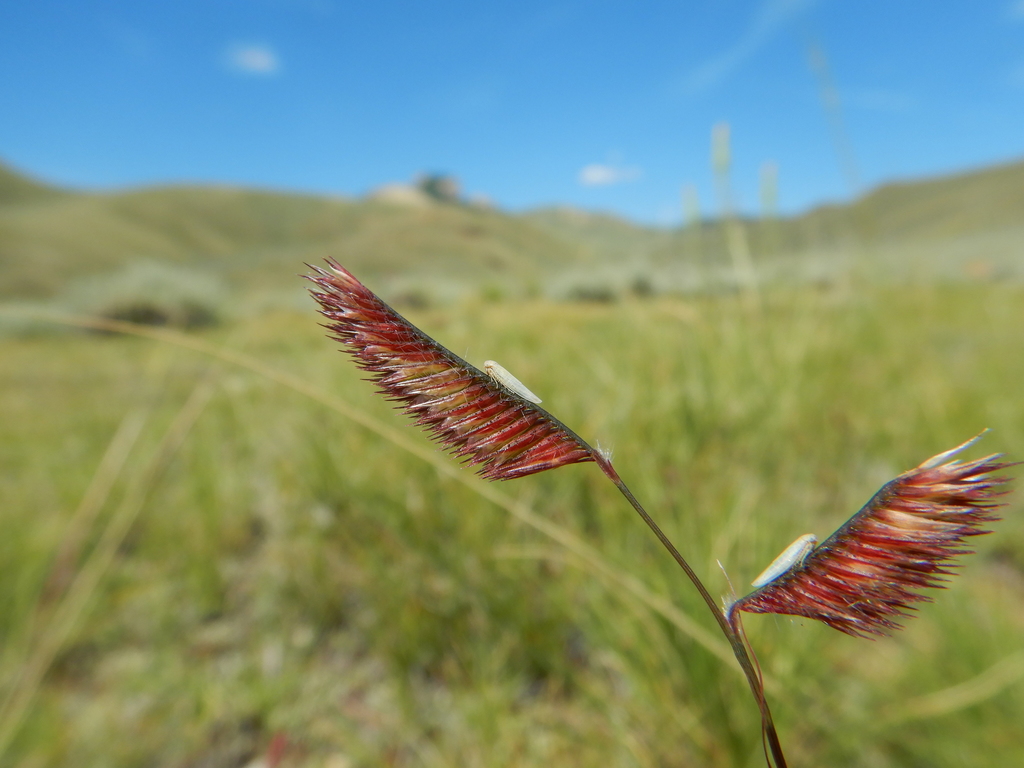
CSU 6.305 table lists Bouteloua gracilis (blue grama) with the preserved ignitability score.
8 cited rows from this source; its identity, lineage and tier are stated once.
“time to flaming (s): 1.508”
· score 1.508 (FLAMITS — time to flaming (s))
FLAMITS record 15901; Ignitability measurement; plant part whole plant; fuel live; predrying no; device burning bench; site Gao2022-1; sampling spring 2019. Primary study Gao2022: Gao, X., & Schwilk, D. W. (2022). Burn hot or tolerate trees: flammability decreases with shade tolerance in grasses. Oikos, 4, e08930.
FLAMITS record 15902; Sustainability measurement; plant part whole plant; fuel live; predrying no; device burning bench; site Gao2022-1; sampling spring 2019. Primary study Gao2022: Gao, X., & Schwilk, D. W. (2022). Burn hot or tolerate trees: flammability decreases with shade tolerance in grasses. Oikos, 4, e08930.
FLAMITS record 15903; Sustainability measurement; plant part whole plant; fuel live; predrying no; device burning bench; site Gao2022-1; sampling spring 2019. Primary study Gao2022: Gao, X., & Schwilk, D. W. (2022). Burn hot or tolerate trees: flammability decreases with shade tolerance in grasses. Oikos, 4, e08930.
FLAMITS record 15904; Combustibility measurement; plant part whole plant; fuel live; predrying no; device burning bench; site Gao2022-1; sampling spring 2019. Primary study Gao2022: Gao, X., & Schwilk, D. W. (2022). Burn hot or tolerate trees: flammability decreases with shade tolerance in grasses. Oikos, 4, e08930.
“time to flaming (s): 1.126”
· score 1.126 (FLAMITS — time to flaming (s))
FLAMITS record 15905; Ignitability measurement; plant part whole plant; fuel live; predrying no; device burning bench; site Gao2022-1; sampling spring 2019. Primary study Gao2022: Gao, X., & Schwilk, D. W. (2022). Burn hot or tolerate trees: flammability decreases with shade tolerance in grasses. Oikos, 4, e08930.
FLAMITS record 15906; Sustainability measurement; plant part whole plant; fuel live; predrying no; device burning bench; site Gao2022-1; sampling spring 2019. Primary study Gao2022: Gao, X., & Schwilk, D. W. (2022). Burn hot or tolerate trees: flammability decreases with shade tolerance in grasses. Oikos, 4, e08930.
FLAMITS record 15907; Sustainability measurement; plant part whole plant; fuel live; predrying no; device burning bench; site Gao2022-1; sampling spring 2019. Primary study Gao2022: Gao, X., & Schwilk, D. W. (2022). Burn hot or tolerate trees: flammability decreases with shade tolerance in grasses. Oikos, 4, e08930.
FLAMITS record 15908; Combustibility measurement; plant part whole plant; fuel live; predrying no; device burning bench; site Gao2022-1; sampling spring 2019. Primary study Gao2022: Gao, X., & Schwilk, D. W. (2022). Burn hot or tolerate trees: flammability decreases with shade tolerance in grasses. Oikos, 4, e08930.