Enter your ZIP to see whether this is legal to plant in your state, and whether it survives your winter.
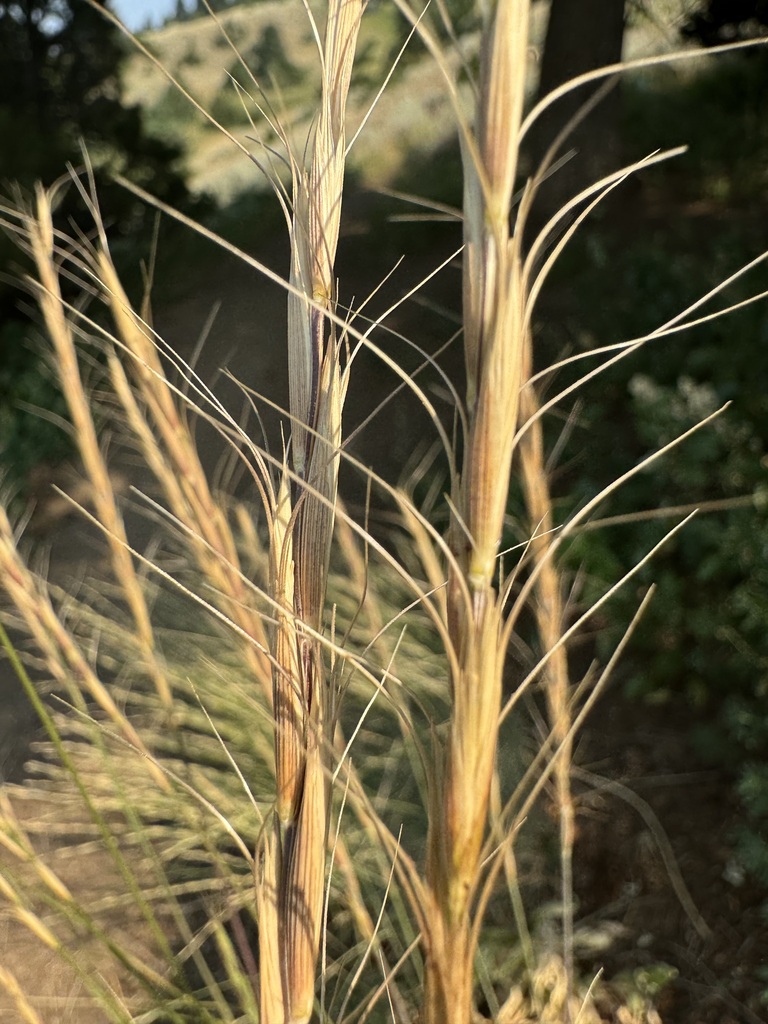
Bluebunch wheatgrass is rated fire resistant, but the support is limited and includes a mixed fire-resistance score.
The Nevada Division of Forestry and University of Nevada Cooperative Extension rate its potential flammability “low.” That is favorable, though the guide calls its ratings rough estimates drawn from various sources rather than scientific trials. The guide also says plants that turn brown often become high fire hazards and advises mowing grasses and forbs when browning begins. This is a general maintenance warning, not a separate finding that bluebunch wheatgrass burned poorly.
The Society for Range Management identifies the grass as a species frequently used in semiarid greenstrips in the Great Basin and Intermountain West. That use supports its favorable standing in that setting, but the source reports no individual burn result for the species. Idaho Firewise supplies the less favorable finding: a fire-resistance score of 4 out of 10, within the mixed portion of the scale used to interpret its field-trial database.
Calling bluebunch wheatgrass fire resistant is therefore reasonable only with qualification. Its low potential-flammability rating and greenstrip use support the label, while the 4-of-10 score keeps the case from being uniformly favorable. Homeowners should treat the mowing guidance as part of managing this grass rather than as proof that its rating changes whenever it browns.
Form
grass
Rated in
Great Basin / Intermountain West; Lake Tahoe Basin, Nevada and California; southern Idaho / Intermountain
On this lot
1. Fire evidence and conditions
Fire evidence
Fire-resistant — location does not change the cited classification.
Southern Idaho (ID footprint); partial normalized coverage · 2013-11-08
The official database labels itself "For Southern Idaho" and describes Idaho residents at the urban-rangeland interface. FireApproved publishes 419 existing plant owners that cite its scored rows. This bounded Southern Idaho scope is regional context, not statewide coverage or a conclusion that the score transfers unchanged to every Idaho site.
Nevada Division of Forestry and University of Nevada Cooperative Extension publish Bulletin 06-01 for the Lake Tahoe Basin and vicinity. FireApproved publishes 83 exact rated owners as basin context across Nevada and California. Rough estimates are not statewide or site ratings.
2. Why this plant is relevant here
State distribution
Documented in AK, AZ, CA, CO, ID, MI, MT, ND, NE, NM, NV, OR, SD, TX, UT, WA, WY.
Native range
Introduced / established
USDA hardiness
3. Legal, ecological, and broader status
Legal-list status
Seed-list status
Reported invasive here
Broader regional context
Federal context
How to read this page
The status above is computed from the cited rows below: independent recommendations can support a fire-resistant result, an avoid row can produce keep-away, and disagreement stays visible as conflict. Placement notes preserve each source’s own scheme rather than translating unlike rules into one scale. This is evidence about a plant, not permission to plant it in every part of the defensible space; Zone 0 remains noncombustible.
Where its sources say to plant it
Placement rules below use each source's own distances or named zones, tied to its rating.
They are not interchangeable with the directory's current Zone 0 guidance.
Fire Resistance of Plants Master Database: plantable at 70' from home [Idaho minimum planting distance] (mid-scale rating)
Forage Kochia Helps Fight Range Fires: species used in a semiarid western rangeland greenstrip [harrison-2002-greenstrip] (with its recommendation)
Home Landscaping Guide for Lake Tahoe and Vicinity: Fire Hazard column: low [tahoe-guide-2006] (with its recommendation)
The evidence
Grouped by what each source concluded. Primary evidence rated the plant itself
(a lab, field program, or original curation); corroboration compiled or
republished another source's rating and resolves to its root lineage.
Table 1 row: bluebunch wheatgrass — Pseudoroegneria spicata (Purch) A. Love. The article says these are species frequently used in greenstrips; it does not report a separate burn result for this row.
Table 1's Fire Hazard column prints “low” for this taxon. The guide calls the rating a rough estimate of potential flammability, not a result of scientific trials. Its footnote says plants that turn brown often become high fire hazards and tells readers to mow grasses and forbs when they begin to turn brown.