Enter your ZIP to see whether this is legal to plant in your state, and whether it survives your winter.
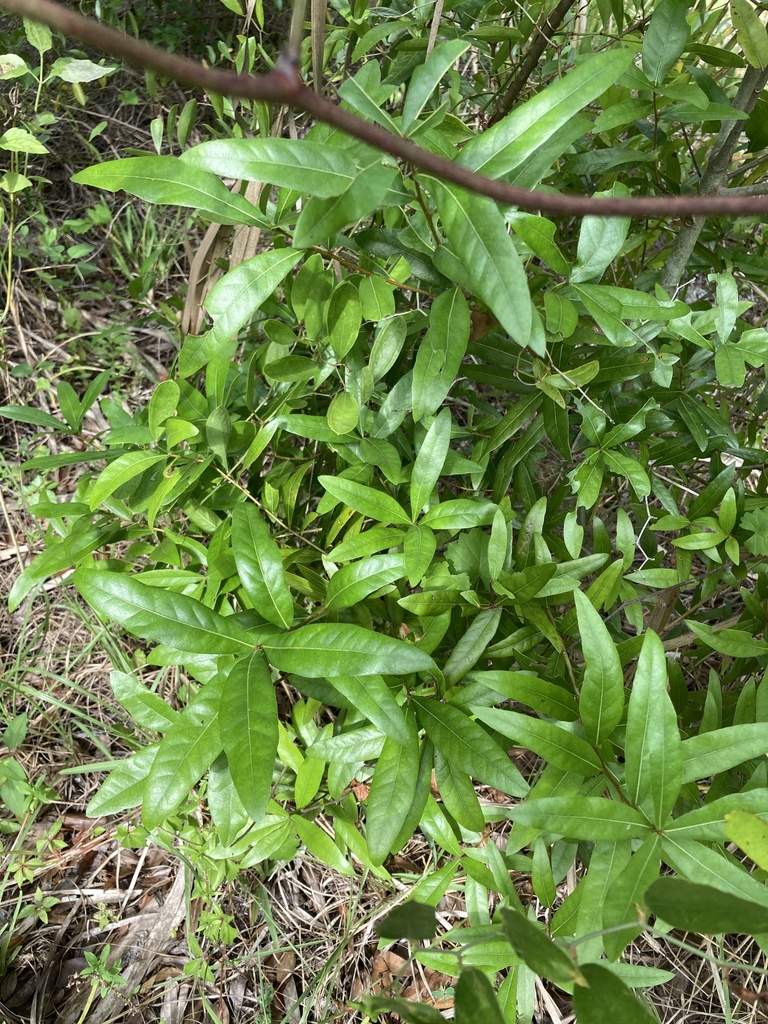
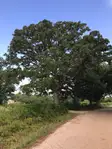
Laurel oak has an avoid result in the evidence table. The sole directional source assigns Quercus hemisphaerica high flammability, while noting that the tree adapts to urban conditions and prefers warm climates.
The rest of the pack consists of non-rated laboratory measurements. Burning-bench studies report flame height, flaming and smouldering duration, mass loss, and consumed biomass for leaves or litter. These data add detail without becoming recommendation votes, leaving the directional result at limited evidence.
Reopen the evidence table to distinguish the rating from those measurements. Same-form alternatives provide other tree records, each with its own conclusion and source lineage.
Virginia Cooperative Extension's publication opens with Virginia wildfire conditions, identifies its Virginia Firewise Landscaping Task Force, and labels plants native to Virginia. FireApproved publishes 306 exact source owners. Publication scope does not establish parcel suitability or current endorsement of this archived 2009 list.
2. Why this plant is relevant here
State distribution
Documented in AL, FL, GA, LA, MS, NC, SC, TX, VA.
Native range
Current cited native range in AL, AR, FL, GA, LA, MS, NC, SC, TX, VA.
Introduced / established
USDA hardiness
3. Legal, ecological, and broader status
Legal-list status
Seed-list status
Reported invasive here
Broader regional context
Federal context
How to read this page
The status above is computed from the cited rows below: independent recommendations can support a fire-resistant result, an avoid row can produce keep-away, and disagreement stays visible as conflict. Placement notes preserve each source’s own scheme rather than translating unlike rules into one scale. This is evidence about a plant, not permission to plant it in every part of the defensible space; Zone 0 remains noncombustible.
Native and introduced range evidence
These are exact U.S. botanical-area records from the cited range source. Native and
introduced describe biogeographic relationship, not fire performance or planting approval.
Doubtful and extinct rows stay visible but do not count as current presence.
The lossless worldwide derivative is retained once in the research corpus; object pages repeat only exact U.S. areas needed by the local lens. The JSON twin carries the same page assertions.
The evidence
Grouped by what each source concluded. Primary evidence rated the plant itself
(a lab, field program, or original curation); corroboration compiled or
republished another source's rating and resolves to its root lineage.
9 cited rows from this source; its identity, lineage and tier are stated once.
Primary study Kane2008: Kane, J. M., Varner, J. M., & Hiers, J. K. (2008). The burning characteristics of southeastern oaks: Discriminating fire facilitators from fire impeders. Forest Ecology and Management, 256, 2039-2045.
Shared row context: fuel live; predrying no; device burning bench; site Kane2008-1; sampling november and december.
“flame height (cm): 40.6”
FLAMITS record 5448; Combustibility measurement; plant part leaves.
“flaming duration (s): 91.4”
FLAMITS record 5456; Sustainability measurement; plant part leaves.
“smouldering duration (s): 348”
FLAMITS record 5464; Sustainability measurement; plant part litter.
“mass loss rate (g/s): 0.29”
FLAMITS record 5472; Combustibility measurement; plant part litter.
“burnt biomass (%): 80.6”
FLAMITS record 5480; Consumability measurement; plant part litter.
Primary study Mola2014: Mola, J. M., Varner, J. M., Jules, E. S., & Spector, T. (2014). Altered Community Flammability in Florida's Apalachicola Ravines and Implications for the Persistence of the Endangered Conifer Torreya taxifolia. Plos One, 9, 8.
Shared row context: plant part litter; fuel all; predrying no; device burning bench; site Mola2014-1; sampling may and june.