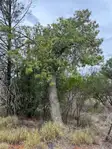
129 cited rows from this source; its identity, lineage and tier are stated once.
-
Primary study Dimitrakopoulos2001: Dimitrakopoulos, A. P., & Panov, P. I. (2001). Pyric properties of some dominant Mediterranean vegetation species. International Journal of Wildland Fire, 10, 23-27.
Shared row context: Combustibility measurement; fuel dead; predrying no; device calorimeter; site Dimitrakopoulos2001-1; sampling december.
-
“calorific value (kcal/kg): 4600.86”
FLAMITS record 2966; plant part leaves.
-
“calorific value (kcal/kg): 4440.72”
FLAMITS record 2976; plant part stems.
-
Primary study Doat1981: Doat, J., Valette, J. C., Askri, D., Caumartin, L., Bettachini, M., & Moro, M. (1981). Le pouvoir calorifique supérieur d'espèces forestières méditerranéennes. Annales des Sciences forestières, 38, 469-486.
Shared row context: Combustibility measurement; plant part leaves; fuel live; predrying yes; device calorimeter; site Doat1981-1; sampling ND.
-
“calorific value (kcal/kg): 4759”
FLAMITS record 3124.
-
“calorific value (kcal/kg): 4761”
FLAMITS record 3125.
-
“calorific value (kcal/kg): 4691”
FLAMITS record 3126.
-
“calorific value (kcal/kg): 4685”
FLAMITS record 3127.
-
“calorific value (kcal/kg): 4540”
FLAMITS record 3128.
-
“calorific value (kcal/kg): 4575”
FLAMITS record 3129.
-
“calorific value (kcal/kg): 4888”
FLAMITS record 3130.
-
“calorific value (kcal/kg): 4854”
FLAMITS record 3131.
-
“calorific value (kcal/kg): 4720”
FLAMITS record 3132.
-
“calorific value (kcal/kg): 4728”
FLAMITS record 3133.
-
“calorific value (kcal/kg): 4723”
FLAMITS record 3134.
-
“calorific value (kcal/kg): 4721”
FLAMITS record 3135.
-
“calorific value (kcal/kg): 4753”
FLAMITS record 3136.
-
“calorific value (kcal/kg): 4751”
FLAMITS record 3137.
-
“calorific value (kcal/kg): 5020”
FLAMITS record 3138.
-
“calorific value (kcal/kg): 4970”
FLAMITS record 3139.
-
“calorific value (kcal/kg): 4785”
FLAMITS record 3140.
-
“calorific value (kcal/kg): 4826”
FLAMITS record 3141.
-
“calorific value (kcal/kg): 4866”
FLAMITS record 3142.
-
“calorific value (kcal/kg): 4847”
FLAMITS record 3143.
-
“calorific value (kcal/kg): 4863”
FLAMITS record 3144.
-
“calorific value (kcal/kg): 4871”
FLAMITS record 3145.
-
“calorific value (kcal/kg): 4719”
FLAMITS record 3146.
-
“calorific value (kcal/kg): 4706”
FLAMITS record 3147.
-
Primary study Essaghi2017: Essaghi, S., Hachmi, M. H., Yessef, M., Dehhaoui, M., & El Amarty, F. (2017). Assessment of Flammability of Moroccan Forest Fuels: New Approach to Estimate the Flammability Index. Forests, 8, 443.
Shared row context: Ignitability measurement; plant part twigs; fuel all; predrying no; device epiradiator; site Essaghi2017-5; sampling january.
-
Primary study Liodakis2005: Liodakis, S., Vorisis, D., & Agiovlasitis, I. (2005). A method for measuring the relative particle fire hazard properties of forest species. Thermochimica Acta, 437, 150-157.
Shared row context: plant part leaves; fuel live; predrying yes; site Liodakis2005-1; sampling ND.
-
“maximum sample temperature (°C): 464”
FLAMITS record 6683; Combustibility measurement; device muffle furnace.
-
Shared measurement context: Ignitability measurement; device muffle furnace.
-
“burning duration (s): 2586”
FLAMITS record 6695; Sustainability measurement; device muffle furnace.
-
“calorific value (kcal/kg): 4793.97”
FLAMITS record 6707; Combustibility measurement; device calorimeter.
-
Primary study Liodakis2006b: Liodakis, S., & Kakardakis, T. (2006b). Measuring the Particle Flammability of Forest Species from Wildland/Urban Inter-face (WUI) near Athens by Thermal Analysis. First International Symposium on Environment Identities and Mediterranean Area. Corte-Ajaccio, France
Shared row context: plant part leaves; fuel live; predrying yes; site Liodakis2006b-1; sampling ND.
-
“calorific value (kcal/kg): 5514”
FLAMITS record 6742; Combustibility measurement; device calorimeter.
-
“time to flaming (s): 1596”
FLAMITS record 6748; Ignitability measurement; device thermal analyzer.
-
“maximum sample temperature (°C): 301.7”
FLAMITS record 6755; Combustibility measurement; device thermal analyzer.
-
“burning duration (s): 348”
FLAMITS record 6762; Sustainability measurement; device thermal analyzer.
-
Primary study Liodakis2011: Liodakis, S., Agiovlasitis, I.P., Kakardakis, T., Tzamtzis, N., Vorisis, D., & Lois, E. (2011). Determining hazard risk indices for Mediterranean forest species based on particle flammability properties. Fire Safety Journal, 46, 116-124.
Shared row context: plant part leaves; fuel live; predrying yes; site Liodakis2011-1.
-
Shared measurement context: Ignitability measurement; device burning bench; sampling all seasons.
-
“time to flaming (s): 10.27”
FLAMITS record 6885.
-
“time to flaming (s): 5.87”
FLAMITS record 6922.
-
“time to flaming (s): 4.96”
FLAMITS record 6958.
-
Shared measurement context: Combustibility measurement; device burning bench; sampling all seasons.
-
“flame intensity (kW/m): 188.02”
FLAMITS record 6892.
-
“flame height (cm): 3.89”
FLAMITS record 6916.
-
“flame height (cm): 5.81”
FLAMITS record 6940.
-
“flame intensity (kW/m): 251”
FLAMITS record 6946.
-
“flame height (cm): 8”
FLAMITS record 6976.
-
“flame intensity (kW/m): 292.2”
FLAMITS record 6982.
-
Shared measurement context: Sustainability measurement; device burning bench; sampling all seasons.
-
“flaming duration (s): 289.04”
FLAMITS record 6898.
-
“rate of burning spread (cm/s): 0.06”
FLAMITS record 6910.
-
“rate of burning spread (cm/s): 0.07”
FLAMITS record 6928.
-
“flaming duration (s): 162.2”
FLAMITS record 6934.
-
“rate of burning spread (cm/s): 0.14”
FLAMITS record 6964.
-
“flaming duration (s): 133.6”
FLAMITS record 6970.
-
Shared measurement context: Consumability measurement; device burning bench; sampling all seasons.
-
“burnt biomass (%): 82.49”
FLAMITS record 6904.
-
“burnt biomass (%): 80.2”
FLAMITS record 6952.
-
“burnt biomass (%): 87.3”
FLAMITS record 6988.
-
“flammability value: 2”
FLAMITS record 6994; Ignitability measurement; device calorimeter; sampling spring.
-
“flammability value: 5”
FLAMITS record 7001; Ignitability measurement; device calorimeter; sampling summer.
-
“flammability value: 3”
FLAMITS record 7008; Ignitability measurement; device calorimeter; sampling autumn.
-
Shared measurement context: Ignitability measurement; device calorimeter; sampling all seasons.
-
“flammability value: 1”
FLAMITS record 7015.
-
“flammability value: 3”
FLAMITS record 7022.
-
“flammability value: 4”
FLAMITS record 7029.
-
Primary study Madrigal2009: Madrigal, J., Hernando, C., Guijarro, M., Diez, C., Marino, E., & De Castro, A. (2009). Evaluation of forest fuel flammability and combustion properties with an adapted mass loss calorimeter device. Journal of Fire Sciences, 27, 323-342.
Shared row context: plant part leaves; fuel dead; predrying no; device calorimeter; site Madrigal2009-1; sampling ND.
-
“time to flaming (s): 7.67”
FLAMITS record 7271; Ignitability measurement.
-
Shared measurement context: Combustibility measurement.
-
“calorific value (kcal/kg): 2815.99”
FLAMITS record 7275.
-
“maximum energy flux (kW/m²): 335.26”
FLAMITS record 7279.
-
“total heat release (MJ/m²): 11.79”
FLAMITS record 7283.
-
“burnt biomass (%): 99.6”
FLAMITS record 7287; Consumability measurement.
-
Primary study Madrigal2011a: Madrigal, J., Guijarro, M., Hernando, C., Díez, C., & Marino, E. (2011a). Effective Heat of Combustion for Flaming Combustion of Mediterranean Forest Fuels. Fire Technology, 47, 461-474.
Shared row context: plant part twigs; fuel live; predrying no; device calorimeter; site Madrigal2011a-1; sampling ND.
-
“flaming duration (s): 38”
FLAMITS record 7331; Sustainability measurement.
-
Shared measurement context: Combustibility measurement.
-
“maximum energy flux (kW/m²): 353”
FLAMITS record 7351.
-
“mass loss rate (g/s): 0.06”
FLAMITS record 7391.
-
“total heat release (MJ/m²): 17.73”
FLAMITS record 7411.
-
“time to flaming (s): 11”
FLAMITS record 7371; Ignitability measurement.
-
Primary study Martin1989: Martín, E., & Miguel, L. (1989). Inflamabilidad y energía de las especies de sotobosque
Shared row context: plant part twigs; fuel live; predrying yes; device epiradiator; site Martin1989-1.
-
Shared measurement context: Ignitability measurement; sampling may.
-
Shared measurement context: Ignitability measurement; sampling july.
-
Shared measurement context: Ignitability measurement; sampling august.
-
Shared measurement context: Ignitability measurement; sampling september.
-
Shared measurement context: Ignitability measurement; sampling october.
-
Shared measurement context: Ignitability measurement; sampling november.
-
“calorific value (kcal/kg): 4846”
FLAMITS record 7912; Combustibility measurement; sampling ND.
-
“flammability value: 2”
FLAMITS record 7961; Ignitability measurement; sampling ND.
-
Primary study Michelaki2020: Michelaki, C., Fyllas, N. M., Galanidis, A., Aloupi, M., Evangelou, E., Arianoutsou, M., & Dimitrakopoulos, P. G. (2020). Adaptive flammability syndromes in thermo-Mediterranean vegetation, captured by alternative resource-use strategies. Science of The Total Environment, 718, 137437.
Shared row context: plant part leaves; fuel dead; predrying no; device muffle furnace; site Michelaki2020-5; sampling spring.
-
“time to flaming (s): 946”
FLAMITS record 9202; Ignitability measurement.
-
“burning duration (s): 406”
FLAMITS record 9203; Sustainability measurement.
-
“mass loss rate (g/s): 0”
FLAMITS record 9204; Combustibility measurement.
-
“estimated burnt biomass (%): 94.5”
FLAMITS record 9205; Consumability measurement.
-
Primary study Ntoufas2016: Ntoufas, I., Liodakis, S., & Tzamtzis, N. (2016). The effect of the extractable components of euro-mediterranean vegetation species to the combustion of their foliage. Fresenius Environmental Bulletin, 2850.
Shared row context: plant part leaves; fuel live; predrying no; site Ntoufas2016-1; sampling february.
-
Shared measurement context: Combustibility measurement; device calorimeter.
-
Shared measurement context: Ignitability measurement; device thermal analyzer.
-
Shared measurement context: Sustainability measurement; device thermal analyzer.
-
Primary study Saura2010: Saura-Mas, S., Paula, S., Pausas, J. G,. & Lloret, F. (2010). Fuel loading and flammability in the Mediterranean Basin woody species with different post-fire regenerative strategies. International Journal of Wildland Fire, 19, 783.
Shared row context: plant part leaves; fuel live; predrying no; device epiradiator; sampling august.
-
Shared measurement context: Ignitability measurement; site Saura2010-1.
-
“temperature at flaming (°C): 579.1”
FLAMITS record 12139.
-
“time to smoke (s): 77.5”
FLAMITS record 12205.
-
“temperature at smoke (°C): 132.53”
FLAMITS record 12242.
-
“time to smouldering (s): 239.2”
FLAMITS record 12278.
-
“temperature at smouldering (°C): 380”
FLAMITS record 12314.
-
Shared measurement context: Ignitability measurement; site Saura2010-2.
-
“temperature at flaming (°C): 571”
FLAMITS record 12153.
-
“time to smoke (s): 99.8”
FLAMITS record 12223.
-
“temperature at smoke (°C): 157.8”
FLAMITS record 12260.
-
“time to smouldering (s): 308”
FLAMITS record 12296.
-
“temperature at smouldering (°C): 441”
FLAMITS record 12332.
-
“flaming duration (s): 370.4”
FLAMITS record 12171; Sustainability measurement; site Saura2010-1.
-
“flaming duration (s): 447.4”
FLAMITS record 12187; Sustainability measurement; site Saura2010-2.
-
Primary study Valette1990: Valette, J.-C. (1990). Flammabilities of Mediterranean forest species. Effects on the combustibility of the forest communities inflammabilités des espèces forestières méditerranéennes. Conséquences sur la combustibilité des formations forestières. Revue forestière française, 42, 76-92.
Shared row context: Ignitability measurement; plant part leaves; fuel live; predrying no; device epiradiator; site Valette1990-1; sampling june to september.
-
“flammability value: 3”
FLAMITS record 13329.
-
“flammability value: 4”
FLAMITS record 13330.
-
Primary study Ormeno2020: Ormeño, E., Ruffault, J., Gutigny, C., Madrigal, J., Guijarro, M., Hernando, C., & Ballini, C. (2020). Increasing cuticular wax concentrations in a drier climate promote litter flammability. Forest Ecology and Management, 473, 118242.
Shared row context: plant part litter; fuel all; predrying yes; site Ormeno2020-1; sampling february 2017.
-
Shared measurement context: Ignitability measurement; device epiradiator.
-
Shared measurement context: Sustainability measurement; device epiradiator.
-
Shared measurement context: Combustibility measurement; device epiradiator.
-
Shared measurement context: Combustibility measurement; device calorimeter.
-
Primary study Guney2022: Güney, C. O., Sar?, A., Cekim, H. O., Küçüksille, E. U., ?entürk, Ö., Gülsoy, S., & Özkan, K. (2022). An advanced approach for leaf flammability index estimation. International journal of wildland fire, 31, 277-290.
Shared row context: plant part leaves; fuel live; predrying no; device calorimeter; site Guney2022-1; sampling may and september 2017.
-
Shared measurement context: Ignitability measurement.
-
“flame height (cm): 56.8”
FLAMITS record 16647; Combustibility measurement.
-
“burning duration (s): 10.7”
FLAMITS record 16648; Sustainability measurement.
-
“burnt biomass (%): 5.7”
FLAMITS record 16649; Consumability measurement.
-
Primary study Mindykowski2011: Mindykowski, P., Fuentes, A., Consalvi, J. L., & Porterie, B. (2011). Piloted ignition of wildland fuels. Fire Safety Journal, 46, 3440.
Shared row context: Ignitability measurement; plant part leaves; fuel dead; predrying no; device calorimeter; site Mindykowski2011-1; sampling ND.
-
“temperature at flaming (°C): 599”
FLAMITS record 17548.
-
“time to flaming (s): 168.83”
FLAMITS record 17572.
-
“time to flaming (s): 119.42”
FLAMITS record 17573.
-
“time to flaming (s): 72.58”
FLAMITS record 17574.
-
“time to flaming (s): 42.18”
FLAMITS record 17575.
-
“time to flaming (s): 31.1”
FLAMITS record 17576.
-
“time to flaming (s): 22.62”
FLAMITS record 17577.