Enter your ZIP to see whether this is legal to plant in your state, and whether it survives your winter.
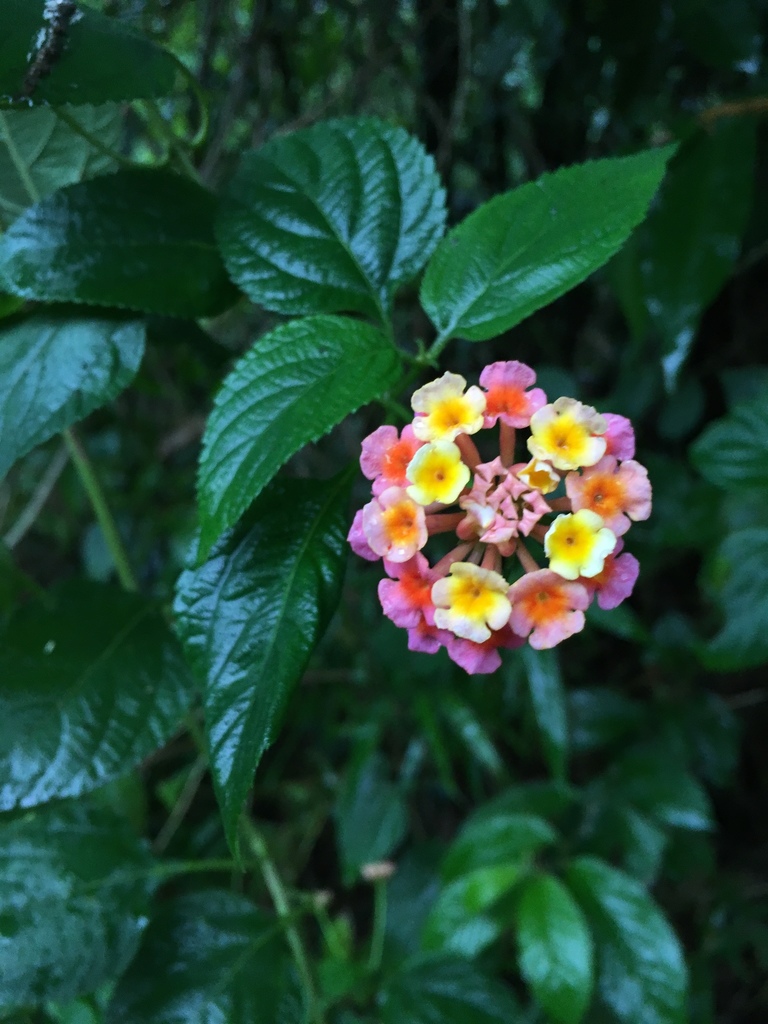
No, lantana is not fire resistant, and the available findings support keeping it away from structures.
Diputació de Girona and Bombers de la Generalitat de Catalunya rate Lantana camara “desaconsejada,” advising against its use. The guide assumes care suited to each species. Its five suitability verdicts balance fuel structure, maintenance, origin and invasiveness with fire evidence and expert fire-service experience. The NSW Rural Fire Service also identifies lantana among the main exotic vegetation groups associated with intense surface-fire behaviour and warns that these plants can increase bushfire intensity during adverse fire weather.
The Tasmania Fire Service gives lantana the less severe rating of moderate flammability, but that is not an endorsement near a building. On its three-group scale, plants rated moderate should be avoided within the Building Protection Zone. Live lantana leaves tested under an epiradiator without prior drying took 59.84 seconds to reach flaming, according to FLAMITS. This measures ignition time under those experimental conditions. The FLAMITS database does not apply one threshold that turns measurements from different methods, plant parts, and devices into a planting recommendation.
The sources differ in severity, but none supports calling lantana fire resistant. The warnings from Catalonia and New South Wales, together with Tasmania’s siting restriction, support treating this Caribbean shrub as highly flammable and keeping it away from structures.
Catalonia, Spain; Global; New South Wales, Australia; Tasmania, Australia
Maintenance
2. Why this plant is relevant here
State distribution
Documented in AL, AZ, CA, FL, GA, HI, LA, MS, NC, OK, PR, SC, TX, UT, VI.
Native range
Current cited native range in PR.
Introduced / established
1 sourced range or established record. This is not an invasive warning.
USDA hardiness
3. Legal, ecological, and broader status
Legal-list status
Seed-list status
Reported invasive here
2 ecological invasive reports.
Broader regional context
Federal context
How to read this page
The status above is computed from the cited rows below: independent recommendations can support a fire-resistant result, an avoid row can produce keep-away, and disagreement stays visible as conflict. Placement notes preserve each source’s own scheme rather than translating unlike rules into one scale. This is evidence about a plant, not permission to plant it in every part of the defensible space; Zone 0 remains noncombustible.
Native and introduced range evidence
These are exact U.S. botanical-area records from the cited range source. Native and
introduced describe biogeographic relationship, not fire performance or planting approval.
Doubtful and extinct rows stay visible but do not count as current presence.
The lossless worldwide derivative is retained once in the research corpus; object pages repeat only exact U.S. areas needed by the local lens. The JSON twin carries the same page assertions.
Where its sources say to plant it
Placement rules below use each source's own distances or named zones, tied to its rating.
They are not interchangeable with the directory's current Zone 0 guidance.
Fire Resisting Garden Plants for the Urban Fringe and Rur…: should be avoided in the Building Protection Zone [Texas Building Protection Zone] (mid-scale rating)
Guía de pirojardinería: not suitable inside the 25-metre maximum-risk zone [girona-2020-iuf-25m-suitability] (with its avoid rating)
Planning for Bush Fire Protection 2019: Appendix A1.9 — Exotic vegetation [nswrfs-pbp-a1.9] (with its avoid rating)
The evidence
Grouped by what each source concluded. Primary evidence rated the plant itself
(a lab, field program, or original curation); corroboration compiled or
republished another source's rating and resolves to its root lineage.
Lantana camara is rated “DESACONSEJADA” by the guide's qualitative IUF garden-suitability method. The method assumes species-specific care and integrates fire evidence with fuel structure, maintenance, origin, invasiveness, and expert fire-service experience.
“Under adverse fire weather conditions these plants can contribute to the intensity of bush fires.”
Appendix A1.9 identifies Lantana camara within its main exotic vegetation groups, reports intense surface-fire behaviour for these groups, and assigns them regulatory vegetation fuel-class conversions.
16 cited rows from this source; its identity, lineage and tier are stated once.
Primary study Batista2020: Batista, A.C., Biondi, D., & Martini, A. (2020). Flammability of ornamental species for fire management in wildland-urban interface in Paraná state. Floresta, 51, 192-200.
Shared row context: plant part leaves; fuel live; predrying no; device epiradiator; site Batista2020-1; sampling ND.
FLAMITS record 9691; Ignitability measurement; plant part leaves; fuel live; predrying no; device muffle furnace; site Murray2013-1; sampling march to april. Primary study Murray2013: Murray, B. R., Hardstaff, L. K., & Phillips, M. L. (2013). Differences in leaf flammability, leaf traits and flammability-trait relationships between native and exotic plant species of dry sclerophyll forest. PLoS One, 8, e79205.
Primary study Salvo2015: Salvo-Aires, F. (2015). Effects of woody weeds on fuels and fire behaviour in Eastern Australian forests and woodlands. PhD. Dissertation. University of Sydney.
Shared row context: plant part leaves; fuel live; predrying yes; device calorimeter; site Salvo2015-1; sampling ND.
Primary study Potts2022: Potts, E., Tng, D., Apgaua, D., Curran, T. J., Engert, J., & Laurance, S. G. (2022). Growth form and functional traits influence the shoot flammability of tropical rainforest species. Forest Ecology and Management, 522, 120485.
Shared row context: plant part branches; fuel all; predrying yes; device grill; site Potts2022-1; sampling ND.