Enter your ZIP to see whether this is legal to plant in your state, and whether it survives your winter.
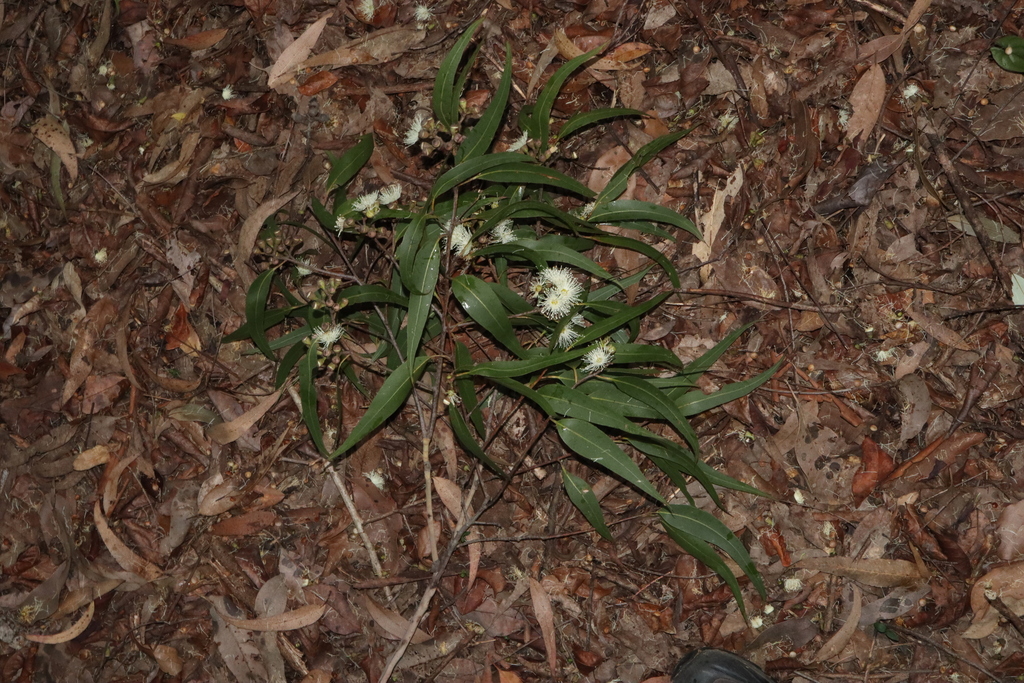
Spotted gum cannot be called simply fire resistant because Australian fire sources disagree about how it burns.
The Tasmania Fire Service rates spotted gum “High Flammability,” its most restrictive group. Plants in that group should not be kept inside the Building Protection Zone and should also be avoided in the Fuel Modified Zone. The Australian Plants Society Victoria reaches a more favorable conclusion, calling the tree fire-retardant. On its field-trial scale, that means spotted gum resists the first wave of a bushfire but may burn after drying out. That is a recommendation, but it is not the stronger claim that the tree remains unburned under continued flame.
The disagreement reflects different premises. Tasmania’s expert-curated guidance is designed to place plants around buildings according to flammability. The Victorian field-trial classification asks whether a plant withstands an initial flame wave. A plant can satisfy that limited definition of fire retardance while still receiving a high-flammability rating under stricter placement guidance.
Laboratory findings do not break the tie. A 2023 shoot study compared time to flame, flame duration, flaming events, and flame temperature, but spotted gum’s rankings across those attributes did not agree and the researchers assigned no overall class. A separate database reports that dead, unpredried leaves took 2.13 seconds to flame in a muffle furnace. That number describes one test condition, not a threshold for safe landscaping. Spotted gum therefore remains a disputed choice, especially close to a building where Tasmania’s guidance applies its strongest restriction.
Central Coast, New South Wales, Australia; Global; Tasmania, Australia; Victoria, Australia
Maintenance
2. Why this plant is relevant here
State distribution
Native range
Introduced / established
USDA hardiness
3. Legal, ecological, and broader status
Legal-list status
Seed-list status
Reported invasive here
Broader regional context
Federal context
How to read this page
The status above is computed from the cited rows below: independent recommendations can support a fire-resistant result, an avoid row can produce keep-away, and disagreement stays visible as conflict. Placement notes preserve each source’s own scheme rather than translating unlike rules into one scale. This is evidence about a plant, not permission to plant it in every part of the defensible space; Zone 0 remains noncombustible.
Conditions in the fire evidence
These describe tested or rated plant material. They are not horticultural maintenance instructions.
Placement rules below use each source's own distances or named zones, tied to its rating.
They are not interchangeable with the directory's current Zone 0 guidance.
Fire Resisting Garden Plants for the Urban Fringe and Rur…: remove from the Building Protection Zone; avoid in the Fuel Modified Zone [Texas Building Protection Zone] (with its avoid rating)
The evidence
Grouped by what each source concluded. Primary evidence rated the plant itself
(a lab, field program, or original curation); corroboration compiled or
republished another source's rating and resolves to its root lineage.
8 cited rows from this source; its identity, lineage and tier are stated once.
Primary study Grootemaat2017b: Grootemaat, S., Wright, I. J., Van Bodegom, P. M., Cornelissen, J. H., & Shaw, V. (2017). Bark traits, decomposition and flammability of Australian forest trees. Australian Journal of Botany, 65, 327.