United States / Grow / big sagebrush

big sagebrush (Artemisia tridentata)
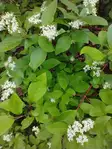
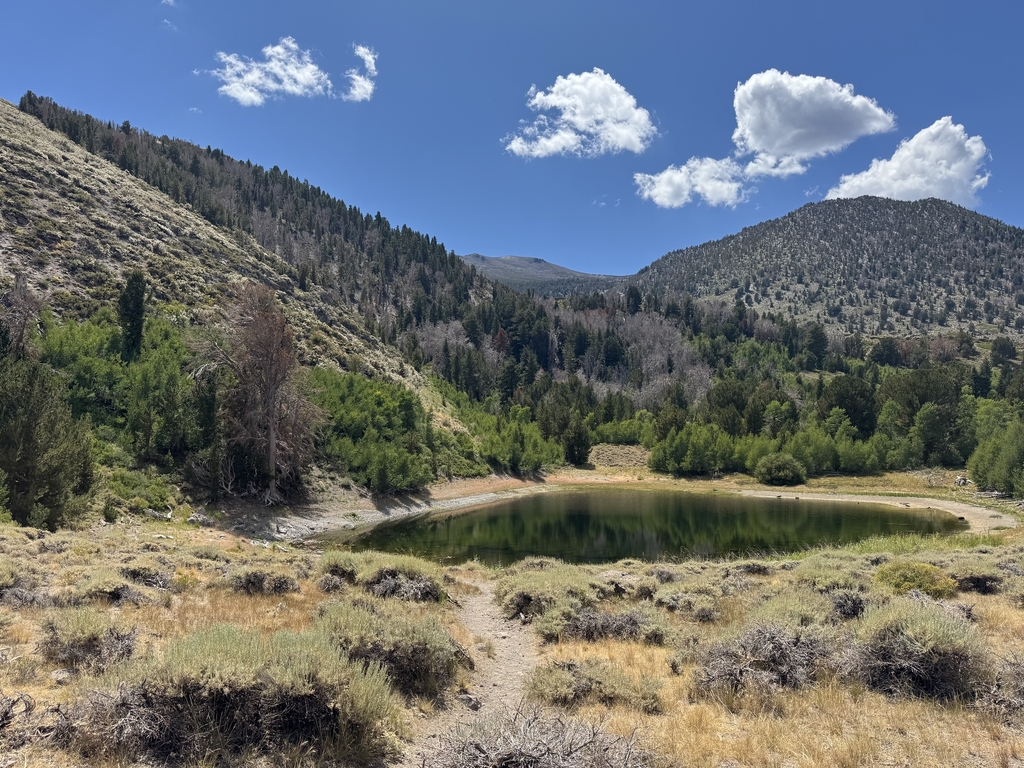
Photo: (c) Matt Lavin, some rights reserved (CC BY-SA) (CC BY-SA), via iNaturalist. Species-typical, not necessarily this cultivar.

big sagebrush

Artemisia tridentata · Asteraceae · all Artemisia records · also called Sagebrush · Wikipedia

View Saved

Is this one for your yard?

Enter your ZIP to see whether this is legal to plant in your state, and whether it survives your winter.

Big sagebrush is rated highly flammable, not fire resistant, and both of its sources agree.

The City of Ashland, Oregon treats it as a prohibited flammable plant, barring new planting or propagation within 30 feet of any structure, whether that structure sits on the same lot or the one next door.

That is a legal line the city draws around a list of named trees, shrubs, and grasses it judges too flammable to stand close to a building, sagebrush among them. A laboratory reading points the same way without proving the case on its own. Researchers tested live sagebrush leaves over a flat flame burner and recorded flaming ignition at about 362 degrees Celsius, one entry in a global trait database that logs plant fire-test results without setting a single pass-or-fail line across the different devices, plant parts, and methods behind them. The number marks the moment those leaves caught fire in that setup; it does not by itself rank sagebrush against other shrubs.

Big sagebrush is a shrub in the Asteraceae family, growing to about four feet on moderate water. It is native to the Southwestern, Northwestern, North-Central, and South-Central United States, introduced as far as New York, and hardy to USDA zone 2b.

None of that range or hardiness changes the fire question. A city has banned this shrub near buildings, and the one ignition measurement matches that call rather than working against it. Anyone planting near a structure should give big sagebrush the distance the code asks for.

Fire-resistant shrubs instead

Form
shrub
Mature height
~4 ft
Water need
moderate
Rated in
Ashland, Oregon; Global
On this lot

1. Fire evidence and conditions

Fire evidence
Highly flammable — location does not change the cited classification.
Placement evidence
1 source placement record; source schemes remain separate.
Evidence regions
Ashland, Oregon; Global
Typed publication scope: 1 scope across 1 cited fire source
  • Prohibited Flammable Plants (Ashland Municipal Code 9.04) · Official scoped edition
    • City of Ashland (OR footprint); partial normalized coverage · 2026-08-26

      This is a City of Ashland adoption fact, not statewide Oregon guidance or an experimental flammability result. FireApproved publishes 24 taxonomy-safe owners as city-level regulatory context. It applies to new planting and propagation within 30 feet of structures, including structures on adjacent lots; it is not projected as a blanket removal order for every established listed plant.

2. Why this plant is relevant here

State distribution
Documented in AZ, CA, CO, ID, MA, MT, ND, NE, NM, NV, OR, SD, UT, WA, WY.
Native range
Current cited native range in AZ, CA, CO, ID, MT, ND, NE, NM, NV, OR, SD, UT, WA, WY.
Introduced / established
1 sourced range or established record. This is not an invasive warning.
USDA hardiness
Documented minimum 2b; no upper limit is documented.

3. Legal, ecological, and broader status

How to read this page

The status above is computed from the cited rows below: independent recommendations can support a fire-resistant result, an avoid row can produce keep-away, and disagreement stays visible as conflict. Placement notes preserve each source’s own scheme rather than translating unlike rules into one scale. This is evidence about a plant, not permission to plant it in every part of the defensible space; Zone 0 remains noncombustible.

Native and introduced range evidence

These are exact U.S. botanical-area records from the cited range source. Native and introduced describe biogeographic relationship, not fire performance or planting approval. Doubtful and extinct rows stay visible but do not count as current presence.

Current native

14

exact source areas

Current introduced

1

exact source area

Qualified

0

doubtful or extinct source rows

14 native source areas · World Checklist of Vascular Plants, version 16 v16, as of 2026-06-04
  • Arizona (AZ)
  • California (CA)
  • Colorado (CO)
  • Idaho (ID)
  • Montana (MT)
  • North Dakota (ND)
  • Nebraska (NE)
  • New Mexico (NM)
  • Nevada (NV)
  • Oregon (OR)
  • South Dakota (SD)
  • Utah (UT)
  • Washington (WA)
  • Wyoming (WY)
1 introduced source area · World Checklist of Vascular Plants, version 16 v16, as of 2026-06-04
  • New York (NY)

The lossless worldwide derivative is retained once in the research corpus; object pages repeat only exact U.S. areas needed by the local lens. The JSON twin carries the same page assertions.

Plant hardiness evidence

These values describe the plant source. Your ZIP zone comes from the separate 2023 USDA Plant Hardiness Zone Map. Whole-zone values stay whole-zone, and a single unresolved value is not treated as a tolerance range. Different source boundaries stay separate: overlapping statements are compared independently, while only ranges with no shared zone are called a conflict.

Where its sources say to plant it

Placement rules below use each source's own distances or named zones, tied to its rating. They are not interchangeable with the directory's current Zone 0 guidance.

The evidence

Grouped by what each source concluded. Primary evidence rated the plant itself (a lab, field program, or original curation); corroboration compiled or republished another source's rating and resolves to its root lineage.

Avoids (1)

Listed without a rating (56)
Corroboration (56 rows from 1 source)
  • FLAMITS: FLAMmability plant traiTS database — Dryad / Global Ecology and Biogeography · Dryad version 9 · original source Corroboration Trait database lineage: meta-aggregator

    56 cited rows from this source; its identity, lineage and tier are stated once.

    • Primary study Fletcher2007: Fletcher, T. H., Pickett, B. M., Smith, S. G., Spittle, G. S., Woodhouse, M. M., Haake, E., & Weise, D. R. (2007). Effects of moisture on ignition behavior of moist California chaparral and Utah leaves. Combustion Science and Technology, 179, 1183-1203.

      Shared row context: Ignitability measurement; plant part leaves; fuel live; predrying no; device flat flame burner; site Fletcher2007-1; sampling ND.

      • “temperature at flaming (°C): 361.88”

        FLAMITS record 3342.

      • “time to flaming (s): 97.8”

        FLAMITS record 3348.

    • Primary study Gallacher2014: Gallacher, J. R., Lansinger, V., Hansen, S., Jack, D., Weise, D. R., & Fletcher, T. H. (2014). Effects of season and heating mode on ignition and burning behavior of three species of live fuel measured in a flat-flame burner system. Spring Technical Meeting of the Western States Section of the Combustion Institute, Pasadena, CA.

      Shared row context: plant part twigs; fuel live; predrying no; device flat flame burner; site Gallacher2014-3.

      • Shared measurement context: Ignitability measurement; sampling ND.

        • “time to flaming (s): 1.29”

          FLAMITS record 3545.

        • “time to flaming (s): 1.65”

          FLAMITS record 3546.

        • “time to flaming (s): 2.66”

          FLAMITS record 3547.

        • “time to flaming (s): 2.24”

          FLAMITS record 3548.

        • “time to flaming (s): 2.41”

          FLAMITS record 3549.

        • “time to flaming (s): 3.25”

          FLAMITS record 3550.

        • “time to flaming (s): 4.68”

          FLAMITS record 3551.

        • “time to flaming (s): 4.6”

          FLAMITS record 3552.

        • “time to flaming (s): 5.94”

          FLAMITS record 3553.

        • “time to flaming (s): 3.13”

          FLAMITS record 3554.

        • “time to flaming (s): 2.45”

          FLAMITS record 3555.

        • “temperature at flaming (°C): 295.28”

          FLAMITS record 3597.

        • “temperature at flaming (°C): 330.39”

          FLAMITS record 3598.

        • “temperature at flaming (°C): 359.4”

          FLAMITS record 3599.

        • “temperature at flaming (°C): 366.81”

          FLAMITS record 3600.

        • “temperature at flaming (°C): 360.79”

          FLAMITS record 3601.

        • “temperature at flaming (°C): 418.17”

          FLAMITS record 3602.

        • “temperature at flaming (°C): 446.09”

          FLAMITS record 3603.

        • “temperature at flaming (°C): 322.81”

          FLAMITS record 3604.

      • Shared measurement context: Combustibility measurement; sampling may.

        • “flame height (cm): 7.31”

          FLAMITS record 3573.

        • “flame height (cm): 7.06”

          FLAMITS record 3574.

        • “flame height (cm): 11.04”

          FLAMITS record 3575.

        • “flame height (cm): 11.1”

          FLAMITS record 3576.

        • “flame height (cm): 10.8”

          FLAMITS record 3577.

        • “flame height (cm): 21.81”

          FLAMITS record 3578.

        • “flame height (cm): 11.41”

          FLAMITS record 3579.

        • “flame height (cm): 10”

          FLAMITS record 3580.

        • “flame height (cm): 13.43”

          FLAMITS record 3581.

    • Primary study McAllister2017: McAllister, S., & Weise, D. (2017). Effects of season on ignition of live wildland fuels using the forced ignition and flame spread test apparatus. Combustion Science and Technology, 189, 231-247.

      Shared row context: Ignitability measurement; plant part twigs; fuel live; predrying no; device scale wind tunnel; site McAllister2017-1.

      • “time to flaming (s): 0”

        FLAMITS record 9064; sampling april.

      • “time to flaming (s): 0”

        FLAMITS record 9065; sampling may.

      • “time to flaming (s): 21.77”

        FLAMITS record 9066; sampling june.

      • “time to flaming (s): 15.25”

        FLAMITS record 9067; sampling july.

      • “time to flaming (s): 12.47”

        FLAMITS record 9068; sampling august.

      • “time to flaming (s): 17.29”

        FLAMITS record 9069; sampling september.

      • “time to flaming (s): 16.99”

        FLAMITS record 9070; sampling october.

      • “time to flaming (s): 22.08”

        FLAMITS record 9071; sampling november.

      • “time to flaming (s): 21.71”

        FLAMITS record 9072; sampling december.

      • “time to flaming (s): 23.77”

        FLAMITS record 9073; sampling january.

      • “time to flaming (s): 26.14”

        FLAMITS record 9074; sampling february.

      • “time to flaming (s): 23.15”

        FLAMITS record 9075; sampling march.

    • Primary study Qi2016: Qi, Y., Jolly, W .M., Dennison, P. E., & Kropp, R. C. (2016). Seasonal relationships between foliar moisture content, heat content and biochemistry of lodgepole line and big sagebrush foliage. International Journal of Wildland Fire, 25, 574-578.

      Shared row context: Combustibility measurement; plant part leaves; fuel live; predrying yes; device calorimeter; site Qi2016-1; sampling july to october.

      • “calorific value (kcal/kg): 4614.5”

        FLAMITS record 10730.

      • “calorific value (kcal/kg): 4635.99”

        FLAMITS record 10731.

      • “calorific value (kcal/kg): 4882.01”

        FLAMITS record 10732.

      • “calorific value (kcal/kg): 4948.88”

        FLAMITS record 10733.

      • “calorific value (kcal/kg): 4867.67”

        FLAMITS record 10734.

    • Primary study Fazeli2022: Fazeli, H., Jolly, W. M., & Blunck, D. L. (2022). Stages and time-scales of ignition and burning of live fuels for different convective heat fluxes. Fuel, 324, 124490.

      Shared row context: Ignitability measurement; plant part leaves; predrying no; device flat flame burner; site Fazeli2022-2; sampling september to february.

      • Shared measurement context: fuel live.

        • “time to flaming (s): 8.2”

          FLAMITS record 16492.

        • “time to flaming (s): 10.9”

          FLAMITS record 16493.

      • Shared measurement context: fuel dead.

        • “time to flaming (s): 0.7”

          FLAMITS record 16494.

        • “time to flaming (s): 1.6”

          FLAMITS record 16495.

    • Primary study Smith2005: Smith, S. G. (2005). Effects of Moisture on Combustion Characteristics of Live California Chaparral and Utah Foliage. Master dissertations. Brigham Young University - Provo.

      Shared row context: Ignitability measurement; plant part leaves; fuel live; predrying no; device flat flame burner; site Smith2005-1; sampling ND.

      • “temperature at flaming (°C): 355”

        FLAMITS record 16705.

      • “time to flaming (s): 2.11”

        FLAMITS record 16706.

    • “time to flaming (s): 20.2”

      FLAMITS record 17483; Ignitability measurement; plant part leaves; fuel live; predrying no; device burning bench; site McAllister2014-4; sampling ND. Primary study McAllister2014: McAllister S., & Finney, M. (2014). Convection Ignition of Live Forest Fuels. Fire Safety Science - Proceedings of the eleventh International Symposium 11th conference. Christchurch, New Zealand.

    • Primary study Pickett2010: Pickett, B. M., Isackson, C., Wunder, R., Fletcher, T. H., Butler, B. W., & Weise, D. R. (2010). Experimental measurements during combustion of moist individual foliage samples. International Journal of Wildland Fire, 19, 153-162 .

      Shared row context: Combustibility measurement; plant part twigs; fuel live; predrying no; device flat flame burner; site Pickett2010-2; sampling ND.
      • “mass loss rate (g/s): 0.0077”

        FLAMITS record 18246.

      • “mass loss rate (g/s): 0.0048”

        FLAMITS record 18247.

Fire-resistant shrubs instead

Fire-resistant shrubs listed above

Guides that discuss this plant

Last verified 2026-08-23. JSON (CC BY 4.0)

Profiles: USDA PLANTS · GBIF · iNaturalist · Wikidata · Wikipedia · ITIS

Artemisia tridentata (Sagebrush). FireApproved. https://fireapproved.com/plants/artemisia-tridentata/. Last verified 2026-08-23.