Enter your ZIP to see whether this is legal to plant in your state, and whether it survives your winter.
California huckleberry cannot yet be called fire resistant because two regional authorities place it on opposite sides.
FireSmart BC classifies the shrub as a “FireSmart-approved fire-resistant plant,” but also flags it as needing more research. Its finding comes from a compiled chart that sorts plants into an approved category and identifies their suitability for parts of the Home Ignition Zone. The research flag makes that approval less conclusive than it first appears.
Fire Safe Marin gives the opposite assessment. Its 2019 guidance lists California huckleberry as fire-prone in Marin County. That guidance is expert-curated rather than an experimental rating, and it stresses that placement, spacing, irrigation, and removal of dead material remain necessary for landscaping plants. The two organizations use different systems and address different regions, but neither source establishes that those differences account for their disagreement.
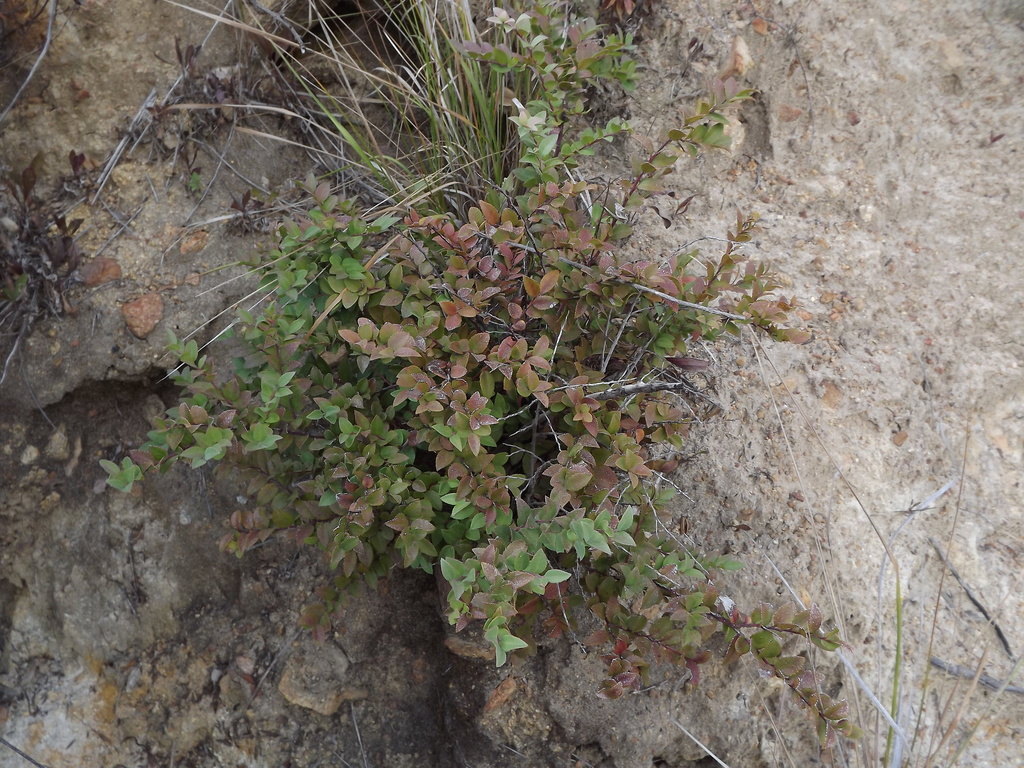
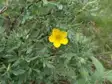
California huckleberry is a low-water shrub native to the southwestern and northwestern United States. A member of Ericaceae, it reaches about eight feet at maturity and is hardy to USDA zone 7b. Those traits do not resolve the conflicting fire classifications. For a California homeowner, the prudent reading is that this shrub has disputed fire performance and should not be treated as a reliably fire-resistant choice near a home.
Form
shrub
Mature height
~8 ft
Water need
low
Rated in
British Columbia; Marin County, California
On this lot
1. Fire evidence and conditions
Fire evidence
Mixed evidence — location does not change the cited classification.
Fire-performance conditions
Fire ecology context
Placement evidence
Evidence regions
British Columbia; Marin County, California
Maintenance
Typed publication scope: 1 scope across 1 cited fire source
Marin County (CA footprint); partial normalized coverage · 2019-01-01
The publication is explicitly limited to plants common to Marin County. FireApproved publishes 104 exact owners as Marin regional context while retaining its placement, spacing, irrigation, and maintenance boundary. It is not statewide California guidance or parcel suitability.
2. Why this plant is relevant here
State distribution
Documented in CA, ID, OR, WA.
Native range
Current cited native range in CA, OR, WA.
Introduced / established
USDA hardiness
Documented minimum 7b; no upper limit is documented.
3. Legal, ecological, and broader status
Legal-list status
Seed-list status
Reported invasive here
Broader regional context
Federal context
How to read this page
The status above is computed from the cited rows below: independent recommendations can support a fire-resistant result, an avoid row can produce keep-away, and disagreement stays visible as conflict. Placement notes preserve each source’s own scheme rather than translating unlike rules into one scale. This is evidence about a plant, not permission to plant it in every part of the defensible space; Zone 0 remains noncombustible.
Native and introduced range evidence
These are exact U.S. botanical-area records from the cited range source. Native and
introduced describe biogeographic relationship, not fire performance or planting approval.
Doubtful and extinct rows stay visible but do not count as current presence.
The lossless worldwide derivative is retained once in the research corpus; object pages repeat only exact U.S. areas needed by the local lens. The JSON twin carries the same page assertions.
Plant hardiness evidence
These values describe the plant source. Your ZIP zone comes from the separate 2023 USDA
Plant Hardiness Zone Map. Whole-zone values stay whole-zone, and a single unresolved value
is not treated as a tolerance range. Different source boundaries stay separate: overlapping
statements are compared independently, while only ranges with no shared zone are called a conflict.
Source location: PlantCharacteristics record 65502, Temperature, Minimum (°F).
The evidence
Grouped by what each source concluded. Primary evidence rated the plant itself
(a lab, field program, or original curation); corroboration compiled or
republished another source's rating and resolves to its root lineage.