United States / Grow / Norway spruce

Norway spruce (Picea abies)
Photo: (c) Георгий Виноградов (Georgy Vinogradov), some rights reserved (CC BY) (CC BY), via iNaturalist. Species-typical, not necessarily this cultivar.

Norway spruce

Picea abies · Pinaceae · all Picea records · Wikipedia

View Saved

Is this one for your yard?

Enter your ZIP to see whether this is legal to plant in your state, and whether it survives your winter.

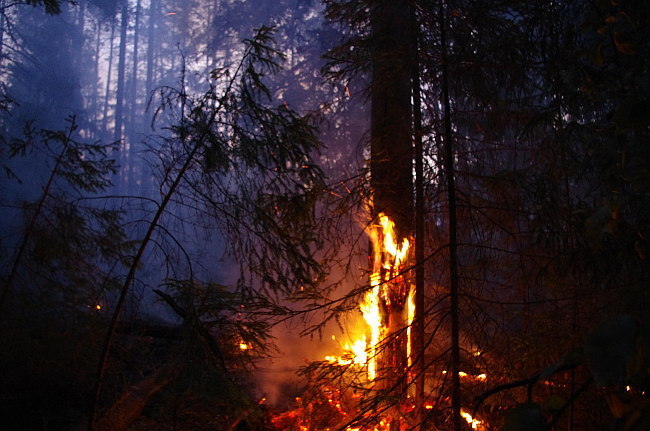
Norway spruce is generally treated as highly flammable, despite one Michigan recommendation that calls it wildfire-resistant.

Five of six assessments advise against it. The Forest Service and state Firewise programs place it at “Not Firewise,” the lowest category on their four-step scale, noting long branches that generally reach the ground. Both Ohio State and Virginia Tech rate Norway spruce’s flammability high (H). Virginia Tech’s three-point scale stops there; Ohio State’s five-band scale continues to very high (VH). European authorities also warn against it: Catalonia’s garden guide calls it very discouraged, and Greece’s 2023 regulation includes it among particularly flammable endemic trees and shrubs.

Michigan State is the clear exception. Its extension service includes Norway spruce on a binary list of plants considered wildfire-resistant and recommended for Michigan’s climate. The Catalan guide assumes care appropriate to each species and judges garden suitability, considering maintenance and fuel structure as well as fire literature, expert fire-service experience, origin, and invasiveness. The Greek source serves yet another purpose, setting fire-protection rules for properties in or near forested land.

For a homeowner choosing a tree near a structure, the disagreement should not outweigh the repeated warnings. Norway spruce is a roughly 75-foot tree at maturity, so its placement has lasting consequences. The overall verdict is to treat it as highly flammable and keep it away from structures.

Fire-resistant trees instead

Form
tree
Mature height
~75 ft
Light
Full sun
Water need
moderate
Rated in
Catalonia, Spain; Global; Greece; Michigan / Great Lakes +4
On this lot

1. Fire evidence and conditions

Fire evidence
Highly flammable — location does not change the cited classification.
Placement evidence
4 source placement records; source schemes remain separate.
Evidence regions
Catalonia, Spain; Global; Greece; Michigan / Great Lakes; New Zealand; Ohio / Midwest; Virginia / Mid-Atlantic; eastern US
Typed publication scope: 3 scopes across 3 cited fire sources
  • Wildfire-resistant Landscape Plants for Michigan (Extension Bulletin E2948) · Official scoped edition
    • MI; partial normalized coverage · 2007-01-01

      Michigan State University Extension Bulletin E2948 is explicitly a list of wildfire-resistant landscape plants for Michigan and includes a Michigan-native field. FireApproved publishes 221 exact GBIF owners from 226 represented source rows and holds 15 complex or non-exact rows. This dated publication scope is not a current site-suitability determination.

  • Firewise Landscaping (OSU Extension Bulletin 921) · Official scoped edition
    • OH; partial normalized coverage · 2006-03-01

      Ohio State University Extension Bulletin 921 is an Ohio publication that describes Ohio fire seasons and landscape conditions and labels nativity to Ohio. FireApproved publishes 352 exact source-owning plant records from its eight rated tables. This historical publication scope does not assert current extension endorsement or that a listed plant suits every Ohio site.

  • Virginia Firescapes — Firewise Landscaping for Woodland Homes (430-300) · Official scoped edition
    • VA; partial normalized coverage · 2009-04-15

      Virginia Cooperative Extension's publication opens with Virginia wildfire conditions, identifies its Virginia Firewise Landscaping Task Force, and labels plants native to Virginia. FireApproved publishes 306 exact source owners. Publication scope does not establish parcel suitability or current endorsement of this archived 2009 list.

2. Why this plant is relevant here

State distribution
Documented in CT, DC, DE, IL, KY, MA, MD, ME, MI, MN, NC, NH, NJ, NY, OH, PA, RI, VA, VT, WI, WV.
Introduced / established
18 sourced range or established records. This is not an invasive warning.
USDA hardiness
2 applicable cited hardiness statements overlap but have different boundaries; compare each complete source row.

3. Legal, ecological, and broader status

Reported invasive here
1 ecological invasive report.
How to read this page

The status above is computed from the cited rows below: independent recommendations can support a fire-resistant result, an avoid row can produce keep-away, and disagreement stays visible as conflict. Placement notes preserve each source’s own scheme rather than translating unlike rules into one scale. This is evidence about a plant, not permission to plant it in every part of the defensible space; Zone 0 remains noncombustible.

Native and introduced range evidence

These are exact U.S. botanical-area records from the cited range source. Native and introduced describe biogeographic relationship, not fire performance or planting approval. Doubtful and extinct rows stay visible but do not count as current presence.

Current native

0

exact source areas

Current introduced

18

exact source areas

Qualified

0

doubtful or extinct source rows

18 introduced source areas · World Checklist of Vascular Plants, version 16 v16, as of 2026-06-04
  • Connecticut (CT)
  • Illinois (IL)
  • Kentucky (KY)
  • Massachusetts (MA)
  • Maine (ME)
  • Michigan (MI)
  • Minnesota (MN)
  • North Carolina (NC)
  • New Hampshire (NH)
  • New Jersey (NJ)
  • New York (NY)
  • Ohio (OH)
  • Pennsylvania (PA)
  • Rhode I. (RI)
  • Virginia (VA)
  • Vermont (VT)
  • Wisconsin (WI)
  • West Virginia (WV)

The lossless worldwide derivative is retained once in the research corpus; object pages repeat only exact U.S. areas needed by the local lens. The JSON twin carries the same page assertions.

Plant hardiness evidence

These values describe the plant source. Your ZIP zone comes from the separate 2023 USDA Plant Hardiness Zone Map. Whole-zone values stay whole-zone, and a single unresolved value is not treated as a tolerance range. Different source boundaries stay separate: overlapping statements are compared independently, while only ranges with no shared zone are called a conflict.

Where its sources say to plant it

Placement rules below use each source's own distances or named zones, tied to its rating. They are not interchangeable with the directory's current Zone 0 guidance.

The evidence

Grouped by what each source concluded. Primary evidence rated the plant itself (a lab, field program, or original curation); corroboration compiled or republished another source's rating and resolves to its root lineage.

Recommends (1)

Avoids (5)

Corroboration (1 rows from 1 source)

Mid-scale / conditional (1)

Listed without a rating (84)
Corroboration (84 rows from 1 source)
  • FLAMITS: FLAMmability plant traiTS database — Dryad / Global Ecology and Biogeography · Dryad version 9 · original source Corroboration Trait database lineage: meta-aggregator

    84 cited rows from this source; its identity, lineage and tier are stated once.

    • Primary study Dimitrakopoulos2011: Dimitrakopoulos, A. P., Mitsopoulos, I. D., & Kaliva, A. (2011). Short communication. Comparing flammability traits among fire-stricken (low elevation) and non fire- stricken (high elevation) conifer forest species of Europe: a test of the Mutch hypothesis. Forest Systems, 22, 134-137.

      Shared row context: plant part leaves; fuel live; predrying no; device calorimeter; site Dimitrakopoulos2011-1; sampling summer.

      • Shared measurement context: Ignitability measurement.

        • “time to flaming (s): 39.57”

          FLAMITS record 2980.

        • “temperature at flaming (°C): 231.75”

          FLAMITS record 3000.

      • “calorific value (kcal/kg): 4569.31”

        FLAMITS record 2990; Combustibility measurement.

    • “calorific value (kcal/kg): 4846.18”

      FLAMITS record 3926; Combustibility measurement; plant part twigs; fuel live; predrying yes; device calorimeter; site Gillon1997-1; sampling june to september. Primary study Gillon1997: Gillon, D., Hernando, C., Valette, J.-C., & Joffre, R. (1997). Fast estimation of the calorific values of forest fuels by near infrared-reflectance spectroscopy. Canadian Journal of Forest Research, 27, 760-765.

    • Primary study Polka2018: Pólka, M. (2018). Analysis of the heat and smoke release rate of selected undergrowth types. E3S Web of Conferences. Semarang, Indonesia.

      Shared row context: Combustibility measurement; plant part litter; fuel all; predrying no; device calorimeter; site Polka2018-1; sampling ND.

      • “energy flux (kW/m²): 13”

        FLAMITS record 10642.

      • “energy flux (kW/m²): 19”

        FLAMITS record 10643.

      • “energy flux (kW/m²): 22”

        FLAMITS record 10644.

      • “energy flux (kW/m²): 30”

        FLAMITS record 10645.

      • “energy flux (kW/m²): 161”

        FLAMITS record 10646.

      • “total heat release (MJ/m²): 15”

        FLAMITS record 10647.

      • “total heat release (MJ/m²): 15”

        FLAMITS record 10648.

      • “total heat release (MJ/m²): 26”

        FLAMITS record 10649.

      • “total heat release (MJ/m²): 35”

        FLAMITS record 10650.

      • “total heat release (MJ/m²): 46”

        FLAMITS record 10651.

      • “smoke release rate (m²/s): 0.02”

        FLAMITS record 10652.

      • “smoke release rate (m²/s): 0.04”

        FLAMITS record 10653.

      • “smoke release rate (m²/s): 0.06”

        FLAMITS record 10654.

      • “smoke release rate (m²/s): 0.11”

        FLAMITS record 10655.

      • “smoke release rate (m²/s): 0.03”

        FLAMITS record 10656.

      • “mass loss rate (g/s): 2.91”

        FLAMITS record 10657.

      • “mass loss rate (g/s): 0.09”

        FLAMITS record 10658.

      • “mass loss rate (g/s): 0.18”

        FLAMITS record 10659.

      • “mass loss rate (g/s): 0.25”

        FLAMITS record 10660.

      • “mass loss rate (g/s): 0.3”

        FLAMITS record 10661.

    • Primary study Zhang2022: Zhang, S., Cornwell, W. K., Zhao, W., van Logtestijn, R. S., Krab, E. J., Aerts, R., & Cornelissen, J. H. (2022). Experimental evidence that leaf litter decomposability and flammability are decoupled across gymnosperm species. Journal of Ecology, 111, 761-772.

      Shared row context: plant part leaves; fuel all; predrying yes; device burning bench; site Zhang2022-1; sampling january and march 2011.

      • “maximum flame temperature (°C): 69.505”

        FLAMITS record 15567; Combustibility measurement.

      • “flaming duration (s): 5.75”

        FLAMITS record 15608; Sustainability measurement.

    • Primary study Blauw2017: Blauw, L. G., van Logtestijn, R. S. P., Broekman, R., Aerts, R., & Cornelissen, J. H. (2017). (Tree species identity in high-latitude forests determines fire spread through fuel ladders from branches to soil and vice versa. Forest Ecology and Management 400, 475-484.

      Shared row context: Combustibility measurement; plant part twigs; fuel all; predrying yes; device burning bench; site Blauw2017-1; sampling ND.

      • “maximum flame temperature (°C): 734.92”

        FLAMITS record 17148.

      • “maximum flame temperature (°C): 640.98”

        FLAMITS record 17151.

      • “maximum flame temperature (°C): 633.44”

        FLAMITS record 17154.

      • “maximum flame temperature (°C): 735.93”

        FLAMITS record 17157.

      • “temperature increase rate (°C/s): 92.05”

        FLAMITS record 17160.

      • “temperature increase rate (°C/s): 70.38”

        FLAMITS record 17163.

    • Primary study Simms1967: Simms, D.L., & Law, M. (1967). The ignition of wet and dry wood by radiation. Combustion and Flame, 11, 377–388.

      Shared row context: Ignitability measurement; plant part wood; device radiant panel; site Simms1967-1; sampling ND.

      • Shared measurement context: fuel dead; predrying yes.

        • “time to flaming (s): 45”

          FLAMITS record 17324.

        • “time to flaming (s): 48”

          FLAMITS record 17325.

      • Shared measurement context: fuel live; predrying no.

        • “time to flaming (s): 52”

          FLAMITS record 17326.

        • “time to flaming (s): 56”

          FLAMITS record 17327.

        • “time to flaming (s): 55”

          FLAMITS record 17328.

        • “time to flaming (s): 50”

          FLAMITS record 17329.

        • “time to flaming (s): 45”

          FLAMITS record 17330.

        • “time to flaming (s): 51”

          FLAMITS record 17331.

        • “time to flaming (s): 61”

          FLAMITS record 17332.

    • Primary study Hagen2009: Hagen, M., Hereid, J., Delichatsios, M. A., Zhang, J., & Bakirtzis, D. (2009). Flammability assessment of fire-retarded Nordic Spruce wood using thermogravimetric analyses and cone calorimetry. Fire Safety Journal, 44, 1053–66.

      Shared row context: Ignitability measurement; plant part wood; fuel dead; predrying yes; device calorimeter; site Hagen2009-1; sampling ND.

      • “time to flaming (s): 13”

        FLAMITS record 19161.

      • “time to flaming (s): 20”

        FLAMITS record 19162.

      • “time to flaming (s): 23”

        FLAMITS record 19163.

      • “time to flaming (s): 42”

        FLAMITS record 19164.

      • “time to flaming (s): 146”

        FLAMITS record 19165.

      • “time to flaming (s): 21”

        FLAMITS record 19166.

      • “time to flaming (s): 28”

        FLAMITS record 19167.

      • “time to flaming (s): 39”

        FLAMITS record 19168.

      • “time to flaming (s): 60”

        FLAMITS record 19169.

      • “time to flaming (s): 223”

        FLAMITS record 19170.

      • “time to flaming (s): 38”

        FLAMITS record 19171.

      • “time to flaming (s): 66”

        FLAMITS record 19172.

      • “time to flaming (s): 73”

        FLAMITS record 19173.

      • “time to flaming (s): 86”

        FLAMITS record 19174.

      • “time to flaming (s): 379”

        FLAMITS record 19175.

      • “time to flaming (s): 103”

        FLAMITS record 19176.

      • “time to flaming (s): 200”

        FLAMITS record 19177.

      • “time to flaming (s): 373”

        FLAMITS record 19178.

      • “time to flaming (s): 738”

        FLAMITS record 19179.

      • “time to flaming (s): 456”

        FLAMITS record 19180.

      • “time to flaming (s): 681”

        FLAMITS record 19181.

      • “time to flaming (s): 1148”

        FLAMITS record 19182.

      • “time to flaming (s): 1398”

        FLAMITS record 19183.

      • “time to flaming (s): 1395”

        FLAMITS record 19184.

      • “time to flaming (s): 1545”

        FLAMITS record 19185.

      • “temperature at flaming (°C): 761”

        FLAMITS record 19186.

      • “temperature at flaming (°C): 8.6”

        FLAMITS record 19187.

      • “temperature at flaming (°C): 815”

        FLAMITS record 19188.

      • “temperature at flaming (°C): 777”

        FLAMITS record 19189.

      • “temperature at flaming (°C): 815”

        FLAMITS record 19190.

    • Primary study Martinka2016: Martinka, J., Ka?íková, D., Rantuch, P., & Balog, K. (2016). Investigation of the influence of spruce and oak wood heat treatment upon heat release rate and propensity for fire propagation in the flashover phase. Acta Facultatis Xylologiae, 58(1), 5–14.

      Shared row context: plant part wood; fuel dead; predrying yes; device calorimeter; site Martinka2016-1; sampling ND.

      • Shared measurement context: Combustibility measurement.

        • “energy flux (kW/m²): 218”

          FLAMITS record 19191.

        • “energy flux (kW/m²): 268”

          FLAMITS record 19192.

        • “energy flux (kW/m²): 178”

          FLAMITS record 19193.

        • “energy flux (kW/m²): 229”

          FLAMITS record 19194.

        • “energy flux (kW/m²): 179”

          FLAMITS record 19195.

        • “energy flux (kW/m²): 218”

          FLAMITS record 19196.

      • Shared measurement context: Ignitability measurement.

        • “time to flaming (s): 20”

          FLAMITS record 19203.

        • “time to flaming (s): 15”

          FLAMITS record 19205.

        • “time to flaming (s): 15”

          FLAMITS record 19207.

    • Primary study Renner2023: Renner, J. S., Mensah, R. A., Jiang, L., & Xu, Q. (2023). A critical assessment of the fire properties of different wood species and bark from small-and bench-scale fire experiments. Journal of Thermal Analysis and Calorimetry, 148, 1423-1434.

      Shared row context: Combustibility measurement; plant part wood; fuel live; predrying yes; device calorimeter; site Renner2023-1; sampling ND.

      • “maximum flame temperature (°C): 397.33”

        FLAMITS record 19543.

      • “maximum flame temperature (°C): 371.98”

        FLAMITS record 19552.

      • “calorific value (kcal/kg): 2284.89736”

        FLAMITS record 19561.

      • “calorific value (kcal/kg): 2980.40482”

        FLAMITS record 19570.
Fire-resistant trees instead

Fire-resistant trees listed above

Last verified 2026-08-23. JSON (CC BY 4.0)

Profiles: USDA PLANTS · GBIF · iNaturalist · Wikidata · Wikipedia · ITIS

Picea abies (Norway spruce). FireApproved. https://fireapproved.com/plants/picea-abies/. Last verified 2026-08-23.