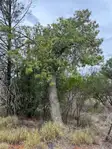
62 cited rows from this source; its identity, lineage and tier are stated once.
-
Primary study Alessio2008b: Alessio, G. A., Peñuelas, J., Llusià, J., Ogaya, R., Estiarte, M., & De Lillis, M. (2008). Influence of water and terpenes on flammability in some dominant Mediterranean species. International Journal of Wildland Fire, 17, 274.
Shared row context: plant part leaves; fuel live; predrying no; device epiradiator; site Alessio2008a-1.
-
Shared measurement context: Ignitability measurement; sampling november.
-
“temperature at flaming (°C): 405.08”
FLAMITS record 87.
-
“time to flaming (s): 415.28”
FLAMITS record 97.
-
“temperature at smouldering (°C): 374.08”
FLAMITS record 122.
-
Shared measurement context: Ignitability measurement; sampling january.
-
“temperature at flaming (°C): 422.11”
FLAMITS record 88.
-
“time to flaming (s): 416.35”
FLAMITS record 98.
-
“temperature at smouldering (°C): 419.47”
FLAMITS record 123.
-
Shared measurement context: Ignitability measurement; sampling may.
-
“temperature at flaming (°C): 367.64”
FLAMITS record 89.
-
“time to flaming (s): 306.5”
FLAMITS record 99.
-
“temperature at smouldering (°C): 361.37”
FLAMITS record 124.
-
Shared measurement context: Ignitability measurement; sampling june.
-
“temperature at flaming (°C): 429.18”
FLAMITS record 90.
-
“time to flaming (s): 281.54”
FLAMITS record 100.
-
“temperature at smouldering (°C): 434.62”
FLAMITS record 125.
-
Shared measurement context: Ignitability measurement; sampling july.
-
“temperature at flaming (°C): 418.48”
FLAMITS record 91.
-
“time to flaming (s): 294.58”
FLAMITS record 101.
-
“temperature at smouldering (°C): 409.4”
FLAMITS record 126.
-
“smouldering duration (s): 341.05”
FLAMITS record 142; Sustainability measurement; sampling november.
-
“smouldering duration (s): 334.39”
FLAMITS record 143; Sustainability measurement; sampling january.
-
“smouldering duration (s): 264.86”
FLAMITS record 144; Sustainability measurement; sampling may.
-
“smouldering duration (s): 250.59”
FLAMITS record 145; Sustainability measurement; sampling june.
-
“smouldering duration (s): 253.47”
FLAMITS record 146; Sustainability measurement; sampling july.
-
“calorific value (kcal/kg): 4870.07”
FLAMITS record 3946; Combustibility measurement; plant part twigs; fuel live; predrying yes; device calorimeter; site Gillon1997-1; sampling june to september. Primary study Gillon1997: Gillon, D., Hernando, C., Valette, J.-C., & Joffre, R. (1997). Fast estimation of the calorific values of forest fuels by near infrared-reflectance spectroscopy. Canadian Journal of Forest Research, 27, 760-765.
-
Primary study Liodakis2006b: Liodakis, S., & Kakardakis, T. (2006b). Measuring the Particle Flammability of Forest Species from Wildland/Urban Inter-face (WUI) near Athens by Thermal Analysis. First International Symposium on Environment Identities and Mediterranean Area. Corte-Ajaccio, France
Shared row context: plant part leaves; fuel live; predrying yes; site Liodakis2006b-1; sampling ND.
-
“calorific value (kcal/kg): 4098”
FLAMITS record 6746; Combustibility measurement; device calorimeter.
-
“time to flaming (s): 1596”
FLAMITS record 6752; Ignitability measurement; device thermal analyzer.
-
“maximum sample temperature (°C): 301.4”
FLAMITS record 6759; Combustibility measurement; device thermal analyzer.
-
“burning duration (s): 366”
FLAMITS record 6766; Sustainability measurement; device thermal analyzer.
-
Primary study Liodakis2011: Liodakis, S., Agiovlasitis, I.P., Kakardakis, T., Tzamtzis, N., Vorisis, D., & Lois, E. (2011). Determining hazard risk indices for Mediterranean forest species based on particle flammability properties. Fire Safety Journal, 46, 116-124.
Shared row context: plant part leaves; fuel live; predrying yes; site Liodakis2011-1.
-
Shared measurement context: Ignitability measurement; device burning bench; sampling all seasons.
-
“time to flaming (s): 6.33”
FLAMITS record 6888.
-
“time to flaming (s): 5.21”
FLAMITS record 6925.
-
“time to flaming (s): 5.83”
FLAMITS record 6961.
-
Shared measurement context: Combustibility measurement; device burning bench; sampling all seasons.
-
“flame intensity (kW/m): 69.78”
FLAMITS record 6894.
-
“flame height (cm): 8.92”
FLAMITS record 6918.
-
“flame height (cm): 7.9”
FLAMITS record 6943.
-
“flame intensity (kW/m): 321.11”
FLAMITS record 6949.
-
“flame height (cm): 8.4”
FLAMITS record 6979.
-
“flame intensity (kW/m): 470.35”
FLAMITS record 6985.
-
Shared measurement context: Sustainability measurement; device burning bench; sampling all seasons.
-
“flaming duration (s): 163.2”
FLAMITS record 6900.
-
“rate of burning spread (cm/s): 0.08”
FLAMITS record 6912.
-
“rate of burning spread (cm/s): 0.13”
FLAMITS record 6931.
-
“flaming duration (s): 186.6”
FLAMITS record 6937.
-
“rate of burning spread (cm/s): 0.22”
FLAMITS record 6967.
-
“flaming duration (s): 147.82”
FLAMITS record 6973.
-
Shared measurement context: Consumability measurement; device burning bench; sampling all seasons.
-
“burnt biomass (%): 78.39”
FLAMITS record 6906.
-
“burnt biomass (%): 92.89”
FLAMITS record 6955.
-
“burnt biomass (%): 89.89”
FLAMITS record 6991.
-
“flammability value: 2”
FLAMITS record 6997; Ignitability measurement; device calorimeter; sampling spring.
-
“flammability value: 3”
FLAMITS record 7004; Ignitability measurement; device calorimeter; sampling summer.
-
“flammability value: 1”
FLAMITS record 7011; Ignitability measurement; device calorimeter; sampling autumn.
-
Shared measurement context: Ignitability measurement; device calorimeter; sampling all seasons.
-
“flammability value: 2”
FLAMITS record 7018.
-
“flammability value: 3”
FLAMITS record 7025.
-
“flammability value: 3”
FLAMITS record 7032.
-
Primary study Michelaki2020: Michelaki, C., Fyllas, N. M., Galanidis, A., Aloupi, M., Evangelou, E., Arianoutsou, M., & Dimitrakopoulos, P. G. (2020). Adaptive flammability syndromes in thermo-Mediterranean vegetation, captured by alternative resource-use strategies. Science of The Total Environment, 718, 137437.
Shared row context: plant part leaves; fuel dead; predrying no; device muffle furnace; site Michelaki2020-3; sampling spring.
-
“time to flaming (s): 984”
FLAMITS record 9194; Ignitability measurement.
-
“burning duration (s): 387”
FLAMITS record 9195; Sustainability measurement.
-
“mass loss rate (g/s): 0”
FLAMITS record 9196; Combustibility measurement.
-
“estimated burnt biomass (%): 93.1”
FLAMITS record 9197; Consumability measurement.
-
Primary study Rosavec2013: Rosavec, R., ikic, Z., panjol, ., & Barcic, D. (2013). Utjecaj meteorolokih ?imbenika na zapaljivost nekih sredozemnih vrsta. umarski list, 137, 583-590.
Shared row context: Sustainability measurement; plant part leaves; fuel live; predrying no; device epiradiator; sampling june.
-
“flaming duration (s): 13.34”
FLAMITS record 11625; site Rosavec2013-1.
-
“flaming duration (s): 11.16”
FLAMITS record 11626; site Rosavec2013-2.
-
Primary study Valette1990: Valette, J.-C. (1990). Flammabilities of Mediterranean forest species. Effects on the combustibility of the forest communities inflammabilités des espèces forestières méditerranéennes. Conséquences sur la combustibilité des formations forestières. Revue forestière française, 42, 76-92.
Shared row context: Ignitability measurement; plant part leaves; fuel live; predrying no; device epiradiator; site Valette1990-1; sampling june to september.
-
“flammability value: 4”
FLAMITS record 13327.
-
“flammability value: 5”
FLAMITS record 13328.
-
Primary study Guney2022: Güney, C. O., Sar?, A., Cekim, H. O., Küçüksille, E. U., ?entürk, Ö., Gülsoy, S., & Özkan, K. (2022). An advanced approach for leaf flammability index estimation. International journal of wildland fire, 31, 277-290.
Shared row context: plant part leaves; fuel live; predrying no; device calorimeter; site Guney2022-1; sampling may and september 2017.
-
Shared measurement context: Ignitability measurement.
-
“flame height (cm): 59.9”
FLAMITS record 16687; Combustibility measurement.
-
“burning duration (s): 20.9”
FLAMITS record 16688; Sustainability measurement.
-
“burnt biomass (%): 6.6”
FLAMITS record 16689; Consumability measurement.