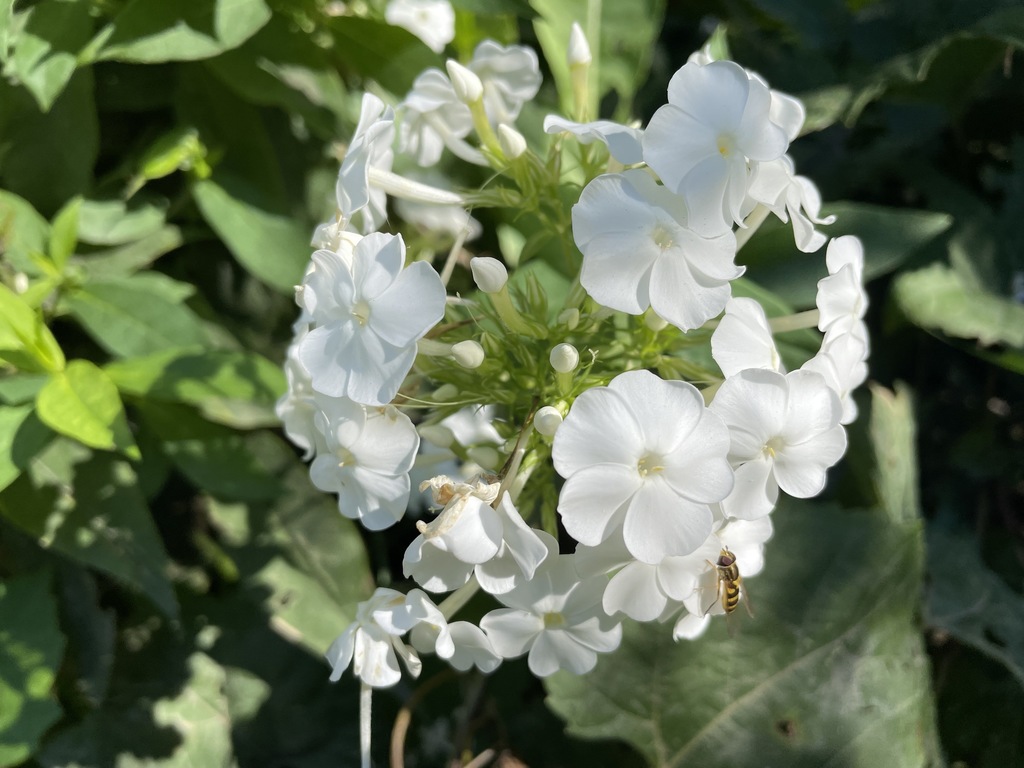
fall phlox
Phlox paniculata
A genus split is not a placement verdict.
Is this one for your yard?
Enter your ZIP to see whether this is legal to plant in your state, and whether it survives your winter.
Yes, fall phlox is rated fire resistant, with all six published assessments placing it among recommended or low-flammability plants.
The agreement spans two kinds of guidance. Extension services from Oregon State, Washington State and the University of Idaho include fall phlox on a recommended list for fire-resistant home landscapes. Washington’s Department of Natural Resources also recommends it, while Oregon State profiles tall garden phlox among perennials chosen for fire-resistant landscaping.
North Carolina reaches the same conclusion through graded flammability scales rather than simple inclusion. NC State and the U.S. Fish and Wildlife Service rated fall phlox “Low” on a four-level scale running from Low to Extreme. NC State’s newer three-level system again places it in the low-flammability class, and its live plant database applies that tag to the species and the cultivars ‘David’ and ‘David’s Lavender.’
That consistency matters because the recommendations cover both the Pacific Northwest and North Carolina, yet use different classification systems. Fall phlox is a perennial in the Polemoniaceae family, native across broad parts of the United States and suited to USDA zones 4a through 8b according to the Pacific Northwest guidance. For a homeowner choosing among landscape perennials, the published guidance consistently supports fall phlox as a fire-resistant choice.
- Form
- perennial
- Rated in
- NC; North Carolina; North Carolina / southeastern US; OR/WA/ID +3