Enter your ZIP to see whether this is legal to plant in your state, and whether it survives your winter.
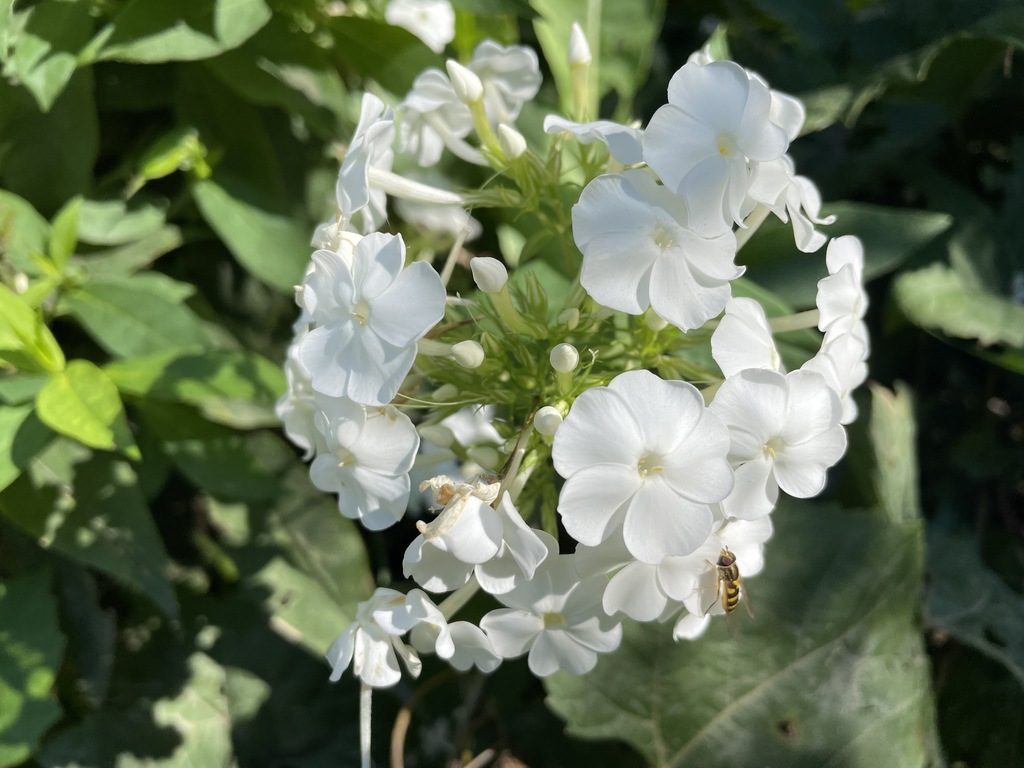
Phloxes are rated fire resistant, with specific conditions attached to guidance for planting close to a structure.
Texas A&M Forest Service places phlox in its acceptable examples for the first ten feet. Georgia's forestry guidance makes a narrower conditional allowance: within its immediate zone, zero to five feet, herbaceous plants including Phlox may grow only when carefully maintained and limited in quantity. That exception sits beneath the guide's general recommendation for no vegetation in the zone.
Ohio State University Extension gives Phlox species an L flammability rating. It also notes that shade tolerance and disease tolerance vary. Oregon State's profile recommends the group for fire-resistant planting suited to Willamette Valley conditions, adding another favorable regional assessment.
For this perennial group, the evidence supports a fire-resistant designation without making all planting positions equivalent. Texas's example has a ten-foot scope, while Georgia's closer allowance retains both a quantity limit and a maintenance condition. These distinctions are useful when applying the favorable ratings around a home.
LSU AgCenter calls these 31 ornamentals commonly used in Louisiana and recommended for Louisiana firewise landscaping efforts. FireApproved publishes 31 exact source owners, mostly at the source's genus grain. Undocumented curation remains corroborative and is not site suitability.
Ohio State University Extension Bulletin 921 is an Ohio publication that describes Ohio fire seasons and landscape conditions and labels nativity to Ohio. FireApproved publishes 352 exact source-owning plant records from its eight rated tables. This historical publication scope does not assert current extension endorsement or that a listed plant suits every Ohio site.
Willamette Valley (OR footprint); partial normalized coverage · 2015-02-01
OSU Extension says EM 9103 highlights fire-resistant plants that thrive under Willamette Valley growing conditions. FireApproved publishes 172 exact owners only as valley context. The guide shares the PNW 590 lineage and is not a second independent vote or statewide site clearance.
Texas A&M Forest Service says the guide's landscape elements apply across Texas and at all scales. FireApproved publishes ten exact genus owners from its placement-band examples and holds Primrose and Bluebells rather than guessing taxa. The examples are not a complete Texas plant palette.
UGA Warnell's WSFNR-20-96A is explicitly firescaping guidance for Georgia. FireApproved publishes the five exact genus owners named in its Immediate Zone examples while retaining the source's maintenance and quantity conditions. This is partial example coverage, not a statewide planting list.
2. Why this plant is relevant here
State distribution
Documented in GA, OH.
Native range
The legacy compatibility field lists OH in native range; its field-level source was not retained.
Introduced / established
USDA hardiness
3. Legal, ecological, and broader status
Legal-list status
Seed-list status
Reported invasive here
Broader regional context
Federal context
How to read this page
The status above is computed from the cited rows below: independent recommendations can support a fire-resistant result, an avoid row can produce keep-away, and disagreement stays visible as conflict. Placement notes preserve each source’s own scheme rather than translating unlike rules into one scale. This is evidence about a plant, not permission to plant it in every part of the defensible space; Zone 0 remains noncombustible.
Where its sources say to plant it
Placement rules below use each source's own distances or named zones, tied to its rating.
They are not interchangeable with the directory's current Zone 0 guidance.
Firewise Landscaping in Texas: The Right Plant for the Ri…: Acceptable in first 10 feet [tamfs-defensible-space] (with its recommendation)
Fire-resistant Landscape Plants for the Willamette Valley: Phlox profile (PDF page 77) [osu-em-9103-profile] (with its recommendation)
Firescaping: Wildfire-Resistant Landscaping in Georgia: Immediate Zone (0–5 feet from structure) [uga-firescaping-zones] (with its recommendation)
The evidence
Grouped by what each source concluded. Primary evidence rated the plant itself
(a lab, field program, or original curation); corroboration compiled or
republished another source's rating and resolves to its root lineage.