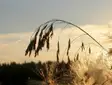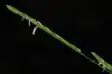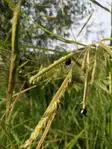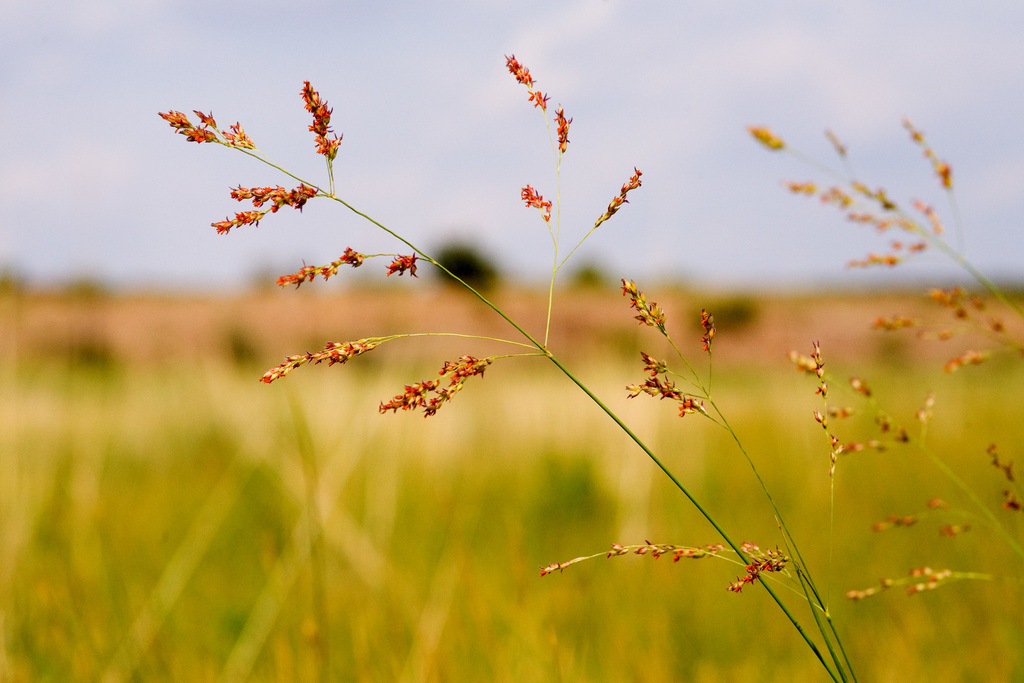
switchgrass
Panicum virgatum
A genus split is not a placement verdict.
Is this one for your yard?
Enter your ZIP to see whether this is legal to plant in your state, and whether it survives your winter.
No, switchgrass is not fire resistant; extension sources consistently classify it as highly flammable or fire-prone.
Five assessments from North Carolina, Ohio, and Arizona all put Panicum virgatum on the side to avoid near structures.
North Carolina’s extension guidance gave switchgrass an extreme flammability rating in 2005. Its 2025 revision calls the grass highly flammable, while the live Plant Toolbox also tags it high. This change does not amount to a safer finding: the newer three-band system dropped the former extreme class, so switchgrass moved into the highest remaining band. Ohio State’s extension service rates it H on a five-point scale, a rating that its guidance treats as one to avoid. That assessment describes switchgrass in full sun to light shade, tolerating moist soil and forming clumps.
Arizona’s Yavapai County extension service reaches the same practical conclusion by naming switchgrass among fire-prone plants. Its bulletin warns that plants in this group may ignite readily and burn intensely. Switchgrass is a grass in the Poaceae family, grows to about four feet at maturity, and has high water needs. Those traits do not override the repeated ratings from different regional extension programs. For landscaping close to a home or other structure, the published guidance points clearly toward choosing something else.
- Form
- grass
- Mature height
- ~4 ft
- Water need
- high
- Rated in
- NC; North Carolina; North Carolina / southeastern US; Ohio / Midwest +1