Home / Plants / Grow / Tanbark & tan oak
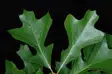
Tanbark & tan oak
Lithocarpus densiflorus
Your local evidence lens
Separate evidence questions, never one approval badge
A genus split is not a placement verdict. Set a ZIP to read the local documented split.
1. Fire evidence and conditions
- Fire evidence
- Mixed evidence — location does not change the cited classification.
- Fire-performance conditions
- No test or rating condition is normalized.
- Fire ecology context
- No section-reviewed fire-ecology context is normalized.
- Placement evidence
- 1 source placement record; source schemes remain separate.
- Evidence regions
- California; Global
- Maintenance
- No sourced horticultural maintenance assertion is normalized; fire-test conditions do not supply maintenance advice.
Typed publication scope: 1 scope across 1 cited fire source
2. Why this plant is relevant here
- State distribution
- No state distribution is normalized.
- Native range
- No current cited or legacy state native range is normalized.
- Introduced / established
- No introduced or established row is normalized; that does not prove native status.
- USDA hardiness
- No hardiness value is normalized.
3. Legal, ecological, and broader status
- Legal-list status
- Set a location for an exact legal-list result; source silence is not clearance.
- Seed-list status
- Set a location to compare the separate state noxious-weed seed layer.
- Reported invasive here
- No ecological invasive report is normalized; that does not prove noninvasiveness.
- Broader regional context
- Aggregate AK, HI, and L48 evidence is shown only as regional context, never as an exact-state finding.
- Federal context
- Federal designations remain separate from state legal-list results.
How to read this page
The status above is computed from the cited rows below: independent recommendations can support a fire-resistant result, an avoid row can produce keep-away, and disagreement stays visible as conflict. Placement notes preserve each source’s own scheme rather than translating unlike rules into one scale. This is evidence about a plant, not permission to plant it in every part of the defensible space; Zone 0 remains noncombustible.
- Form
- tree
- Region
- EE. UU.
- Rated in
- California; Global
- Family
- Fagaceae
- Evidence
- 9 cited sources
Where its sources say to plant it
- Defensible Space Landscaping in the Urban/Wildland Interf…: Chapter 4, Landscape Vegetation Database
The evidence
Mid-scale / conditional (1)
-
“Conflicting information on fire performance.”
1997 Landscape Vegetation Database row: Lithocarpus (syn Notholithocarpus) densiflorus (Tanbark & tan oak) | Notholithocarpus densiflorus (Tan oak, tanbark oak). Preserved UCFPL transcription marker: C5.
Listed without a rating (8)
-
FLAMITS: FLAMmability plant traiTS database
-
“flame height (cm): 63.6”
FLAMITS record 3244; Combustibility measurement; plant part litter; fuel all; predrying yes; device burning bench; site Engber2012-1; sampling ND. Primary study Engber2012: Engber, E. A., & Varner, J. M. (2012). Patterns of flammability of the California oaks: the role of leaf traits. Canadian Journal of Forest Research, 42, 1965-1975.
-
“flaming duration (s): 571”
FLAMITS record 3262; Sustainability measurement; plant part litter; fuel all; predrying yes; device burning bench; site Engber2012-1; sampling ND. Primary study Engber2012: Engber, E. A., & Varner, J. M. (2012). Patterns of flammability of the California oaks: the role of leaf traits. Canadian Journal of Forest Research, 42, 1965-1975.
-
“burnt biomass (%): 88.5”
FLAMITS record 3280; Consumability measurement; plant part litter; fuel all; predrying yes; device burning bench; site Engber2012-1; sampling ND. Primary study Engber2012: Engber, E. A., & Varner, J. M. (2012). Patterns of flammability of the California oaks: the role of leaf traits. Canadian Journal of Forest Research, 42, 1965-1975.
-
“smouldering duration (s): 245.6”
FLAMITS record 3298; Sustainability measurement; plant part litter; fuel all; predrying yes; device burning bench; site Engber2012-1; sampling ND. Primary study Engber2012: Engber, E. A., & Varner, J. M. (2012). Patterns of flammability of the California oaks: the role of leaf traits. Canadian Journal of Forest Research, 42, 1965-1975.
-
“flaming duration (s): 64”
FLAMITS record 13567; Sustainability measurement; plant part litter; fuel all; predrying yes; device burning bench; site Varner2017-1; sampling ND. Primary study Varner2017: Varner, J. M., Kuljian, H. G., & Kreye, J. K. (2017). Fires without tanoak: the effects of a non-native disease on future community flammability. Biological Invasions, 19, 2307-2317.
-
“flame height (cm): 58.3”
FLAMITS record 13572; Combustibility measurement; plant part litter; fuel all; predrying yes; device burning bench; site Varner2017-1; sampling ND. Primary study Varner2017: Varner, J. M., Kuljian, H. G., & Kreye, J. K. (2017). Fires without tanoak: the effects of a non-native disease on future community flammability. Biological Invasions, 19, 2307-2317.
-
“smouldering duration (s): 223”
FLAMITS record 13577; Sustainability measurement; plant part litter; fuel all; predrying yes; device burning bench; site Varner2017-1; sampling ND. Primary study Varner2017: Varner, J. M., Kuljian, H. G., & Kreye, J. K. (2017). Fires without tanoak: the effects of a non-native disease on future community flammability. Biological Invasions, 19, 2307-2317.
-
“burnt biomass (%): 87”
FLAMITS record 13582; Consumability measurement; plant part litter; fuel all; predrying yes; device burning bench; site Varner2017-1; sampling ND. Primary study Varner2017: Varner, J. M., Kuljian, H. G., & Kreye, J. K. (2017). Fires without tanoak: the effects of a non-native disease on future community flammability. Biological Invasions, 19, 2307-2317.
-